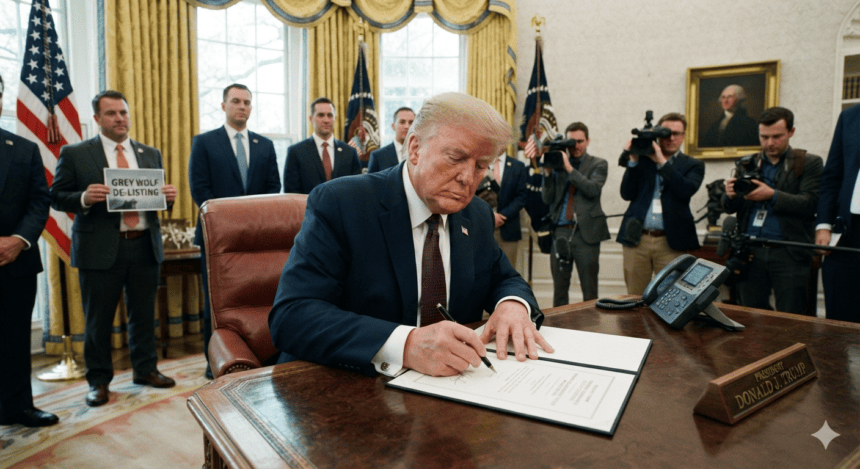
The Trump administration has finalized a rule stripping federal endangered species protections from grey wolves across most of the lower 48 states. The move marks the end of a decades-long recovery effort, shifting management authority to individual states and tribal wildlife agencies.
Wildlife biologists and conservationists warned the decision is premature. The U.S. Fish and Wildlife Service, however, maintains that the grey wolf population has rebounded sufficiently to no longer require the oversight of the Endangered Species Act.
“The wolf has met all of our scientific recovery goals,” said a department spokesperson. “State-led management has proven capable of sustaining these populations.”
Critics argue the recovery is geographically lopsided. While wolf packs are well-established in the Northern Rockies and the Great Lakes, they remain absent from vast swaths of their historical range. Removing protections now, they contend, leaves the species vulnerable to aggressive hunting and trapping policies in states that view wolves as a threat to livestock and big-game herds.
The policy shift follows years of intense lobbying from agricultural groups and hunting organizations. Ranchers have long complained that federal protections prevented them from effectively defending their herds against predators, often waiting for government intervention that arrived too late.
Environmental groups have already signaled their intent to challenge the order in federal court. They argue the move violates the spirit of the Endangered Species Act, which mandates protection until a species is secure throughout a “significant portion” of its range.
For now, the legal battle lines are drawn. Wolf management in the coming months will likely be defined by state-level politics rather than federal conservation policy, as the species faces its most significant shift in status since the 1970s.