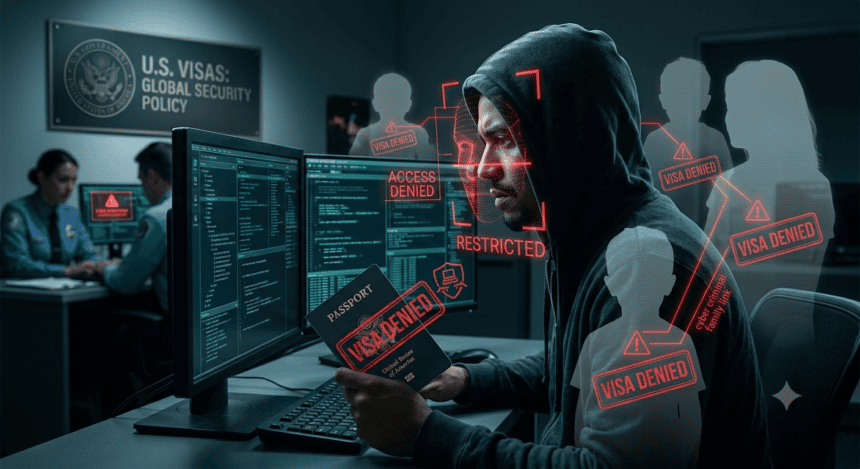
The United States has announced a new visa restriction policy targeting foreign cybercriminals and, in certain cases, their immediate family members, as Washington intensifies efforts to combat cybercrime and hold those responsible accountable.
Under the policy, individuals involved in serious cybercriminal activities may face restrictions on obtaining US visas. The measures may also extend to immediate family members of designated individuals, reflecting the US government’s broader approach to applying pressure on those involved in cyber-related criminal networks.
The policy is aimed at individuals accused of activities such as cyberattacks, ransomware operations, online fraud and other malicious cyber activities that threaten US national security, businesses and individuals.
US authorities have increasingly used visa restrictions and other sanctions as tools to deter cybercriminals who operate from outside the United States. The latest move signals Washington’s intention to pursue those responsible for cyber threats even when they are located beyond US borders.
The policy also highlights the growing international nature of cybercrime. Criminal groups operating across borders can target victims and organisations in multiple countries, making international cooperation and coordinated action increasingly important.
The United States has warned that individuals involved in malicious cyber activities could face consequences beyond criminal investigations, including travel restrictions and other government measures.
The new policy is expected to strengthen Washington’s efforts to disrupt cybercrime networks and discourage foreign actors from using digital platforms to target US citizens, companies and government institutions.