US Muslims Make Record Republican Gains in 2024 Election
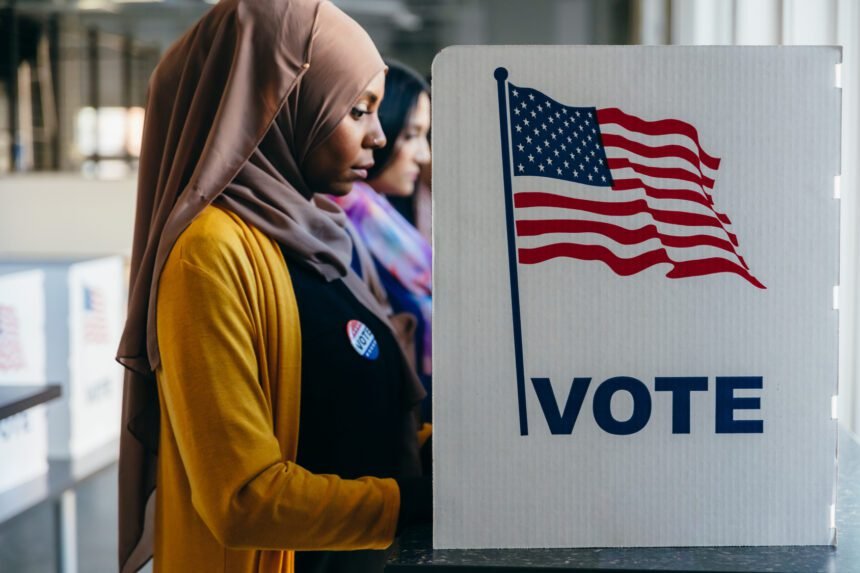
In a surprising development during the 2024 U.S. presidential race, 33% of Muslim voters backed Donald Trump a sharp rise from just 9% in 2020. Among Muslims who attend mosque weekly, support soared to 42%, according to the Cooperative Election Study (CES).
Historically, Muslim support for Republican candidates has been low: 22% for Trump in 2016, 13% for Mitt Romney in 2012, and 6% for John McCain in 2008. While CES data shows Muslims still lean Democratic overall (50% Democrat vs. 27% Republican), the shift toward Republicans is notable. Pew Research found similar patterns, with 53% leaning Democrat and 42% leaning Republican.
Huge Possible Reasons and Political Impact are present. Analysts note the Isra@elii Gaza war was unlikely to be a major factor, as both parties held similar positions during the campaign. Instead, cultural and social issues may be influencing Muslim voters. Pew data shows 55% of Muslims believe society should discourage homosexuality, and the same percentage supports allowing school-led prayer positions more aligned with conservative politics.
However, Muslim populations remain small in most states. They make up over 2% of residents in only nine states, concentrated in Democratic strongholds like Illinois, New York, and New Jersey. Michigan, with 2.4% Muslims, was the only major swing state where their votes could have affected the outcome Harris lost there by just over 80,000 votes.
There is Complexity Within Muslim Politics. While some Muslims drift rightward on cultural issues, others, like Zohran Mamdani, represent a progressive wave within the Democratic Party. Mamdani, a 33 year old Democratic Socialist, recently won New York City’s Democratic mayoral nomination with a platform focused on affordability and Gaza solidarity, energized by younger voters.
Data from UCLA’s Nationscape survey also shows Muslim Democrats often hold more conservative views than Democrats overall on topics such as abortion, immigration, and transgender policies, suggesting an ideological split within the community.
Political scientist Ryan Burge cautions against overgeneralizing due to small sample sizes, but says the trend indicates Muslims are shifting from “deep blue to a more purple hue.” This comes amid broader religious realignments, with white Catholics solidifying Republican loyalty and atheists and agnostics becoming a key Democratic base voting 83% and 76% Democrat respectively in 2024.