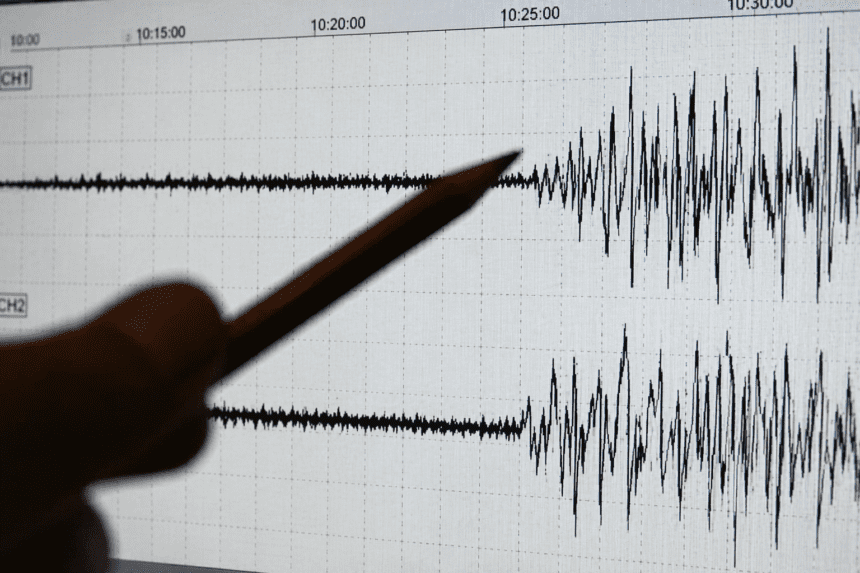
A 3.4-magnitude earthquake jolted parts of Karachi and adjoining areas in the early hours of June 3, 2025, adding to a string of mild tremors that had already unsettled residents across the city. According to reporting based on data from the Pakistan Meteorological Department’s Seismic Monitoring Centre, the 3.4 tremor struck at 12:53 am, with its epicenter located about 10 kilometers northwest of DHA Karachi and at a depth of 20 kilometers.
The quake was one of several low-intensity shocks felt in Karachi over a short period. The city had experienced 19 mild earthquakes since June 1, with tremors recorded in and around Malir, Quaidabad, Korangi, Gadap, DHA, and nearby localities. That pattern made the 3.4-magnitude jolt stand out, but it was not an isolated event. It came in the middle of an unusual spell of repeated seismic activity that kept residents on edge.
Despite the anxiety it caused, there were no immediate reports of deaths, injuries, or major property damage linked to the tremor. That fits the broader pattern of the Karachi sequence, where the quakes were strong enough to be felt widely but generally remained too weak to cause large-scale destruction. Even so, repeated shaking in a densely populated city naturally raised concern, especially in neighborhoods where people were already rattled by earlier tremors.
Meteorologists tied the seismic activity to the activation of the Landhi fault region. Chief Meteorologist Aamir Haider, as quoted in local reporting, said the fault line appeared to be going through a normalization phase, with energy being released gradually through smaller tremors. In his assessment, that slow release reduces the likelihood of a much larger event in the immediate term, though it can still make the shaking feel frequent and unnerving for residents.
That explanation helped frame the Karachi tremors less as a single alarming incident and more as part of a broader seismic episode. The same reporting said the shallow depth of some of the quakes was one reason they were felt so clearly across the city. Haider also noted that Karachi’s fault lines have long been identified, particularly around Korangi and Malir, and that the reactivation of one after decades could explain the unusual cluster of light earthquakes.