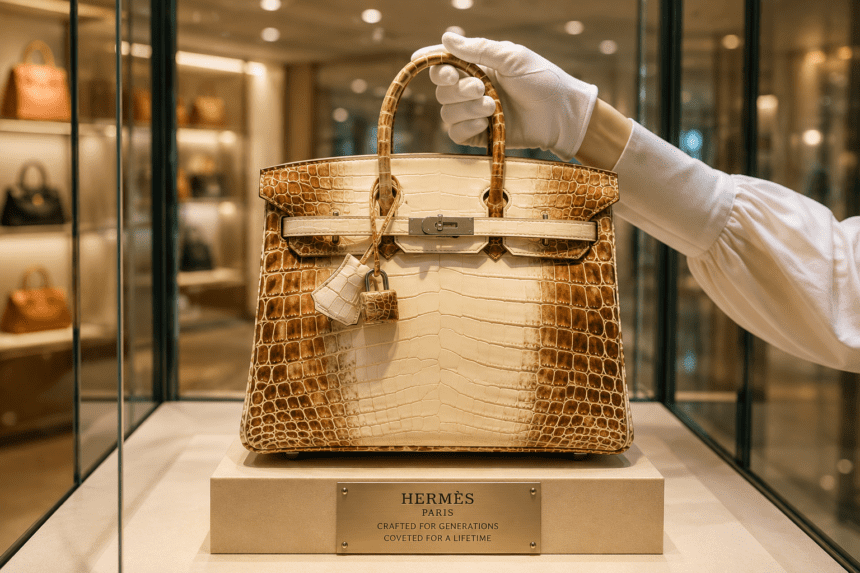
MILAN/LONDON: European luxury houses are sharpening their focus on the United States, betting that America’s newest generation of super-rich consumers can help offset slower demand in China, Europe and the Middle East.
The push is being led by some of the biggest names in luxury — including LVMH, Gucci, Moncler, Zegna, Hermès and Ralph Lauren — through new store openings, high-profile fashion events and a stronger presence outside the usual luxury capitals of New York, Los Angeles and Miami. The target is clear: wealthy American buyers whose fortunes have swelled with the AI and technology boom.
For luxury brands, the United States is no longer just a reliable market. It has become the market they can’t afford to underplay.
According to Reuters, North America accounted for 27% of global luxury store openings in 2025, overtaking both Europe and China for the first time. That shift says a lot about where the industry thinks the next round of growth will come from. Instead of waiting for a broad recovery in China or hoping European shoppers loosen their wallets again, brands are putting more boutiques and brand experiences closer to America’s wealthiest consumers.
And it’s not only about the coasts anymore.
Luxury groups are increasingly looking at second-tier U.S. cities and wealthy regional pockets where tech wealth, finance money and strong salaries have created new clusters of high-end consumers. In simple terms, luxury brands are following the money — and plenty of that money now sits in places that weren’t always treated as front-line luxury destinations.
The change comes after a difficult stretch for the global luxury industry. China’s property-linked slowdown has hurt consumer confidence, while spending in parts of Europe and the Middle East has remained uneven. The result is what analysts describe as a “two-speed” luxury market: the U.S. and some parts of Asia are still offering growth, but other major regions are struggling to regain momentum.
That has forced brands to rethink how they reach wealthy clients. A flagship boutique still matters, of course, but the playbook is wider now. Fashion shows, private client events, sports partnerships and cultural tie-ups are all being used to build loyalty among buyers who may spend heavily, but expect more than just a product on a shelf.
Gucci’s recent move to become title partner of Renault’s Alpine Formula One team from 2027 fits into that broader strategy. Luxury labels are chasing visibility in spaces where wealthy consumers already gather — motorsport, art, design, travel, exclusive clubs and private experiences. It’s less about shouting for attention and more about being present in the right room.
Still, the American opportunity comes with risks. U.S. tariffs on European goods have added pressure on pricing and margins, while the strongest luxury shoppers are becoming more selective. The old trick of simply raising prices every year is harder to pull off when even wealthy buyers are asking whether a product feels special enough to justify the bill.
There is also a deeper challenge: not all luxury buyers are behaving the same way. The ultra-rich are still spending, but aspirational customers — those who saved up for an expensive handbag, watch or jacket — have become more cautious. Earlier Reuters reporting, citing Bain, noted that brands focused on wealthier U.S. consumers were performing better than those more exposed to lower-income aspirational shoppers.
That is why the industry’s current American push is so targeted. Brands are not simply trying to sell more. They are trying to sell to the right customer: someone less affected by inflation, less nervous about interest rates and more likely to keep spending even when the wider economy feels shaky.
But the U.S. cannot solve everything. A full recovery for luxury will still depend heavily on China, where demand once powered years of expansion for European brands. Without a stronger Chinese rebound, America may act more like a cushion than a complete cure.
For now, though, the strategy is obvious. European luxury brands are going where confidence, cash and new wealth are still flowing. And in 2026, that means America’s AI-rich elite are getting a lot of attention.