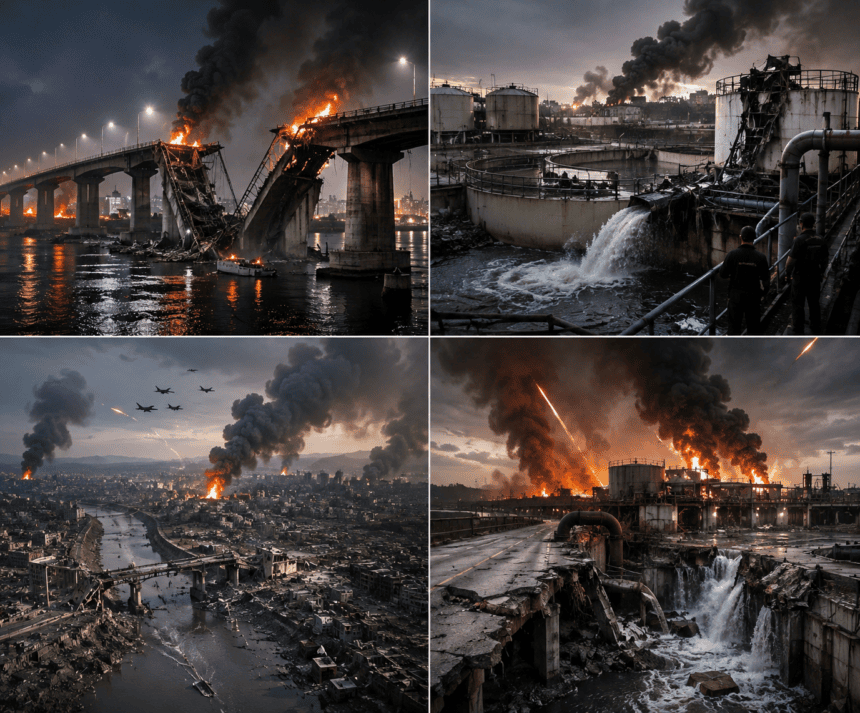
TEHRAN — The aerial campaign against Iranian infrastructure stretched into its seventh consecutive day Wednesday, with reports confirming fresh strikes on bridges and water treatment facilities across key industrial hubs.
The sustained bombardment marks a shift in operational focus. While initial sorties targeted military installations and radar arrays, the current wave centers on the logistical arteries of the country. By hitting bridges, commanders are effectively severing internal supply lines, while strikes on water plants have left major residential zones facing immediate, critical shortages.
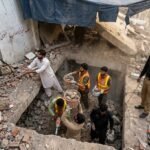
For the average civilian, the war has moved from a distant geopolitical dispute to a daily struggle for basic utilities. In central provinces, residents reported total water cutoffs after a primary treatment facility sustained heavy damage late Tuesday. Repair crews are unable to reach the sites, citing the persistent threat of further strikes.
The military leadership in Tehran has remained largely silent regarding specific damage assessments. State media continues to frame the attacks as “ineffective,” insisting that air defense systems intercepted the majority of incoming projectiles. Yet, satellite imagery tell a different story, showing charred remains of reinforced concrete spans and crippled pumping stations.
Regional analysts suggest the strategy is clear: degrade the state’s ability to move troops and maintain domestic stability simultaneously. By targeting water infrastructure, the pressure on the government to negotiate or escalate increases by the hour.
“They aren’t just hitting missile silos anymore,” said a regional security consultant who tracks the conflict. “They are dismantling the physical framework that allows the state to function on a day-to-day basis.”
As the seventh day of the campaign wears on, the international community watches for signs of a potential ground shift. For now, the conflict remains locked in the skies, with the civilian population caught in the widening gap between state pride and the crumbling of essential services.
With no immediate ceasefire on the horizon, the focus for the next 24 hours remains on whether the current strikes on infrastructure will force a change in Tehran’s strategic calculus or lead to a desperate, large-scale retaliation.