October 20, 2025
Web desk
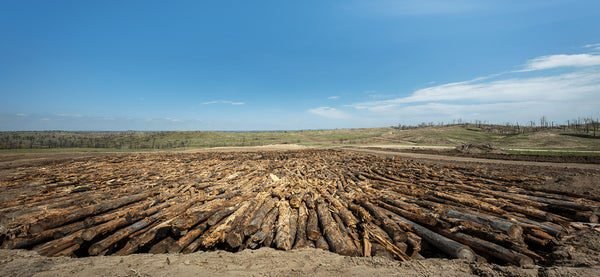
In the race against global warming, researchers are turning to an unexpectedly low-tech idea burying wood. The method, known as wood vaulting or biomass burial, could potentially remove up to 12 billion tons of carbon dioxide from the atmosphere each year.
Instead of relying on expensive, high-tech machines that “vacuum” CO₂ out of the air, this approach simply takes what nature already provides trees and prevents their carbon from escaping back into the atmosphere.
Here’s how it works: when trees die or are cut down, their wood normally decays, releasing stored carbon. But if those logs, branches, and sawdust are buried underground just a few yards deep decomposition slows dramatically because bacteria can’t survive without oxygen. That means the carbon stays locked away for centuries instead of cycling back into the air.
According to a Nature Geoscience study led by Yiqi Luo of Cornell University, this simple act of burial could cut global warming by more than 0.35°C (0.63°F) by 2100 enough to help protect polar ice and coral reefs from collapse.
Even better, researchers say there’s already enough waste wood from logging, construction, and wildfires to make this feasible. Instead of burning or dumping it, that biomass could become one of the planet’s biggest carbon storage systems.
As Ning Zeng, a University of Maryland climate scientist, puts it:
“Every year, plants capture six times more carbon than our fossil fuel emissions. The problem is, most of it goes right back into the atmosphere when trees decay. Burying even a fraction could change everything.”
It’s a back to basics solution in a world obsessed with tech. Sometimes, the answer to a complex problem is literally just beneath the surface.