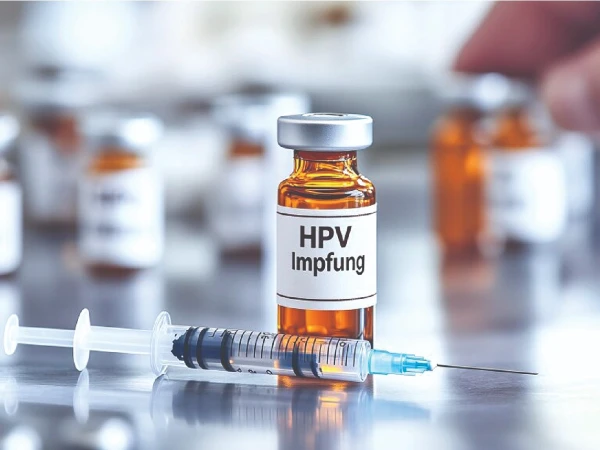
The Sindh government has included the Human Papillomavirus (HPV) preventive vaccine for girls in the Expanded Programme on Immunization (EPI). With this inclusion, the immunization program now covers vaccines against 13 diseases. The HPV vaccine will be administered only to girls aged nine years and above.
Director of the EPI program Dr Raj Kumar said that in a recent letter issued to District Health Officers across Sindh, including Karachi, it was stated that the HPV vaccine has been included in the routine immunization program from January 1, 2026, and the vaccination process for girls up to the age of nine years will be initiated.
He said that all District Health Officers have been directed to ensure that the vaccine is administered to girls up to the age of nine at EPI vaccination centers.
Dr Raj Kumar said that the Sindh government has provided Rs 797 million to the federal government for three years’ worth of vaccines, and seven hundred thousand girls will be vaccinated every year.
He said that the federal government will procure the vaccine, but Sindh’s share in the procurement amounts to Rs 797 million, which will be paid to the federal government.
It may be recalled that for the first time, an HPV vaccination campaign to protect girls from cervical cancer was launched on September 15, 2025, in Karachi as well as across Sindh and Punjab. During the campaign, a majority of parents expressed distrust and refused to have their daughters vaccinated.
During this campaign, the target was to vaccinate 4.1 million girls aged nine to fifteen across Sindh, including Karachi.
The EPI program under the Health Department claimed that the vaccination campaign was successful, but the situation was contrary to these claims. The major reason for the failure of the campaign was the lack of an effective response from parents despite awareness and publicity efforts by the Health Department.
The Health Department had informed parents about the benefits of the vaccine through advertisements on various television channels and social media platforms, and programs were also organized at different locations for this purpose.
On the other hand, anti-vaccine elements launched a negative campaign against the vaccine on social media, which proved to be quite effective. AI generated videos were circulated on social media, causing fear and panic among parents.
According to data released by the EPI program under the Health Department, the effectiveness of the vaccination campaign in Karachi can be assessed by the fact that in District Keamari, out of 154,632 girls aged nine to fifteen, only 16 percent were vaccinated. In District East, only 37 percent of the 291,552 girls were vaccinated.
Similarly, in District South, only 39 percent of 173,772 girls were vaccinated, while in District Central, only 42 percent of 284,976 girls received the vaccine.