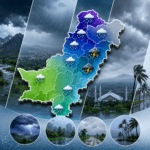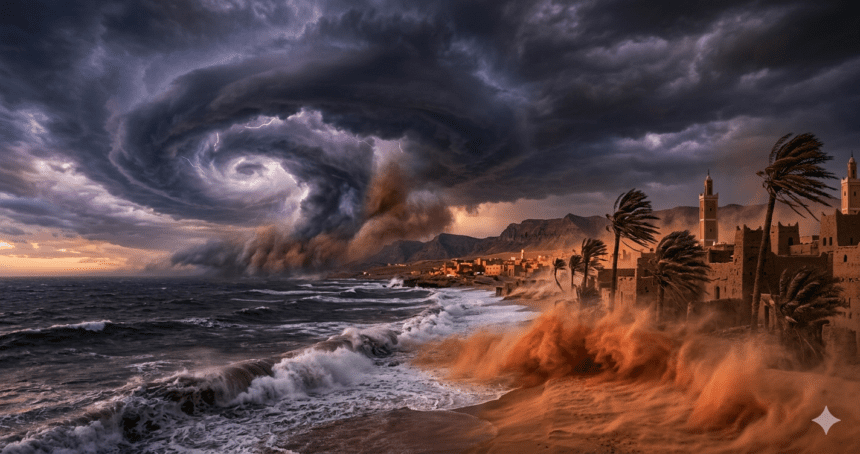
A rare tropical-like cyclone known as a “medicane”, named Jolina, has caused significant damage across parts of North Africa after developing over the Mediterranean Sea in March 2026.
The storm affected several coastal regions as it moved across the Mediterranean, bringing heavy rainfall, strong winds, and flooding. Reports indicate widespread disruption in affected areas, highlighting the growing risk posed by such rare weather systems.
Medicanes are unusual cyclonic storms that form in the Mediterranean region but share characteristics with tropical hurricanes, including a well-defined structure and an eye-like center. Scientists say they can produce extreme rainfall and powerful winds, often causing flooding and infrastructure damage across multiple countries.
Experts warn that rising sea surface temperatures, driven by climate change, are increasing the energy available for these storms, making them more intense and potentially more destructive.
Studies show that the Mediterranean Sea has been warming steadily over recent decades, contributing to heavier rainfall events during such cyclones. Researchers emphasize the need for improved early warning systems and better climate models to predict future medicane activity.
Although medicanes are rare, occurring only a few times per year, their impact can be severe due to the high population density along Mediterranean coastlines.
Authorities and scientists are calling for increased international cooperation, improved forecasting systems, and stronger disaster preparedness strategies to reduce future risks.