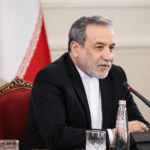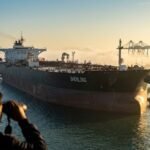
The Strait of Hormuz, one of the world’s most important oil shipping lanes, was declared “completely open” to commercial vessels on Friday, April 17, after a 10-day ceasefire took hold between Israel and Hezbollah in Lebanon. Iran’s foreign minister, Abbas Araghchi, said traffic through the waterway would be allowed during the truce, and U.S. President Donald Trump publicly echoed that message, saying the route was fully open for passage.
That mattered immediately. Markets had been bracing for a longer disruption after weeks of war and shipping threats in the Gulf, and oil prices fell sharply once the announcement landed. AP reported crude dropping more than 10%, while other market coverage showed U.S. oil falling below $83 a barrel and Brent sliding to around the low $90s. Investors clearly took the signal as a step back from the brink, even if only for now.
Still, this is not a clean reset. The reopening of Hormuz does not mean the broader confrontation between Washington and Tehran is settled. AP reported that the U.S. blockade on Iranian ports remains in place despite the opening of the strait to commercial traffic, which leaves a strange and uneasy picture: one of the region’s most vital maritime arteries is open again, but the pressure campaign against Iran has not been lifted.
The Lebanon ceasefire itself is also fragile. Reporting from AP says the 10-day truce appeared to be holding on Friday, with no fresh airstrikes observed by the United Nations, but Israeli forces remained in parts of southern Lebanon and there were still allegations of airspace violations. On the ground, many displaced Lebanese families began heading home, even as officials and armed groups warned that conditions remained unstable and dangerous.
That gets to the heart of the story: this is de-escalation, not peace. Trump described the moment as a “historic day for Lebanon,” and diplomats are clearly trying to turn this pause into something bigger. Pakistan has been cited in multiple reports as a mediator in the wider diplomacy, while European leaders gathered in Paris to discuss maritime security and the future of navigation through Hormuz. But several major issues remain unresolved, including Iran’s nuclear program, oil transit security, compensation related to the war, and the status of Hezbollah’s role in any broader settlement.
There is also a layer of uncertainty beneath the public optimism. A Wall Street Journal live report cited a shipping analyst saying Iran’s declaration did not yet provide enough operational clarity for the industry. In other words, “open” on paper does not automatically mean shipping companies, insurers and traders will behave as though the danger has passed. After weeks of threats, mines, military deployments and confusion over routes, commercial confidence may take longer to return.
So yes, Friday brought a visible shift. The Strait of Hormuz reopened to commercial traffic. Oil prices dropped. The Lebanon truce held through its first hours. But none of that means the region is out of danger. It means the temperature came down a little. In this crisis, right now, that counts as significant progress — but only that.