United Nations: Pakistan has called for an immediate ceasefire and an end to military attacks in Lebanon, warning that the worsening violence could push the region into a deeper humanitarian and security crisis.
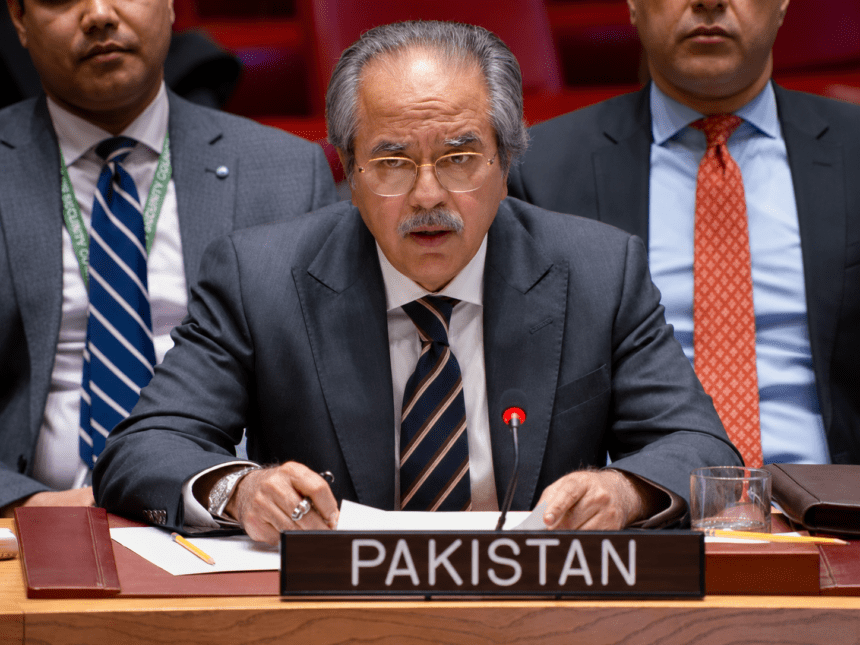
Speaking at an emergency meeting of the United Nations Security Council, Pakistan’s Permanent Representative to the UN, Ambassador Asim Iftikhar Ahmad, said Lebanon’s situation was fast becoming a serious humanitarian emergency and a threat to regional stability. He urged all sides to stop hostilities and return to diplomacy before the conflict spreads further.
Pakistan’s statement came as fighting between Israel and Hezbollah showed fresh signs of escalation despite diplomatic efforts for a truce. Recent reports said Israel had carried out strikes in southern Lebanon and Beirut’s southern suburbs, while Hezbollah responded with attacks on Israeli positions. The violence has added another dangerous layer to an already fragile Middle East, where Gaza, Iran-related tensions and Lebanon are increasingly tied together in diplomatic calculations.
Ambassador Asim said the Security Council could not afford to treat the crisis as a side issue. Pakistan, he stressed, stood for Lebanon’s sovereignty, territorial integrity and political independence. Islamabad also called for the full implementation of UN Security Council Resolution 1701, the framework that seeks a halt to hostilities between Israel and Hezbollah and supports stability along the Israel-Lebanon border. In an earlier Council statement, Pakistan had said violations in Lebanon were continuing despite ceasefire efforts and that a complete cessation of hostilities was necessary.
The humanitarian cost is already severe. According to recent international reporting, thousands have been killed in Lebanon during the wider conflict, while more than one million people have been displaced. Civilian areas in southern Lebanon and Beirut’s suburbs have repeatedly come under pressure, raising fears that ordinary Lebanese families are once again being dragged into a war they cannot escape.
There are, however, some diplomatic openings. U.S.-linked mediation efforts have pushed for a partial reduction in fighting, with reports suggesting Hezbollah may be willing to accept a broader ceasefire if Israel also stops its attacks. Lebanese officials have also argued that a limited pause is not enough and that only a comprehensive ceasefire can prevent another round of destruction.
Pakistan’s position fits into its broader diplomatic line at the UN: restraint, dialogue and respect for international law. Islamabad has repeatedly warned that continued attacks in Lebanon, Gaza and elsewhere could inflame the whole region. Frankly, that is the danger many diplomats now see — one battlefield bleeding into another, with civilians paying the price first.
Pakistan urged the Security Council to act with urgency, saying peace in Lebanon is not only a Lebanese concern but a key test for regional stability. The message was clear enough: stop the attacks, enforce international law, and give diplomacy a real chance before the crisis spins further out of control.