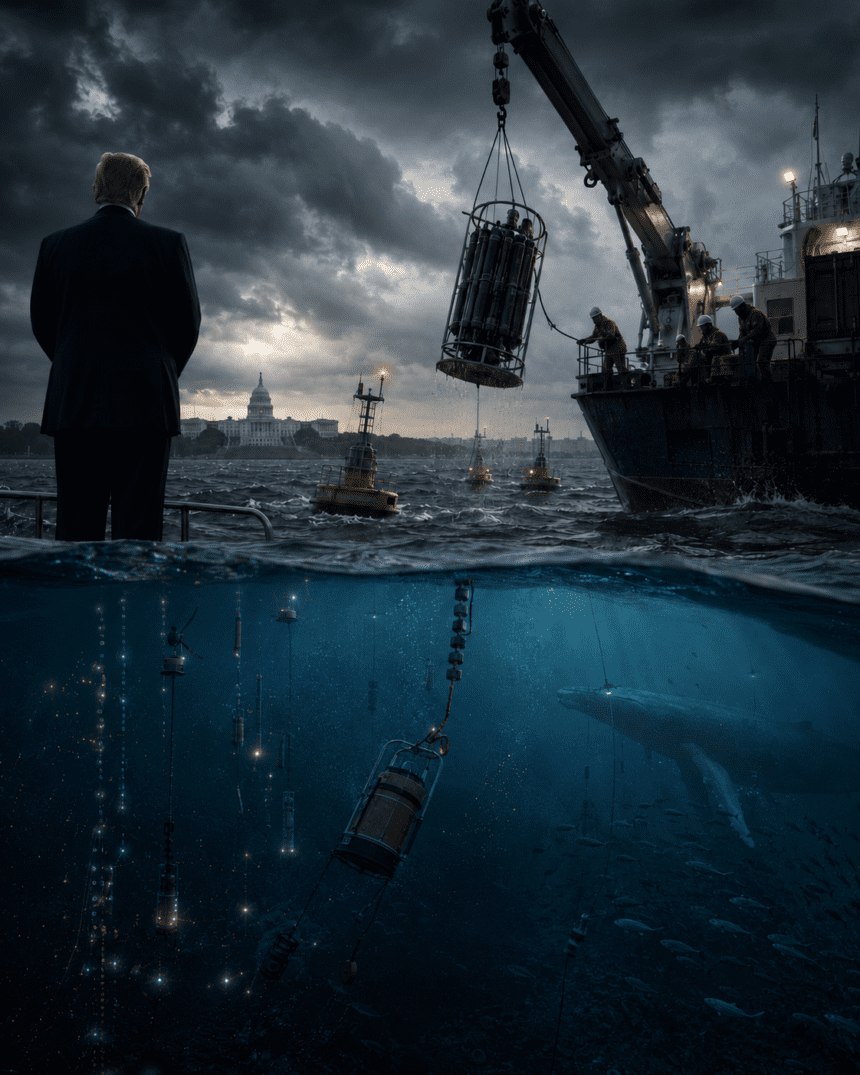
Washington: The Trump administration’s budget proposal has triggered concern among scientists, mariners, emergency responders and coastal communities after reports said it would eliminate funding for a key U.S. ocean monitoring network used for real-time marine data, weather forecasting and public safety.
At the centre of the controversy is the U.S. Integrated Ocean Observing System, known as IOOS, a national network that gathers and distributes information on coastal waters, the Great Lakes and oceans. The system compiles and shares ocean data for safety, economic and environmental needs.
The budget plan would cut ocean data support and leave boaters, anglers, forecasters and emergency crews scrambling for information. The system helps provide data from sensors, buoys, high-frequency radar, gliders and regional monitoring systems, which are used to track ocean conditions and support navigation, fisheries, storm response and coastal planning.
Its data platform connects to more than 32,000 stations, offering recent oceanographic and meteorological information from regional, national and global observing systems.
The proposed cuts are part of a broader effort to reduce funding for climate and ocean research programmes. The proposal aims to cut about $1.67 billion, or roughly 27%, from the agency responsible for oceanic and atmospheric monitoring, while also targeting climate research divisions.
Critics warn that dismantling or defunding the ocean monitoring network could weaken the country’s ability to respond to dangerous marine conditions, storm surges, harmful algal blooms, fisheries disruption and coastal flooding. They argue that the system is not only a scientific tool but also a public safety network used by commercial operators, local governments and emergency officials.
Supporters of the cuts, however, frame the move as part of a larger effort to reduce federal spending and remove programmes the administration considers outside its priorities. The budget proposal also reflects a wider shift away from climate-focused research and toward energy and deregulation policies.
For coastal states, the debate carries direct economic consequences. Fishing communities, shipping operators, offshore industries and tourism-dependent areas rely on timely ocean data to make operational decisions. Any disruption in the flow of information could make maritime activity riskier and more expensive.
The proposal is not final and would still require congressional approval. But the debate has already raised a larger question in Washington: whether ocean and climate monitoring should be treated as optional research spending or as essential national infrastructure.
As climate-driven extreme weather, sea-level rise and marine hazards intensify, scientists say weakening ocean observation systems could leave the United States less prepared for the very risks those systems were built to detect.