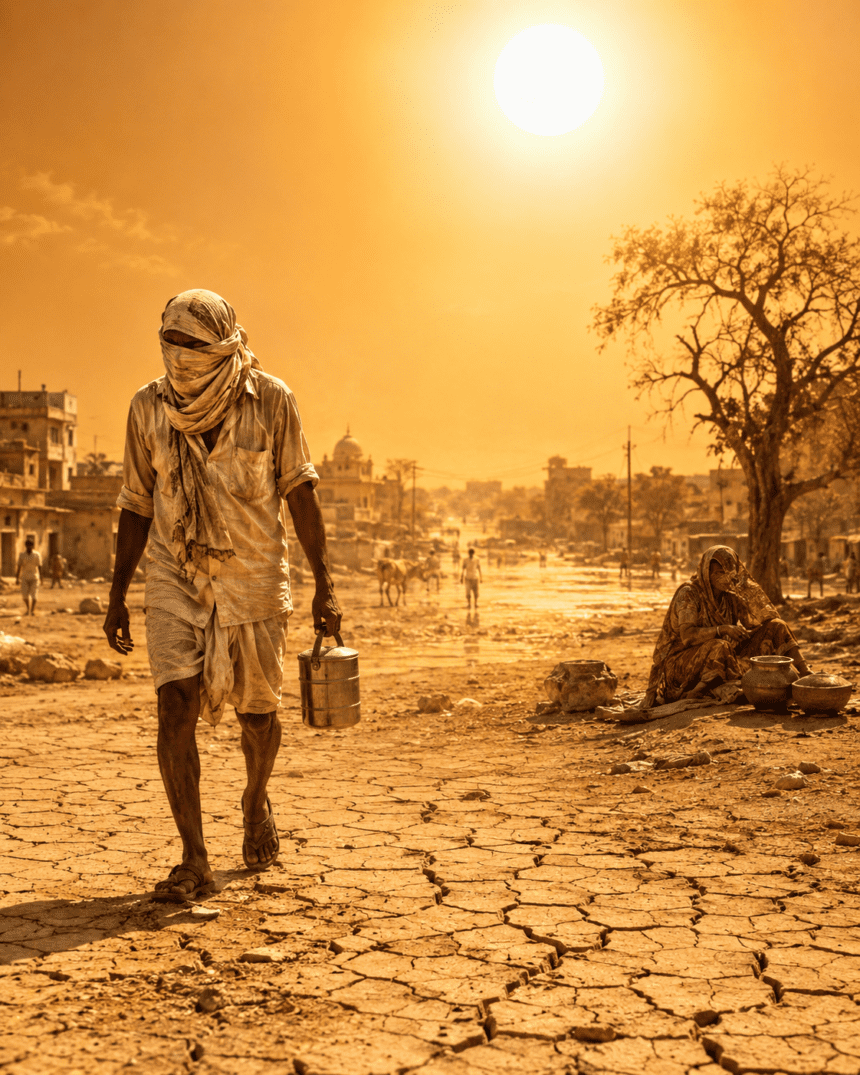
Banda, Uttar Pradesh: Life in India’s Bundelkhand region has been pushed to the edge as Banda, one of the hottest districts in the country, continues to suffer under a punishing heatwave, with temperatures touching around 47°C to 48°C in recent days.
For residents, the crisis is no longer limited to hot afternoons. The heat has become so relentless that people say mornings and nights have lost their meaning. Homes remain warm after sunset, streets empty during the day, and ordinary routines have been reduced to a struggle for shade, water and survival.
According to reports, Banda recorded nearly 48°C, making it one of the hottest places in India during the latest spell of severe heat. Other parts of north India also witnessed extreme temperatures, with Delhi, Haryana and Rajasthan facing dangerous heatwave conditions.
The impact has been severe on daily wage workers, shopkeepers, rickshaw drivers, farmers and elderly residents, many of whom cannot afford to stop working despite the dangerous weather. In several areas, people have been forced to begin their work before sunrise or wait until late evening, but even then, the heat offers little relief.
Hospitals and health centres have reported rising cases of heat-related illnesses, including fever, dehydration, dizziness, vomiting and exhaustion. Health officials have warned that heatstroke can become life-threatening if symptoms are ignored. Reuters also reported that parts of India have seen hundreds of suspected heat-related cases during the ongoing summer spike.
Authorities have advised citizens to avoid outdoor movement during peak heat hours, especially between late morning and afternoon. People have also been urged to drink water frequently, wear light clothes, protect children and elderly family members, and avoid unnecessary travel. In some affected areas, schools adjusted timings or announced early breaks as a precaution.
Experts say Banda’s geography makes the crisis worse. The district lies in the Bundelkhand region, which is known for its dry land, rocky terrain, low vegetation and water stress. Reduced tree cover and falling groundwater levels have made the land absorb and retain heat more intensely, creating furnace-like conditions during peak summer.
For many families, the heatwave has also become an economic crisis. Electricity demand has increased, water shortages have deepened, and outdoor labour has become dangerous. Those without air-conditioning or reliable power supply remain the most vulnerable.
India has faced repeated heatwaves in recent years, but the latest conditions underline a growing climate and public health challenge. As temperatures rise earlier and remain high for longer, extreme heat is no longer just a seasonal discomfort. In places like Banda, it has become a daily emergency.