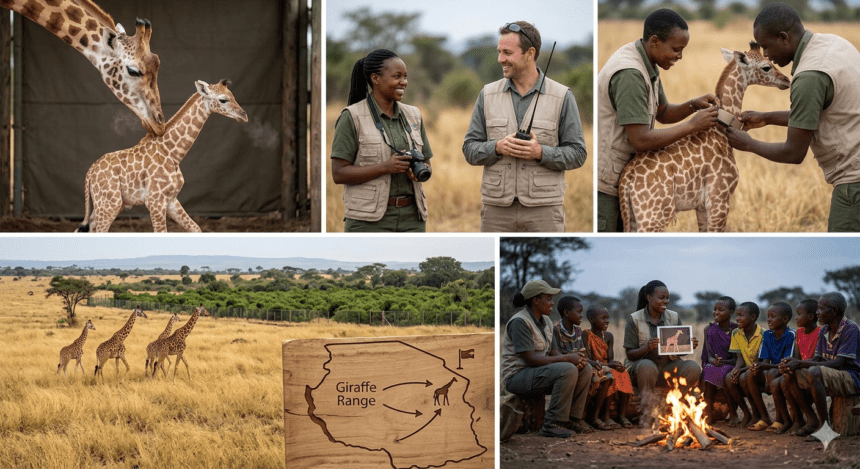
A male Rothschild’s giraffe arrived at the Chester Zoo this week, marking a vital shift in the survival strategy for one of the world’s rarest subspecies. The six-year-old bull, named Tisa, traveled from a facility in Germany to join a targeted breeding program aimed at reversing years of population decline.
Conservationists view Tisa’s arrival as more than just a logistical success. With fewer than 3,000 Rothschild’s giraffes left in the wild, the genetic diversity of zoo-managed populations has reached a critical bottleneck. Tisa brings a fresh genetic lineage that researchers hope will produce healthier, more resilient calves.
“We aren’t just moving an animal; we are securing a future,” said Sarah Mitchell, the lead giraffe keeper at the zoo. “Every successful birth from this pairing acts as an insurance policy against extinction.”
The Rothschild’s giraffe, distinguished by its lack of markings below the knees—giving the appearance of wearing white stockings—has been decimated by habitat fragmentation and poaching in its native Uganda and Kenya. While wild populations are slowly stabilizing through government-led sanctuary efforts, the zoo population remains the primary safety net should environmental conditions in East Africa deteriorate.
The introduction process is delicate. Keepers have spent the last 48 hours monitoring Tisa’s integration with the resident females. Giraffes are social creatures, but they are also notoriously selective. A mismatch in temperament could stall the breeding efforts for months.
“It’s a slow game,” Mitchell noted. “We don’t force the pairing. We provide the environment and wait for them to decide.”
The zoo plans to keep Tisa off-exhibit for another week to ensure he acclimates to the local diet and climate. If the transition proves successful, the first offspring from this new bloodline could arrive as early as next year.
For now, the focus remains on the paddock. Whether this arrival translates into a long-term population surge depends entirely on the coming months, but for the conservation team, the addition of one bull represents the most significant progress they’ve made in a decade.