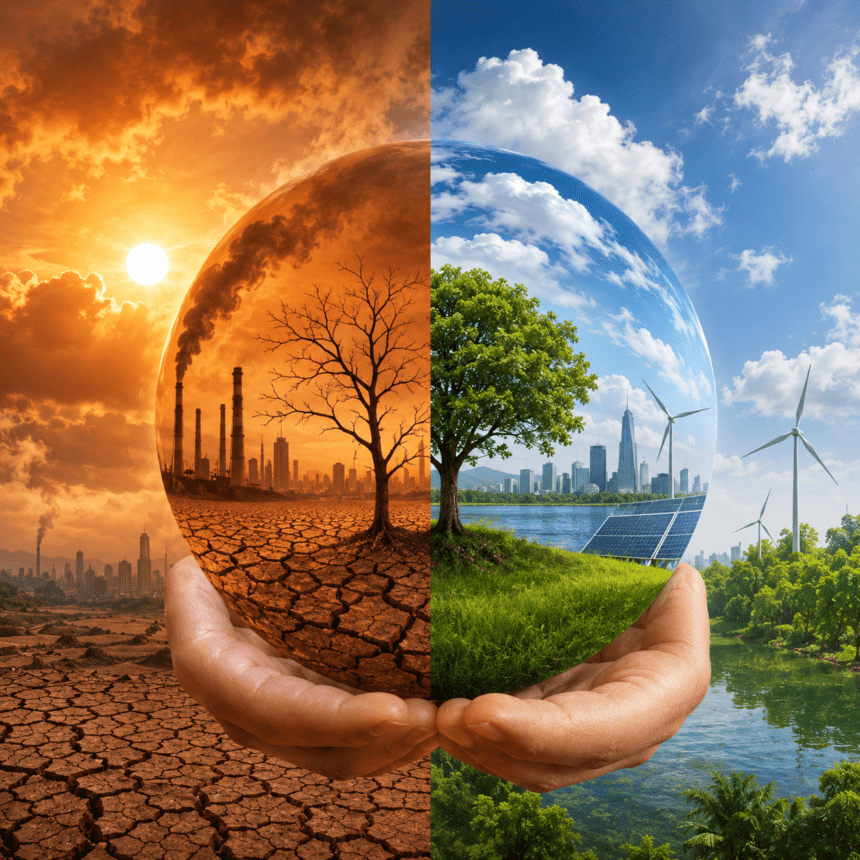
Pakistan is facing increasingly severe heatwaves, alongside rising water scarcity, erratic rainfall, urban flooding, crop failures, and worsening air quality. Experts warn that these interconnected issues are no longer isolated environmental events but part of a deepening climate crisis.
According to climate researcher Dr Muhammad Bilal Tahir, Pakistan is now experiencing climate change as a daily reality affecting public health, agriculture, infrastructure, and the economy. He notes that rising temperatures are reducing productivity, increasing electricity demand, and worsening water shortages across the country.
He emphasizes that climate change should no longer be seen only as an environmental issue but as a national development challenge requiring urgent, science-based, and practical action.
Dr Tahir highlights that Pakistan contributes less than 1% to global greenhouse gas emissions but remains among the most vulnerable countries to climate impacts such as floods, droughts, and heatwaves.
He further stresses the role of universities and research institutions, stating that academic work must move beyond theory and become solution-oriented, focusing on real-world climate challenges. He calls for interdisciplinary research in areas such as renewable energy, sustainable materials, water purification, and climate-resilient infrastructure.
He also urges reforms in education, recommending that climate literacy be included in all academic disciplines, including engineering, medicine, economics, and policy studies.
Experts believe Pakistan must shift from symbolic climate actions to practical innovation, technology development, and evidence-based policymaking to build long-term resilience.