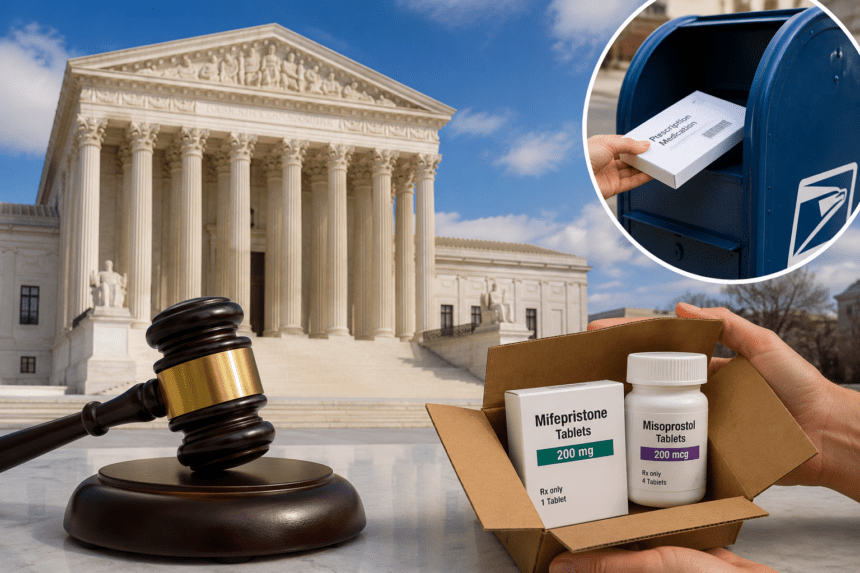
The Supreme Court has cleared the way for continued nationwide access to mifepristone, the medication used in the majority of U.S. abortions. In a unanimous ruling, the justices rejected a challenge brought by anti-abortion doctors who sought to roll back FDA regulations that allowed the pill to be sent by mail and prescribed via telehealth.
The court didn’t weigh in on the drug’s safety or the legality of abortion itself. Instead, the justices focused on a fundamental procedural question: standing. Justice Brett Kavanaugh, writing for the court, stated the plaintiffs lacked the legal right to sue because they couldn’t show they had been personally harmed by the FDA’s policy changes.
“The plaintiffs do not prescribe or use mifepristone,” Kavanaugh wrote. “They are pro-life doctors who seek to challenge the FDA’s regulation of mifepristone because they oppose abortion.” The decision keeps the current landscape of reproductive care intact, at least for now. Since the 2022 overturning of Roe v. Wade, mifepristone has become the primary target for legal challenges from conservative groups. By removing the requirement for an in-person doctor’s visit, the FDA had significantly expanded access, particularly in states where abortion clinics have closed. For the Biden administration, the ruling is a tactical victory, though it’s a temporary one.
The Justice Department had argued that allowing these doctors to challenge the FDA’s scientific findings would open a floodgate of lawsuits against agency decisions. “This is a win for patients who rely on telehealth,” said a spokesperson for a national reproductive health advocacy group.
“But the legal battle over mifepristone is far from over.” Anti-abortion organizations have already signaled they aren’t backing down. Other states, including Missouri, Kansas, and Idaho, have active lawsuits challenging the same FDA rules.
These cases are currently moving through lower courts, meaning the Supreme Court could be forced to confront the issue again in the near future. For now, the mail-order delivery of the drug remains legal under federal guidance. Millions of women in states with strict abortion bans have relied on these remote services to access care across state lines.
Today’s ruling ensures that pipeline stays open, but the underlying legal conflict remains unresolved.