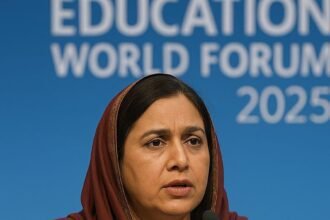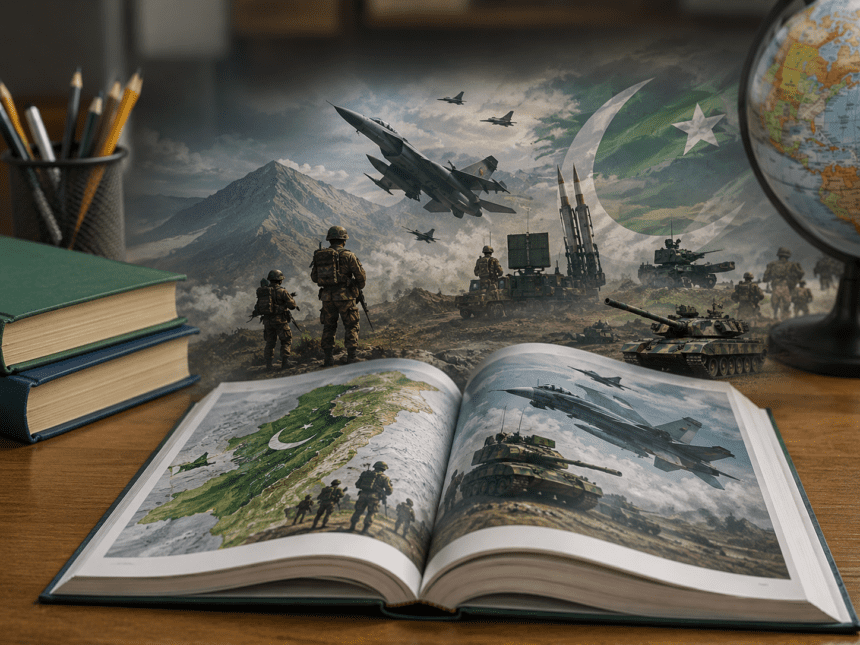
Pakistan’s federal education ministry has officially integrated the 2025 border conflict, officially designated as ‘Marka-e-Haq,’ into the national secondary school curriculum.
The update, confirmed by the Federal Board of Intermediate and Secondary Education (FBISE), aims to standardize the narrative surrounding the brief but intense military engagement.
Students in grades 9 through 12 will begin studying the conflict starting the upcoming academic session. The new module includes maps of the contested border regions, a timeline of the three-week escalation, and a detailed breakdown of the diplomatic maneuvers that led to the eventual ceasefire. Critics of the move point to the timing.
By formalizing a narrative for a conflict that ended less than a year ago, the government is moving faster than historical precedent usually allows. History textbooks typically undergo a cooling-off period to allow for declassified documents and objective analysis. This, however, is a departure from that norm. ”
We need the youth to understand the strategic realities of our border security,” said a senior official at the Ministry of Federal Education, speaking on condition of anonymity. He argued that waiting decades to teach current events leaves a void that foreign media often fills. The curriculum content focuses heavily on the defensive posture of the Pakistan military, citing specific tactical decisions made during the northern front engagements.
It also includes a section on the humanitarian impact, though it frames the displacement of border communities as a testament to the “resilience of the nation” rather than a failure of regional diplomacy. Education experts remain divided.
Some argue that teaching contemporary history is essential for civic engagement, while others fear the curriculum prioritizes nationalistic fervor over nuanced geopolitical study. “When you teach history while the ink is still wet on the ceasefire agreement, you aren’t teaching history you’re teaching policy,” says Dr. Arshad Mahmood, a political analyst who has reviewed the draft syllabus.
“A classroom should be a place for inquiry, not a repository for a singular, state-approved account of recent trauma.” The ministry has already begun distributing the updated textbooks to provincial boards. Teachers are expected to complete a three-day training program next month to ensure the material is delivered according to the official guidelines.
Whether this curriculum succeeds in fostering a deeper understanding of regional instability or simply hardens existing biases remains the central question for the coming school year. For now, the ‘Marka-e-Haq’ module is mandatory, and it will be appearing on final examinations by the spring of 2026.