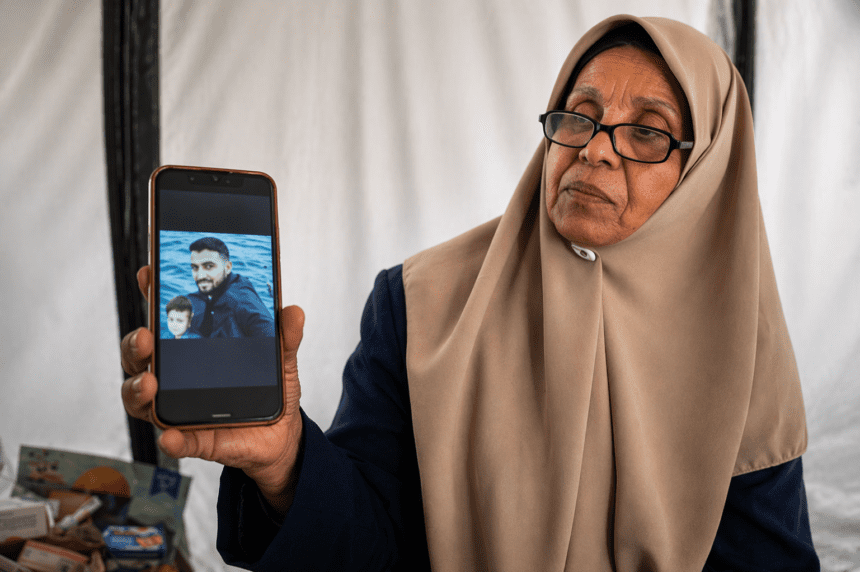
For one mother in Gaza, the war has settled into a cruel routine: waiting, asking, and getting almost nothing back. Her three sons are believed to be in Israeli custody, yet the family has been left without clear, reliable answers about where they are being held, what condition they are in, or when — if ever — they might come home. That uncertainty is the heart of the story, and it reflects a wider crisis facing many Palestinian families whose relatives disappeared into Israel’s detention system during the war.
Recent reporting has shown that for many families in Gaza, detention is only part of the trauma. The other part is silence. Relatives often say they receive conflicting information, no formal notice, and no dependable channel for confirming whether loved ones are alive, wounded, transferred, or dead. Al Jazeera reported in January that families were trapped in an “information void” around detained relatives from Gaza, while The New Humanitarian described the missing as an “open wound” for households suspended between hope and despair.
That is what gives this mother’s story its force. It is not only about three imprisoned sons. It is about what imprisonment becomes when there is almost no transparency around it. Every day without news stretches the punishment beyond the prison walls and into the family tent, the shelter, the queue for bread, the sleepless night. In Gaza, uncertainty itself has become part of the suffering. This framing is consistent with recent reporting that families describe the lack of information as a second layer of torment on top of war and displacement.
Humanitarian access is a major reason the fear runs so deep. Al Jazeera reported that the International Committee of the Red Cross has been barred from visiting detainees from Gaza, removing one of the few neutral mechanisms families would normally rely on for confirmation and contact. Without that channel, relatives are often left piecing together rumors, unofficial lists, and fragmentary accounts from released prisoners or social media posts.
There is also a broader pattern here. Al Jazeera’s March reporting on another Gaza mother, Tahrir Abu Mady, showed how families can be handed documents suggesting one fate while prisoner lists hint at another. In her case, a death certificate for her daughter existed, yet a detainee list suggested she might instead have been arrested. That kind of contradiction helps explain why so many mothers in Gaza remain stuck in a state of suspended grief, unable to mourn fully and unable to feel relief either.
So this headline lands with unusual weight because it captures something larger than one household’s pain. A Gaza mother fearing for her three imprisoned sons is also a portrait of a war in which disappearance, detention, and silence have fused together. She is waiting, yes. But the more devastating part is that she is waiting without answers, and that, for many families in Gaza, has become its own kind of prison.