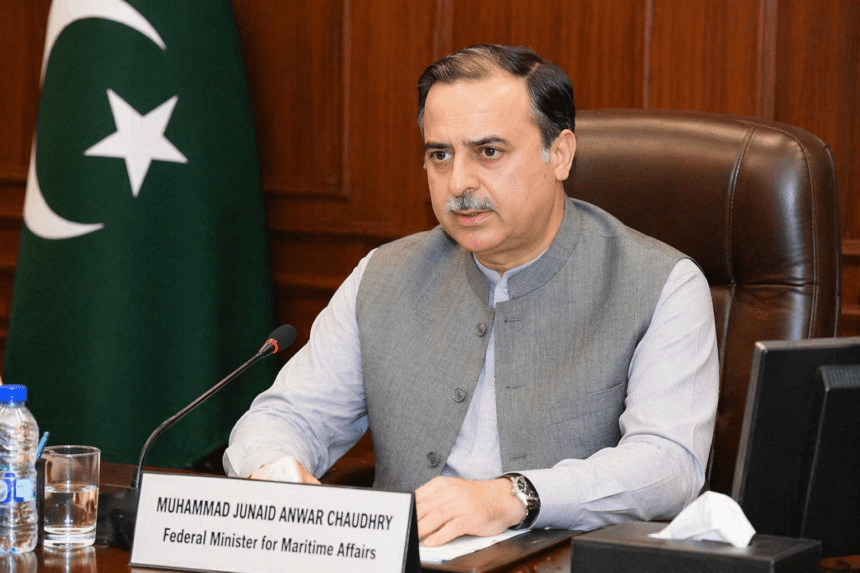
ISLAMABAD/KARACHI: Federal Minister for Maritime Affairs Muhammad Junaid Anwar Chaudhry chaired a meeting related to the Korangi Fisheries Harbor Board and underscored the government’s push to modernize the harbor, improve export standards and strengthen Pakistan’s blue economy, according to official statements and subsequent ministry briefings.
The policy direction coming out of the ministry has been fairly clear for months now: Korangi Fisheries Harbor Authority is being positioned as a central hub for seafood processing, handling and exports. In an official statement issued on April 17, 2025, the ministry said the minister had directed that the harbor be upgraded to meet international standards, arguing that better infrastructure and tighter operational management are necessary if Pakistan wants to expand seafood trade in serious markets abroad.
That message didn’t stop at broad promises. On May 28, 2025, the government said a wider revamp of Korangi Fish Harbor could generate more than $100 million in direct and indirect economic activity over five years, while also creating over 3,000 jobs across construction, logistics, fish processing and associated services. Officials also projected a 50% increase in seafood processing capacity once the modernization effort moves ahead at scale.
By January 10, 2026, the ministry had taken the plan a step further, announcing a proposed 100-acre, $80 million Seafood Processing and Export Zone at the Korangi Fisheries Harbor Authority. The official line was that the project would support value-added seafood exports, attract investment and give Pakistan a stronger foothold in the global seafood supply chain.
For the government, Korangi is no side issue. The harbor has repeatedly been described by maritime officials as a backbone institution for the country’s fishing industry, especially because it connects catch handling, processing and export activity in one ecosystem. The ministry has also linked Korangi’s revival to better governance, regulatory compliance and stronger environmental oversight in the marine sector.
That broader framing matters. Pakistan has been trying to sell the idea of a “blue economy” more aggressively, and Korangi fits neatly into that pitch. A functioning, internationally compliant fisheries harbor would not just help exporters; it could also improve cold-chain performance, reduce losses, create higher-value seafood products and make local operators more competitive in demanding overseas markets. That, at least, is the bet the ministry seems to be making.
Even so, one thing remains less clear in publicly indexed reporting: a full official readout of this specific board meeting’s agenda, attendance list and formal decisions was not readily available in the sources I could verify. What is clear, though, is the direction of travel. Under Chaudhry, Korangi Fisheries Harbor has moved from being a neglected fisheries asset to a flagship maritime reform project—one the government is presenting as a test case for export-led coastal development.