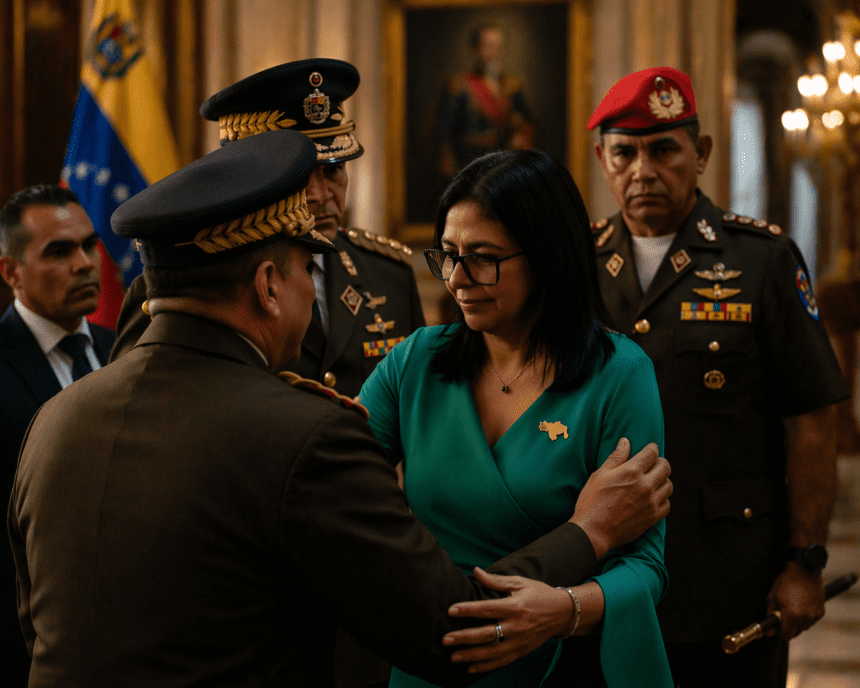
Venezuela’s new interim leader, Delcy Rodríguez, is increasingly turning against figures from Nicolás Maduro’s inner circle, signaling a power struggle inside the ruling establishment after Maduro’s removal. Reuters reported earlier that although Maduro was out, many of his top allies still retained influence, leaving uncertainty over who really controlled the country. More recent reporting says Rodríguez has begun distancing herself from Maduro loyalists and removing some of them from positions of power. Rodríguez rose to the presidency after Maduro’s capture in January 2026. The Associated Press reported that she was sworn in as interim president with backing from the Supreme Court and the military, giving her a formal route to power at a moment of deep instability. AP also noted that she had already built ties across parts of the state, including the economic and security apparatus, which helped strengthen her hand. The current tension appears to center on consolidation. Reports indicate that Rodríguez is no longer simply preserving Maduro’s old coalition, but is trying to reshape it by sidelining people who were once essential to keeping him in power. The Guardian reported on April 18 that she has been consolidating authority, removing Maduro loyalists, and presenting herself as a more pragmatic economic manager. That makes this more than a leadership change. It suggests a broader reordering inside Venezuela’s ruling camp, where survival now depends less on loyalty to Maduro personally and more on alignment with the new center of power. Analysts cited in recent coverage say the country may be moving not toward a full democratic transition, but toward a rebranded version of the same authoritarian system under different leadership. In practical terms, the purge matters because the officials now being pushed aside were among the same political and security figures who helped Maduro preserve control during years of sanctions, isolation, and domestic unrest. If Rodríguez keeps removing or weakening them, it could reduce the influence of old hardliners, but it could also trigger new infighting within the regime. Overall, the development shows that Maduro’s departure did not end the struggle for power in Venezuela. Instead, it appears to have opened a new phase in which his successor is trying to secure control by purging former allies, even those who once helped sustain the system he led.
Maduro’s Successor Moves Against Key Allies in Venezuela Power Struggle
Leave a Comment