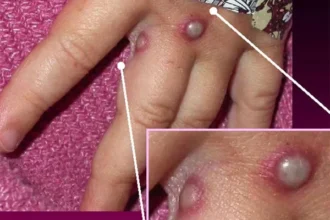
Monkeypox is a virus in which fever appears as an initial symptom, followed by the development of blisters on the body, swelling, and pain in muscles and head.
Public health inspector Professor Dr Saeed Khan discussed in detail the causes, precautions and treatment of monkeypox.
He said that monkeypox disease is caused by a virus of the same name, it spreads from animals and is transmitted from one person to another. Its initial symptoms are similar to flu, however these symptoms begin after 5 to 21 days.
So far, more than 300 cases of monkeypox have been reported in at least 20 countries worldwide, with most cases observed in Europe.
In response to a question, he said that the disease in Pakistan has come from abroad, for example from husband to pregnant wife and then to the unborn child, and after birth if the child is in an incubator, the germs can also grow there, which can further affect other children.
Initial symptoms of monkeypox include headache, muscle pain, fever and fatigue, which resemble common cold in the beginning. Within a few days of fever, red rashes appear on the face and then spread to other areas such as the palms of the hands and the soles of the feet.
It is worth noting that monkeypox was discovered in 1958 when a smallpox like disease began spreading among groups of monkeys used for research.
Scientists have not yet confirmed the exact source of the disease, but it is believed to spread from small rodents and squirrels in the rainforests of Africa.