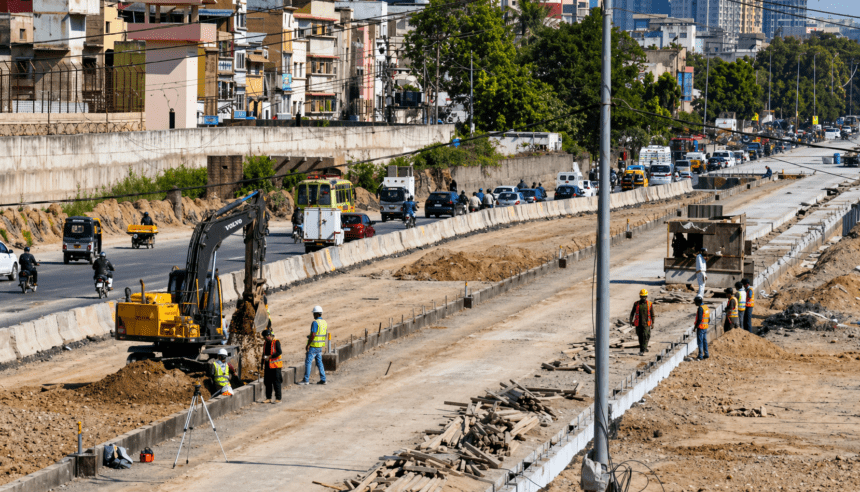
Karachi’s long-troubled Red Line BRT project has entered a tougher phase, with authorities moving to end the Lot-2 contract after months of stalled progress on one of the scheme’s most important stretches, according to recent reporting and official project records. Lot-2 covers the larger Mosamiyat-to-Numaish section, the part that has repeatedly drawn scrutiny because work there slowed sharply, at times almost to a standstill.
The termination, if carried through in full administrative terms, would mark a serious setback for a project already badly off schedule. The Red Line was launched with a 30-month construction timeline and had earlier been expected to finish by June 2024, but that deadline passed long ago. The Asian Development Bank’s project data also reflects a later project end date of June 30, 2026, underlining how far the timetable has slipped.
What pushed Lot-2 to this point was not one isolated snag. Recent reports said the section had been bogged down by recurring contractor disputes, very limited activity on site, and earlier payment disagreements that had already disrupted construction. On top of that, utility relocation and related coordination problems have haunted the wider Red Line corridor for months, making the project a daily frustration for commuters on University Road.
That’s the part that has really hurt public confidence. In January 2026, Sindh Senior Minister Sharjeel Inam Memon said the University Road and Safoora Road portions would be completed by March, while also blaming inflation for prolonging the work. By mid-April, though, Geo News reported that large stretches still showed little to no visible progress and that sluggish performance had created the possibility of contract termination.
The Red Line is not a minor corridor. Official project material describes it as a roughly 26.6-kilometre route intended to connect major urban areas from Malir Halt to Tower via University Road and Numaish, with an expected benefit for around 1.5 million people and projected daily ridership of about 350,000 passengers. TransKarachi, the public-sector company overseeing the system, describes the scheme as a $503 million project, while Sindh government material presents it as a flagship zero-emission mass transit corridor for Karachi.
So the stakes are high. Every fresh delay does more than stretch a construction calendar; it deepens traffic bottlenecks, prolongs road damage and diversions, and keeps Karachi waiting for a transport system that was supposed to ease movement on one of the city’s busiest arteries. With Lot-2 now effectively breaking down as a contract package, the next big question is whether authorities can quickly appoint a replacement or restructure the work without letting the entire Red Line drift even further. That final step has not yet been clearly set out in the latest public reporting.