By using this site, you agree to the Privacy Policy and Terms of Use.
Accept
Media HydeMedia Hyde
  • Home
  • Politics
  • Education
  • Entertainment
  • Sports
  • Blogs
  • Business & Commerce
  • Others
    • Religious
    • Metropolitan
    • Climate and Weather
Font ResizerAa
Media HydeMedia Hyde
Font ResizerAa
  • Home
  • Politics
  • Education
  • Entertainment
  • Sports
  • Blogs
  • Business & Commerce
  • Others
    • Religious
    • Metropolitan
    • Climate and Weather
Follow US
© 2026 Media Hyde Network. All Rights Reserved.
international

Trump reportedly weighs Congo option for Afghans who helped U.S. forces

Last updated: April 22, 2026 2:48 am
Mabruka Khan
Share
Trump reportedly weighs Congo option for Afghans who helped U.S. forces
SHARE

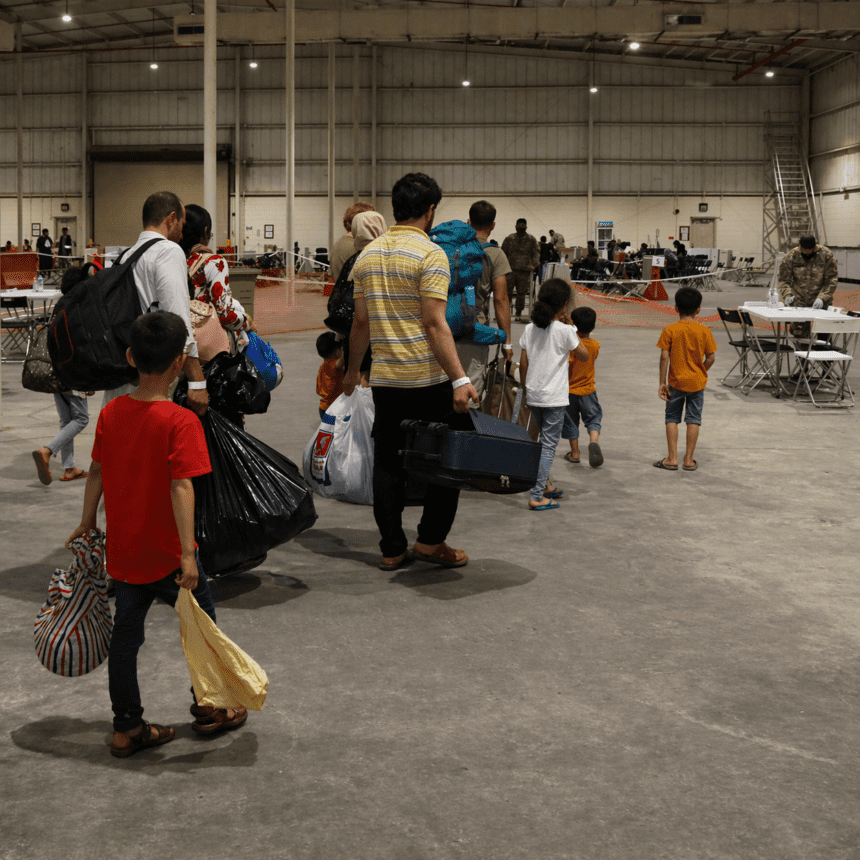
WASHINGTON: The Trump administration is reportedly exploring whether some Afghans who aided U.S. forces and are now stranded in the refugee pipeline could be sent to the Democratic Republic of Congo, a move that would open a new and deeply controversial chapter in America’s long, unfinished withdrawal from Afghanistan. The report lands against a wider backdrop in which Congo has already agreed to take some third-country deportees from the United States under a temporary arrangement announced this month.

What makes this especially sensitive is who these Afghans are. They are not being discussed as random migrants in the public debate, but as people who worked with the U.S. military or American-backed missions during the war and were later funneled into relocation channels that have since slowed, narrowed or stalled. Recent reporting says more than 1,000 Afghans who say they assisted the United States remain stuck in Qatar after the administration froze or disrupted parts of the relocation process.

The Congo angle is alarming to advocates because Kinshasa’s new agreement with Washington was framed around receiving third-country deportees whom the U.S. cannot or will not return directly to their home countries. Congolese authorities said the arrangement is temporary, the U.S. will cover the costs, and each case will be individually reviewed. Even so, rights groups and lawyers have raised serious questions about sending vulnerable people to a country dealing with conflict, instability and a major humanitarian crisis of its own.

So far, the public reporting suggests this is still a developing policy discussion rather than a finished program. But even the fact that Congo is being mentioned tells you something about how strained the Afghan resettlement system has become under current policy shifts. The administration has been under pressure from veterans’ groups and refugee advocates over Afghans left in limbo in places such as Qatar, the UAE and elsewhere, while separate moves to tighten protections for Afghans already in the U.S. have added to the sense of betrayal felt by many former American partners.

There is also a harsh political contradiction hanging over the story. Trump has at times publicly said he wanted to help Afghans who assisted American forces, and reports last year showed his comments raising hopes among families stranded abroad. At the same time, refugee pathways and immigration protections affecting Afghans have been squeezed in other parts of the system, leaving many unsure whether U.S. promises still mean much in practical terms.

For veterans who served in Afghanistan, this issue cuts deeper than routine immigration politics. Many have argued for years that Washington owes a direct moral debt to interpreters, contractors and other Afghan partners who took enormous risks on America’s behalf. A policy that reroutes some of those people to Congo instead of the United States would almost certainly be seen by those groups as not just bureaucratic improvisation, but a break with that promise. That reaction is not speculative in spirit, even if the exact Congo plan is still emerging, because veterans and advocates have already been warning that the U.S. is failing the very Afghans it once urged to trust it.

The immediate question now is whether these talks produce an actual transfer plan or remain a trial balloon inside a broader deportation and relocation strategy. Either way, the optics are grim: Afghans who helped American troops, years after the fall of Kabul, are still waiting to learn whether the country they backed will resettle them, abandon them, or send them somewhere else entirely.


Share This Article
Email Copy Link Print
Previous Article WASHINGTON/ISLAMABAD: President Donald Trump said Tuesday he was extending the ceasefire with Iran until Tehran’s leadership produces what he called a “unified proposal,” adding that the decision came at the request of Pakistan’s Field Marshal Asim Munir and Prime Minister Shehbaz Sharif. In a post cited by multiple outlets, Trump said the United States would hold off on further attacks on Iran while waiting for its leaders and representatives to come forward with a common negotiating position. The wording was striking, and not just because Trump publicly named both Pakistan’s civilian and military leadership. It underlined something that has been building for days: Pakistan is now firmly at the center of efforts to keep the U.S.-Iran track from collapsing altogether. AP reported that the original two-week truce had been due to expire Wednesday, while Islamabad was still trying to salvage another round of talks. That does not mean the crisis is close to being resolved. CBS reported that Trump extended the deadline even as uncertainty persisted over whether Iran would actually rejoin negotiations in Islamabad. The same coverage said Vice President JD Vance was expected to lead a U.S. negotiating team if talks resume, but Iranian participation remained unclear. So, in practical terms, Trump’s announcement buys time, not peace. It keeps the ceasefire alive a little longer and gives mediators room to work, but it also puts the burden squarely on Tehran. Washington is now signaling that the next move must come from Iran, and not in fragments. It wants one proposal, one line, one negotiating position. For Pakistan, the statement is politically important. Trump did not refer vaguely to “regional partners” or “friendly governments.” He named Munir and Shehbaz directly, which effectively credits Islamabad with helping prevent the immediate collapse of the truce. That is a notable diplomatic moment for Pakistan, especially as it tries to present itself as a serious intermediary rather than a bystander in a fast-moving regional conflict. Still, the pause looks fragile. AP said Iran had been hesitant to resume talks, and broader tensions were still high, including pressure around maritime routes and continued military signaling. So the extension should be read less as a breakthrough and more as a last-minute reprieve. The guns may stay quiet for now, but only because diplomacy has been given one more narrow opening. The immediate question now is simple: will Iran answer with a workable proposal, or will this ceasefire become just another temporary halt before the next round of escalation? That answer, more than Trump’s announcement itself, will decide whether this episode is remembered as the start of real negotiations or merely a delay in renewed conflict. Trump extends Iran ceasefire, says move came after request from Pakistan’s Munir and Shehbaz
Leave a Comment

Leave a Reply Cancel reply

Your email address will not be published. Required fields are marked *

Sponsored Ads

Stay Connected

FacebookLike
XFollow
InstagramFollow
YoutubeSubscribe
WhatsAppFollow
ThreadsFollow
WASHINGTON/ISLAMABAD: President Donald Trump said Tuesday he was extending the ceasefire with Iran until Tehran’s leadership produces what he called a “unified proposal,” adding that the decision came at the request of Pakistan’s Field Marshal Asim Munir and Prime Minister Shehbaz Sharif. In a post cited by multiple outlets, Trump said the United States would hold off on further attacks on Iran while waiting for its leaders and representatives to come forward with a common negotiating position. The wording was striking, and not just because Trump publicly named both Pakistan’s civilian and military leadership. It underlined something that has been building for days: Pakistan is now firmly at the center of efforts to keep the U.S.-Iran track from collapsing altogether. AP reported that the original two-week truce had been due to expire Wednesday, while Islamabad was still trying to salvage another round of talks. That does not mean the crisis is close to being resolved. CBS reported that Trump extended the deadline even as uncertainty persisted over whether Iran would actually rejoin negotiations in Islamabad. The same coverage said Vice President JD Vance was expected to lead a U.S. negotiating team if talks resume, but Iranian participation remained unclear. So, in practical terms, Trump’s announcement buys time, not peace. It keeps the ceasefire alive a little longer and gives mediators room to work, but it also puts the burden squarely on Tehran. Washington is now signaling that the next move must come from Iran, and not in fragments. It wants one proposal, one line, one negotiating position. For Pakistan, the statement is politically important. Trump did not refer vaguely to “regional partners” or “friendly governments.” He named Munir and Shehbaz directly, which effectively credits Islamabad with helping prevent the immediate collapse of the truce. That is a notable diplomatic moment for Pakistan, especially as it tries to present itself as a serious intermediary rather than a bystander in a fast-moving regional conflict. Still, the pause looks fragile. AP said Iran had been hesitant to resume talks, and broader tensions were still high, including pressure around maritime routes and continued military signaling. So the extension should be read less as a breakthrough and more as a last-minute reprieve. The guns may stay quiet for now, but only because diplomacy has been given one more narrow opening. The immediate question now is simple: will Iran answer with a workable proposal, or will this ceasefire become just another temporary halt before the next round of escalation? That answer, more than Trump’s announcement itself, will decide whether this episode is remembered as the start of real negotiations or merely a delay in renewed conflict.
Trump extends Iran ceasefire, says move came after request from Pakistan’s Munir and Shehbaz
Breaking
April 22, 2026
WASHINGTON: UnitedHealth has warned that the Trump administration’s planned Medicare obesity-drug pilot faces “notable challenges,” casting doubt over how smoothly the program can move ahead if major insurers stay cautious. Recent market reporting said the model depends heavily on participation from Medicare drug plans that cover most Part D enrollees, which makes the stance of large insurers especially important. The concern centers on a broader CMS effort to expand access to GLP-1 weight-loss medicines for seniors. Under CMS’s published framework, the longer-term BALANCE Model would begin in Medicare Part D in January 2027, while a temporary Medicare GLP-1 Bridge is designed to start earlier and give eligible beneficiaries short-term access before that main model begins. What makes this a little more complicated is that the short-term bridge and the longer pilot are not the same thing. CMS says the Medicare GLP-1 Bridge operates outside the normal Part D coverage and payment flow, meaning Part D sponsors are not directly involved in that bridge arrangement. In other words, insurer participation is a much bigger issue for the 2027 BALANCE rollout than for the bridge itself. That distinction matters because investors and drugmakers are watching this closely. Reports said shares of obesity-drug makers fell after UnitedHealth’s comments, largely because Medicare coverage is seen as a huge growth opportunity for drugs such as Wegovy and Zepbound. If major insurers hesitate, the program could struggle to achieve the scale CMS appears to want. There is already some evidence of resistance. MarketWatch reported that CVS Health has opted out, while UnitedHealth is still evaluating the structure and discussing possible changes with Medicare officials. That does not mean the program is dead, not yet anyway, but it does suggest the administration may need to revise the design or sweeten the terms if it wants broader insurer buy-in. The bigger backdrop here is cost. Medicare has long been wary of broad obesity-drug coverage because GLP-1 therapies are expensive and potentially involve very large patient populations. Earlier policy debates around these drugs were shaped by concerns that wide coverage could drive up federal spending sharply, even as supporters argued the medicines could reduce longer-term health costs tied to obesity. So the headline problem for CMS is pretty straightforward: it has created a short-term bridge that can move without direct Part D plan involvement, but the more ambitious long-term Medicare model still appears to need insurers on board. UnitedHealth’s warning does not shut the door, but it does signal that one of the industry’s biggest players thinks the current setup may not be ready for easy launch.
UnitedHealth raises red flags over Medicare obesity-drug pilot
Headline Health
April 22, 2026
COVID shots, newer vaccines in limbo after US court halts Kennedy’s advisory panel
Health
April 22, 2026
WASHINGTON/ISLAMABAD: President Donald Trump said the ceasefire with Iran could remain in place until Tehran submits proposals and negotiations are wrapped up, though the latest reporting suggests the truce is still shaky and could unravel quickly if talks stall. AP reported Tuesday that the current two-week ceasefire was due to expire Wednesday, with U.S. and Iranian officials signaling possible new talks in Islamabad even as both sides warned they were ready to resume fighting without a deal. The line from Trump adds a bit of breathing room, at least on paper. CBS reported that he indicated the ceasefire would continue until discussions are concluded, but the same round of coverage also showed growing uncertainty over whether Iran would actually send a delegation for the next phase of talks in Pakistan. By Tuesday evening in Pakistan, officials were still waiting for formal confirmation from Tehran. That uncertainty has become the real story now. While Trump has publicly said senior U.S. officials, including Vice President JD Vance and envoy Steve Witkoff, are heading to Pakistan for another possible round of negotiations, Iranian officials have pushed back against the idea of negotiating under pressure. Recent reporting says Tehran has not officially confirmed participation, and Iranian public messaging has stressed that talks cannot proceed under threats or coercion. Pakistan, meanwhile, has emerged as the central mediator in this phase of the crisis. Multiple recent reports say Islamabad has been trying to keep the ceasefire alive and host a second round of U.S.-Iran talks, following earlier efforts that helped open a diplomatic channel after the fighting. That mediation role has given Pakistan unusual visibility in a conflict that has rattled the wider region and raised fears over shipping and energy security. Still, nobody seems to be pretending this is settled. AP described the talks as uncertain on the eve of the ceasefire deadline, while other live updates showed that the next meeting could be delayed or even collapse if Iran refuses to attend. That leaves Trump’s statement looking less like a firm peace breakthrough and more like a conditional extension: the guns stay quiet a little longer, but only if diplomacy starts moving. The main pressure point remains whether Tehran will put forward terms both sides can work with. Earlier reporting said Trump had treated an Iranian 10-point plan as a possible basis for negotiations, but key sticking points remain unresolved, including broader security demands and the terms of any longer-term settlement. So for now, the ceasefire is alive, yes, but it’s living hour to hour. That is why Trump’s latest remark matters. It signals he is willing to keep the pause in place a bit longer, yet it also makes clear that Washington wants something concrete from Tehran, not just more delay. Whether Iran responds with proposals, or with another refusal, will probably decide whether this fragile ceasefire becomes a negotiation track or slips back into open conflict.
Trump says Iran ceasefire can continue, but only until Tehran puts forward proposals
international
April 22, 2026
Nawaz pitches development as PML-N gears up for Gilgit-Baltistan vote
Politics
April 22, 2026
Iran Tensions Rise: Vance’s Talks Trip Paused for Now
Headline
April 22, 2026

You Might Also Like

international

Trump Says He Wants Buyer for Spirit Airlines as Carrier’s Crisis Deepens

By
Amna Iqbal
international

Kuwait Warns Firms of Fines Up to KD10,000 Over Ownership Disclosure Breaches

By
Amna Iqbal
international

JD Vance’s Pakistan Trip Put on Hold as Iran Talks Slip Into Uncertainty

By
Amna Iqbal
Media Hyde Media Hyde Dark
Facebook Twitter Youtube Rss Medium

About US

Media Hyde Network: Your instant connection to breaking stories and live updates. Stay informed with our real-time coverage across politics, tech, entertainment, and more. Your reliable source for 24/7 News.

Top Categories
  • Headline
  • Politics
  • Entertainment
  • Education
  • Sports
  • Religious
  • Metropolitan
  • Climate and Weather
Usefull Links
  • Contact Us
  • Disclaimer
  • Privacy Policy
  • Cookies Policy
  • Advertising Policy
  • Terms & Conditions

© 2025 Media Hyde Network. All Rights Reserved.

Welcome Back!

Sign in to your account

Username or Email Address
Password

Lost your password?