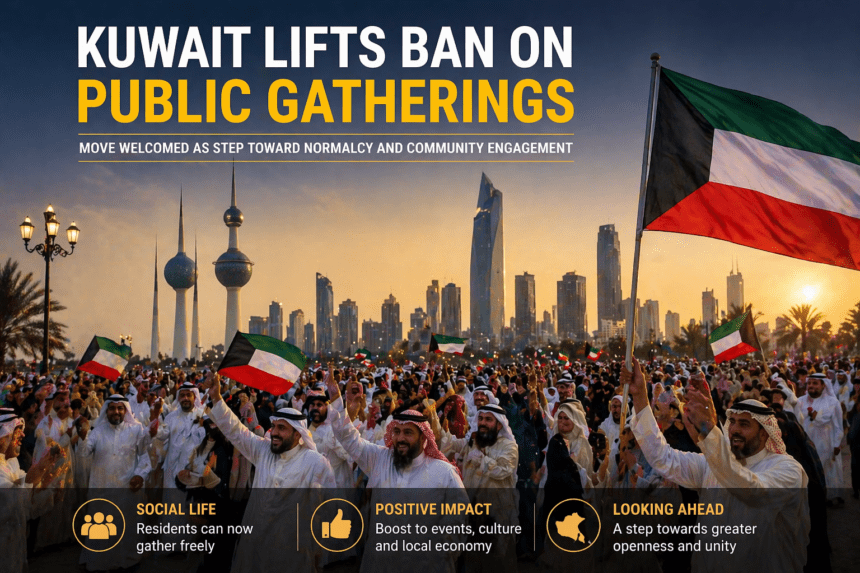
Kuwait has moved to lift its temporary restrictions on public gatherings after earlier security-related measures had halted weddings, plays, parties, and similar events during the Eid period. The earlier ban was announced by the Interior Ministry in March as a precaution tied to domestic and regional security concerns and was described at the time as temporary and subject to conditions on the ground.
The restrictions had come at a tense moment, with Kuwaiti authorities saying the goal was to reduce large gatherings and strengthen public safety amid wider regional instability. Reports at the time said the measures covered social events and entertainment activities and were framed as preventive rather than permanent.
The reported lifting of the ban signals a degree of confidence that the immediate security situation has eased enough for public life to return more fully to normal. Even so, the available search results found are much clearer on the original ban than on the official wording of its withdrawal, so that part should be treated as based on current reporting rather than a clearly surfaced formal government statement in the material reviewed here.
For residents and businesses, especially those linked to events and hospitality, the change would be significant. The original restrictions affected weddings, celebrations and performances, so lifting them would reopen space for social and commercial activity that had been put on hold during the precautionary period.
The move also reflects a familiar pattern in Gulf security policy: temporary public-safety restrictions imposed quickly during regional flare-ups, then eased once authorities judge the risk to have receded. In Kuwait’s case, the earlier measures were explicitly tied to security concerns, not to a standing long-term policy against public events.