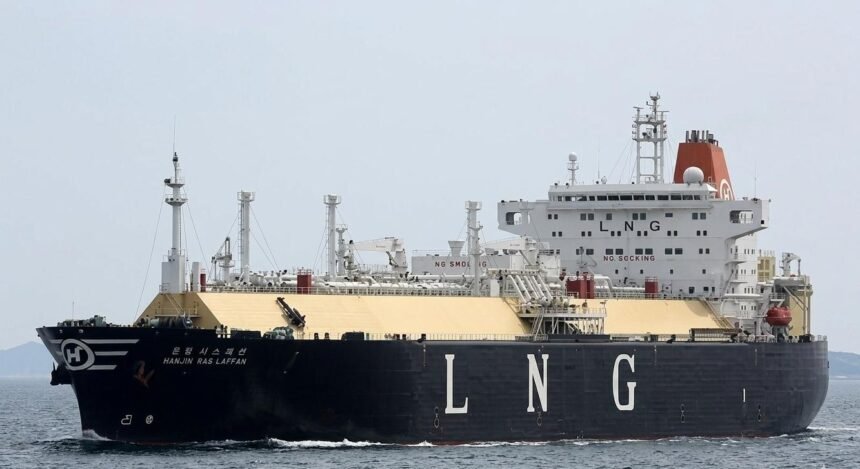
Pakistan’s energy planners are back in a place they had hoped to avoid: the spot LNG market, where cargoes have turned brutally expensive after the Strait of Hormuz disruption scrambled Gulf supply and hit Qatar’s exports. The pressure is immediate. Islamabad has been weighing fresh LNG purchases to plug supply gaps ahead of summer demand, even as Petroleum Minister Ali Pervaiz Malik acknowledged that spot cargo prices had jumped to roughly $20 to $30 per mmBtu during the crisis.
That is why the reported $18.4 per mmBtu level matters. It sits just below the upper end of the price shock now being discussed in the market, and it underlines how quickly Pakistan’s bargaining position has worsened. I could verify the broader squeeze, Pakistan’s return to spot buying, and the minister’s warning about steep premiums. I could not independently verify, from a strong primary public document in the material reviewed, whether $18.4/mmBtu refers to a finalized awarded cargo, the lowest bid in a tender, or an indicative deal level. So the number is best framed, for now, as a reported transaction level in a sharply stressed market, not yet as a fully documented official award.
Still, the broader story is not in doubt. Pakistan’s LNG stress is tied directly to the Hormuz shock and the wider war-related disruption around Qatar. S&P Global says the effective closure of the strait halted LNG tanker traffic, temporarily disrupting about one-fifth of global LNG supply and pushing Asia-Pacific buyers into the front line of the crisis. The same analysis says South Asian importers, including Pakistan, are especially exposed because they depend heavily on Qatari and UAE LNG and have limited storage to cushion the blow.
For Pakistan, that exposure is more than theoretical. Reuters reported on April 16 that the country was considering spot purchases to offset supply disruptions caused by the war, while preferring government-to-government arrangements to avoid the worst of the premium. The minister’s wording was telling: Pakistan would buy only if prices were acceptable for the power sector. That’s a careful way of saying the market is there, but it hurts.
The supply side has been rough for weeks. Reporting carried by Business Recorder said force majeure linked to the conflict disrupted Qatari LNG shipments and that several scheduled March cargoes did not arrive, deepening concern for Pakistan’s power and industrial sectors. Another Reuters report published in late March said Pakistan had already moved into rationing mode, including a four-day work week, as the LNG shock fed directly into domestic energy management.
There is a grim irony here. Not long ago, Pakistan was dealing with the opposite problem: too much contracted LNG relative to weak domestic uptake. By mid-April, though, S&P Global described the country’s gas balance as transformed from oversupplied to supply-constrained because the loss of Qatari volumes removed a critical source of fuel for power generation and industry. Pakistan’s LNG import bill for the first nine months through March 31 was actually lower year-on-year, at $1.884 billion versus $2.682 billion a year earlier, but that softer import value now looks less like relief and more like the calm before a much costlier buying cycle.
And Pakistan is already testing the market again. LNG Journal reported that Pakistan LNG Ltd. issued a spot tender for three cargoes for delivery at Port Qasim, its first such tender in nearly three years. That alone says a lot. Countries do not come back to the spot market in a crisis because they want optionality; they come back because they need molecules.
If the reported $18.4/mmBtu level proves to be the clearing price Pakistan accepted, the implications are serious. It would be far above the sub-$10 territory that had earlier eased pressure on importers, and it would feed straight into the old Pakistani dilemma: either pass expensive regasified LNG through to power and industrial users, absorb more fiscal strain, or curtail demand. None of those options is painless. The country has lived this story before, just not with the same geopolitical intensity.
The deeper issue is structural. Pakistan remains heavily reliant on imported LNG at a time when domestic gas output is declining and regional energy routes have become visibly fragile. S&P Global analysts expect the country’s LNG demand to keep rising over the long term as indigenous production falls away. That means the current shock is not just a bad month in the market. It is also a reminder that Pakistan’s energy security still leans too heavily on one corridor, one region, and a handful of suppliers.
For now, the headline writes itself: a geopolitical choke point has turned into a pricing trap, and Pakistan is paying up. Whether the exact figure is $18.4/mmBtu or a little above it, the direction is the same. Cheap LNG is gone, at least for the moment, and every cargo now looks like a test of how much financial pain the country can absorb before the lights start flickering again.