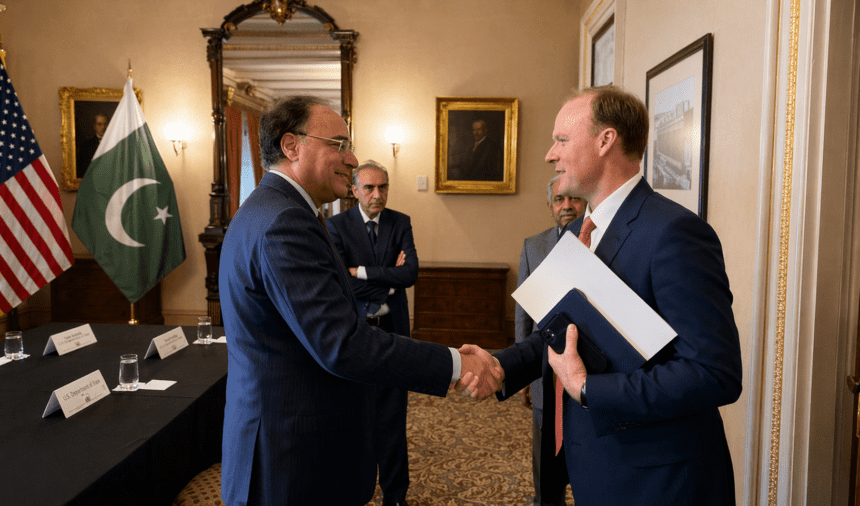
WASHINGTON, D.C. — Pakistan’s Finance Minister Muhammad Aurangzeb met U.S. Treasury official Francis Brooke in Washington during the 2026 World Bank-IMF Spring Meetings, with both sides discussing broader economic cooperation, investment prospects, and ways to deepen financial engagement between Pakistan and the United States. The meetings are being held in Washington from April 13 to April 18, 2026.
The meeting comes as Aurangzeb is in the United States for a packed round of high-level engagements aimed at presenting Pakistan’s reform agenda and economic outlook to global policymakers, investors, and financial institutions. Before arriving in Washington, he also stopped in Boston for the Pakistan Conference at Harvard and related policy discussions.
According to Pakistan’s official statements around the trip, the finance minister has been using these meetings to highlight what Islamabad sees as improving macroeconomic stability, a push for structural reforms, and a renewed effort to attract foreign capital into key sectors of the economy. In recent outreach, his message has centered on reform momentum, growth, and emerging opportunities for outside investors.
One area that has drawn particular attention is U.S. interest in Pakistan’s minerals and energy sectors. Recent reporting indicates Pakistan has been pitching American investment in untapped mineral resources and related projects as part of a wider attempt to move the relationship beyond routine trade talks and toward longer-term investment partnerships.
Brooke’s role also adds weight to the meeting. The U.S. Treasury’s officials page lists Francis Brooke as serving in the Office of the Deputy Secretary in a performing-duties capacity, while also holding international affairs responsibilities. That makes the conversation more than a ceremonial courtesy call; it fits into Pakistan’s wider economic diplomacy effort in Washington at a moment when it is trying to keep reform credibility intact and open doors for investment.
Even if no immediate deal was announced, meetings like this often matter for what comes next: policy coordination, investor confidence, technical engagement, and the tone of future bilateral economic talks. For Pakistan, the signal from Washington this week is pretty clear — the government wants to show that it is not just seeking short-term financial breathing room, but trying to build a longer runway for trade, investment, and strategic economic cooperation with the United States.