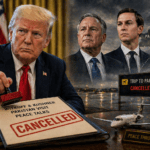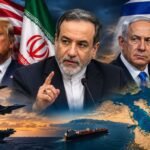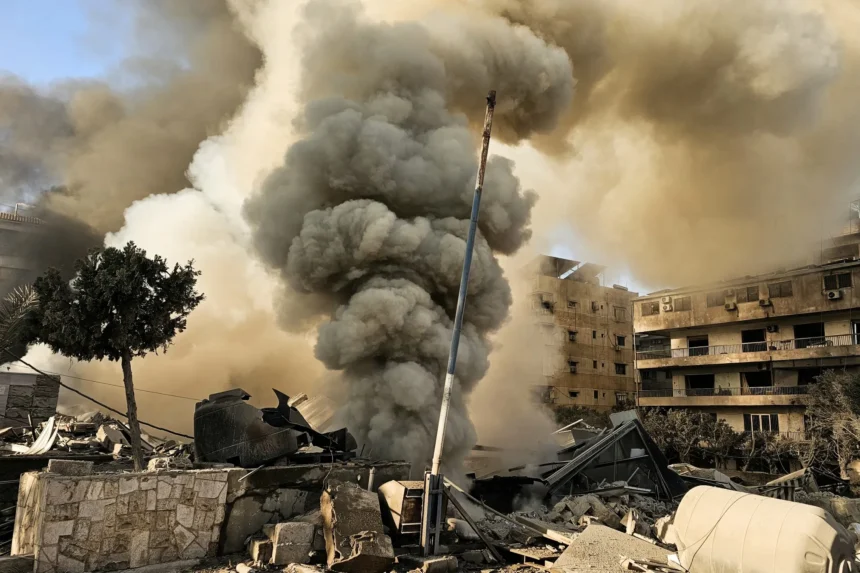
The 2026 U.S. Isr@_eli military campaign against Ir@n has rapidly evolved from a targeted strike into a crisis with far reaching global consequences. What began as an effort to curb Ir@n’s nuclear ambitions now threatens to destabilize the Middle East, disrupt global energy markets, and pull major world powers into a prolonged and uncertain conflict. As tensions rise, one pressing question echoes louder than ever: how does this war actually end?
The Big Picture: A Conflict Expanding Beyond Its Goals
The joint U.S. Isr@_eli operation, launched on February 28 under Operation Epic Fury, initially focused on Iran’s leadership, missile infrastructure, and military capabilities. Official objectives included halting Iran’s nuclear progress, weakening its proxy networks, and neutralizing its naval strength.
While these strikes may have delayed potential threats, they have also triggered immediate instability. Instead of resolving tensions, the operation has opened the door to retaliation, cyber warfare, and economic disruption creating risks that extend far beyond Iran’s borders.
Inside Iran: Political Uncertainty and Rising Divisions
The sudden death of Supreme Leader Ali Khamenei and the controversial rise of his son Mojtaba Khamenei have shaken Iran’s political structure.
For decades, centralized leadership helped maintain internal control. Now, the country faces deep divisions:
- Hardliners demand revenge and tighter control
- Reformists push for political change, with some supporting Reza Pahlavi
Ethnic diversity within Iran Persians, Kurds, Baloch, and others adds another layer of complexity. If the regime weakens further, the risk of internal conflict or even fragmentation increases significantly. A collapse could also trigger a massive refugee crisis affecting neighboring countries and Europe.
Regional Fallout: Proxy Wars and Energy Threats
Iran’s response has not relied solely on conventional warfare. Instead, it has turned to asymmetric tactics:
- Drone and missile attacks on U.S. bases in Gulf countries
- Increased activity from allied groups like Hezbollah and the Houthis
These actions have widened the conflict across multiple fronts, forcing the U.S. and its allies to stretch their resources.
At the same time, disruptions near the Strait of Hormuz a critical global oil route have driven up energy prices worldwide. Even minor instability in this region has ripple effects across global markets, making the conflict not just regional, but economic in scale.
Global Impact: A Strategic Shift in Power
The war is also reshaping global geopolitics. While the U.S. focuses on Iran:
- Russia gains leverage by strengthening its economy through rising oil prices and reduced Western pressure
- China benefits from diverted U.S. attention and continues supporting Iran economically and strategically
This shift risks weakening U.S. influence in other critical regions, including Eastern Europe and the Indo Pacific. It also raises concerns about future conflicts, particularly around Taiwan.
The Core Problem: No Clear Endgame
Despite early tactical successes, the larger question remains unanswered: what does victory look like?
Without a clear strategy for ending the conflict, the war risks becoming another prolonged engagement costly in both resources and human lives. History has shown how easily limited interventions can spiral into long-term military commitments.
The Way Forward: Diplomacy Over Escalation
Experts suggest that the U.S. should avoid deepening military involvement and instead focus on:
- Strengthening international cooperation through organizations like the UN
- Building regional security partnerships
- Prioritizing diplomatic solutions over military escalation
A balanced approach could reduce tensions, prevent wider conflict, and protect global stability.
Conclusion: A Defining Moment
This war is more than a regional conflict it is a test of global leadership and strategic decision making. Short term military gains may offer immediate results, but long term peace will depend on diplomacy, cooperation, and restraint.
As the situation continues to unfold, one question remains at the heart of it all: can the world step back from the brink before this conflict grows into something far more dangerous?