By using this site, you agree to the Privacy Policy and Terms of Use.
Accept
Media HydeMedia Hyde
  • Home
  • Politics
  • Education
  • Entertainment
  • Sports
  • Blogs
  • Business & Commerce
  • Others
    • Religious
    • Metropolitan
    • Climate and Weather
Font ResizerAa
Media HydeMedia Hyde
Font ResizerAa
  • Home
  • Politics
  • Education
  • Entertainment
  • Sports
  • Blogs
  • Business & Commerce
  • Others
    • Religious
    • Metropolitan
    • Climate and Weather
Follow US
© 2026 Media Hyde Network. All Rights Reserved.
internationalTravel

In Japan, the fight is on against unruly tourists

Last updated: April 26, 2026 8:54 pm
Mabruka Khan
Share
In Japan, the fight is on against unruly tourists
SHARE

TOKYO — Japan spent years trying to bring more visitors in. Now, in some of its most famous destinations, the struggle is about how to keep tourism from overwhelming everyday life.

The pressure is easy to see in the numbers. Japan recorded a record wave of inbound travel in 2025, and the national government has openly acknowledged that some destinations are dealing with overcrowding, broken rules and growing friction between visitors and residents. In a policy update published this month, the Japan Tourism Agency said concentrated tourism in certain places and time periods has led to “excessive congestion” and “manners violations” that affect locals’ quality of life and can also reduce visitor satisfaction.

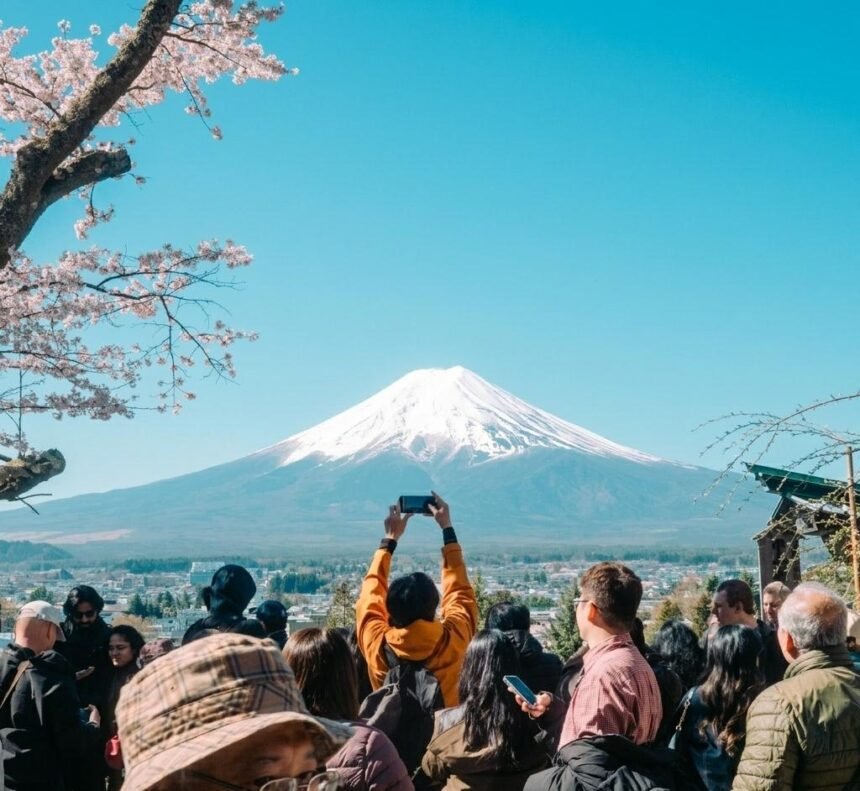
That fight is playing out most visibly in postcard-pretty places that have become social-media magnets. Near Mount Fuji, city officials in Fujiyoshida scrapped this year’s cherry blossom festival after warning that bad tourist behavior had become too disruptive to residents. Officials cited trespassing, littering, traffic problems and other conduct that, in their view, had crossed a line. AP reported that the town was also stepping up security and limiting access in peak periods as it tried to contain the damage.

Around Mount Fuji more broadly, authorities have moved from warnings to firmer controls. Yamanashi Prefecture says the 2026 climbing season will again run from July 1 to September 10, with reservations and managed access continuing as part of a wider effort to handle crowding and safety on the mountain. That follows earlier steps such as gates, fees and limits aimed at reducing dangerous rush climbs and easing pressure on the most heavily used routes.

Kyoto, maybe the clearest symbol of Japan’s tourism boom and backlash, has already taken action in its historic Gion district. Tourists were barred from some private alleyways after repeated complaints that visitors were ignoring signs, entering private spaces and harassing geiko and maiko for photographs. It was one of those moments that made the broader problem feel less abstract. This was not just about crowds. It was about boundaries.

Elsewhere, the response has become even more visible. In Otaru, on the northern island of Hokkaido, authorities deployed security guards to control tourists crowding a popular photo spot after risky behavior and congestion raised safety concerns. The issue there was not simply noise or inconvenience; local officials were responding to the real danger created when visitors chased the perfect image in narrow, exposed areas.

Tokyo’s message, at least on paper, is that Japan does not want to shut the door. It wants tourism to keep growing, but in a way that spreads visitors out and makes destinations more livable. The national government says it is supporting local measures to prevent and suppress overtourism, while encouraging communities to design rules that fit local conditions. That sounds tidy. On the ground, it is messier. Some towns are putting up barriers, some are hiring guards, some are restricting access, and some are simply canceling events they once promoted.

The tension at the center of all this is pretty stark. Tourism is good for business, jobs and local tax revenue. But when busloads of visitors block roads, wander into private property, harass performers, ignore smoking rules or treat neighborhoods like open-air film sets, the economic argument starts to wear thin for the people who actually live there. That is why Japan’s current push is not really a war on tourists. It is a campaign against the idea that being a tourist excuses anything.


Share This Article
Email Copy Link Print
Previous Article Trump likely was target in White House Correspondents’ dinner shooting, officials say Trump likely was target in White House Correspondents’ dinner shooting, officials say
Next Article ‘The Mummy 4’ set to return with Brendan Fraser and Rachel Weisz ‘The Mummy 4’ set to return with Brendan Fraser and Rachel Weisz
Leave a Comment

Leave a Reply Cancel reply

Your email address will not be published. Required fields are marked *

Sponsored Ads

Stay Connected

FacebookLike
XFollow
InstagramFollow
YoutubeSubscribe
WhatsAppFollow
ThreadsFollow
First Ray Films Takes Six-Title Slate to Cannes as Anshuman Jha’s Indie Banner Moves Into Its Second Decade
Entertainment
April 28, 2026
NASA’s latest look at the Eye of the Sahara reveals its true origins
information
April 28, 2026
Four of Mumbai family die after suspected food poisoning
Health
April 28, 2026
Iran Prioritizes Strait of Hormuz Over Nuclear Talks in New Proposal
international
April 28, 2026
Rising Cases of HIV in the Country Reach Parliament
Health
April 28, 2026
Outstanding Services in Cardiology, Chinese Professor Awarded Sitara-e-Pakistan
Health
April 28, 2026

You Might Also Like

PARIS — French President Emmanuel Macron said Tuesday that France will help Lebanon prepare for negotiations with Israel, throwing Paris more directly behind a diplomatic push that both sides hope can keep a shaky ceasefire from collapsing. The pledge came after Macron met Lebanese Prime Minister Nawaf Salam in Paris on April 21, 2026, with both men calling for talks aimed at reinforcing the truce and easing pressure along the border. The message from Paris was fairly blunt: diplomacy has to move faster than events on the ground. Macron said securing the truce in Lebanon remains a priority, while Salam said Beirut is still committed to a political route — but only if Israel fully withdraws and Lebanese sovereignty is respected. That gives the talks a familiar tension from the outset: everybody says they want calm, but each side is attaching hard conditions to what comes next. What makes this moment different is that actual contact has already started. Earlier in April, Lebanon and Israel held their first direct diplomatic talks in decades in Washington, a notable step for two countries that remain formally at war. Those talks lasted more than two hours, according to AP, and were seen as an opening rather than any kind of breakthrough. Still, even getting both sides into the same room was a shift. A month ago, that would have sounded like a long shot. France is trying to carve out a role around that opening, even if it is not at the center of the U.S.-led channel. Reuters, in a report carried by AOL, said Macron offered French help in preparing Lebanese authorities for the negotiations despite Paris not being directly involved in the current track. That matters because France has longstanding ties to Lebanon and has already tried in recent months to position itself as a possible facilitator for Lebanon-Israel contacts. None of this is happening in calm conditions. The ceasefire itself is fragile, and that word keeps showing up for a reason. AP reported that Macron and Salam framed negotiations as a way to shore up that truce, not celebrate it. In other words, this is less about a peace moment and more about damage control — an attempt to stop cross-border violence from flaring back into a wider war. There is another layer here too: France’s own stake in Lebanon’s security picture has grown more personal and more political. AP reported that a French peacekeeper serving with the U.N. mission in southern Lebanon was recently killed, with France and UNIFIL blaming Hezbollah, which denied responsibility. Macron also signaled France could support a future peacekeeping arrangement if the current UNIFIL mandate expires later this year. That does not make France a neutral bystander. It makes Paris a country with skin in the game. For Lebanon, Salam’s visit was about more than symbolism. It was also about trying to strengthen Beirut’s hand before any deeper round of talks. That is how the Reuters report framed the meeting, and it fits the broader reality: Lebanon wants diplomatic backing, but it also wants guarantees that negotiations will not simply formalize Israeli military leverage on the ground. Israel, for its part, has shown little appetite for giving France a central seat. Recent reporting from The Times of Israel said Jerusalem has effectively boxed Paris out of the current Lebanon track, a sign that Macron’s activism is not automatically welcome everywhere. So France may end up playing the role of outside backer rather than direct broker, at least for now. That is still useful, but it is not the same thing as controlling the process. That leaves the region in an awkward, in-between place. The channels are open. The rhetoric is cautious. The fighting has eased, but nobody seems ready to pretend the danger is over. Macron’s offer to help Lebanon prepare for talks is significant because it tries to turn a brief diplomatic opening into something sturdier. Whether that works depends on what happens next — in Washington, along the border, and in the political calculations of Beirut and Jerusalem. Right now, the talks look less like a grand peace effort and more like a narrow bridge built over very thin ice.
international

Macron says France will help Lebanon get ready for talks with Israel

By
Mabruka Khan
Headlineinternational

Canada citizenship-by-descent rules draw renewed attention from Americans

By
Haris Ali
international

Bahrain Revokes Citizenships as Security Crackdown Continues

By
Ayan Ahmed
Iran’s Araghchi returns to Pakistan for second visit in two days amid flurry of regional diplomacy
international

Iran’s Araghchi returns to Pakistan for second visit in two days amid flurry of regional diplomacy

By
Mabruka Khan
Media Hyde Media Hyde Dark
Facebook Twitter Youtube Rss Medium

About US

Media Hyde Network: Your instant connection to breaking stories and live updates. Stay informed with our real-time coverage across politics, tech, entertainment, and more. Your reliable source for 24/7 News.

Top Categories
  • Headline
  • Politics
  • Entertainment
  • Education
  • Sports
  • Religious
  • Metropolitan
  • Climate and Weather
Usefull Links
  • Contact Us
  • Disclaimer
  • Privacy Policy
  • Cookies Policy
  • Advertising Policy
  • Terms & Conditions

© 2025 Media Hyde Network. All Rights Reserved.

Welcome Back!

Sign in to your account

Username or Email Address
Password

Lost your password?