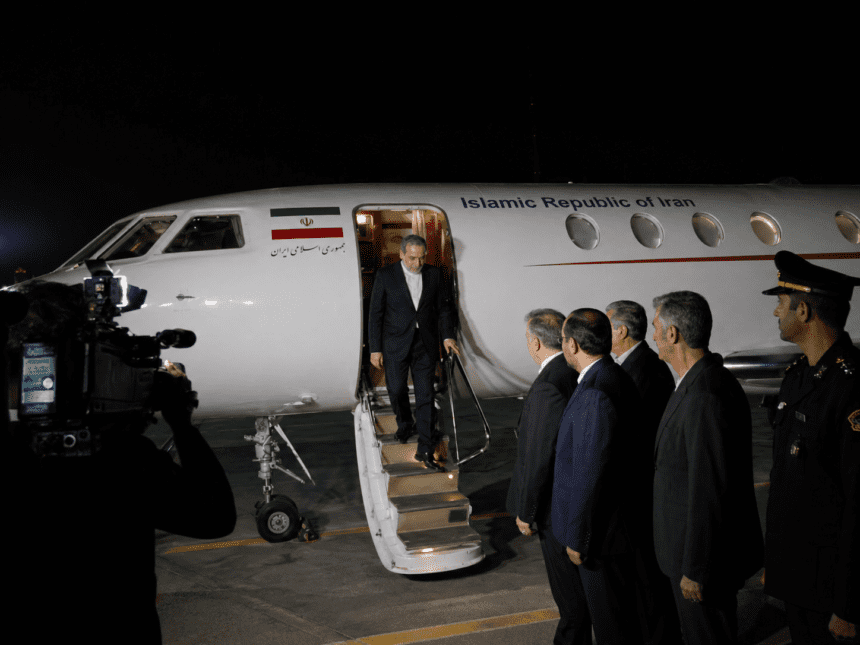
ISLAMABAD: Iranian Foreign Minister Abbas Araghchi returned to Pakistan for a second time in two days, as Tehran and Islamabad kept up fast-moving diplomatic contacts over what Iranian officials described as regional developments. Pakistan media, citing diplomatic sources, reported that Araghchi made a short stop in Islamabad after visiting Oman and was expected to travel onward to Moscow.
The clearest public explanation came from Iran’s ambassador to Pakistan, Reza Amiri Moghadam, who said the visit was undertaken to discuss developments in the region. That framing matches earlier Iranian reporting on Araghchi’s wider regional tour, which said his itinerary included Pakistan, Oman and Russia for consultations on bilateral ties and the evolving regional situation.
The back-to-back visit stood out because Araghchi had only just left Islamabad after earlier meetings with Pakistan’s top civilian and military leadership. Reporting around that first leg said he had met Prime Minister Shehbaz Sharif and senior officials as part of broader diplomacy linked to tensions involving Iran, the United States and the wider region.
His return also came against a messy diplomatic backdrop. Multiple reports said Araghchi’s travel coincided with uncertainty over possible U.S.-Iran contacts through Pakistan, while planned travel by U.S. envoys to Islamabad was called off. At the same time, outside reporting said Araghchi’s stop in Pakistan was still being presented by Iranian officials as a consultation-focused visit rather than a formal negotiating session with Washington.
That makes the story less about ceremony and more about urgency. Tehran appears to be using quick, repeated stops in key capitals to coordinate positions as regional tensions shift by the hour. Pakistan, sitting between diplomatic channels and regional fault lines, has again found itself part of that conversation. The precise content of Araghchi’s talks in Islamabad was not fully disclosed in the reports I could verify, but the pattern strongly suggests a tightly timed shuttle-diplomacy effort rather than a routine bilateral call. That last point is an inference based on the sequence of reported visits and official descriptions of the tour.
For Pakistan, the visit adds another layer to its increasingly visible role as a contact point during regional crises. For Iran, it shows Araghchi moving rapidly between capitals at a moment when every meeting seems designed to test options, pass messages, or prevent further escalation. And for now, that seems to be the real headline: not just that he came back, but how quickly he came back.