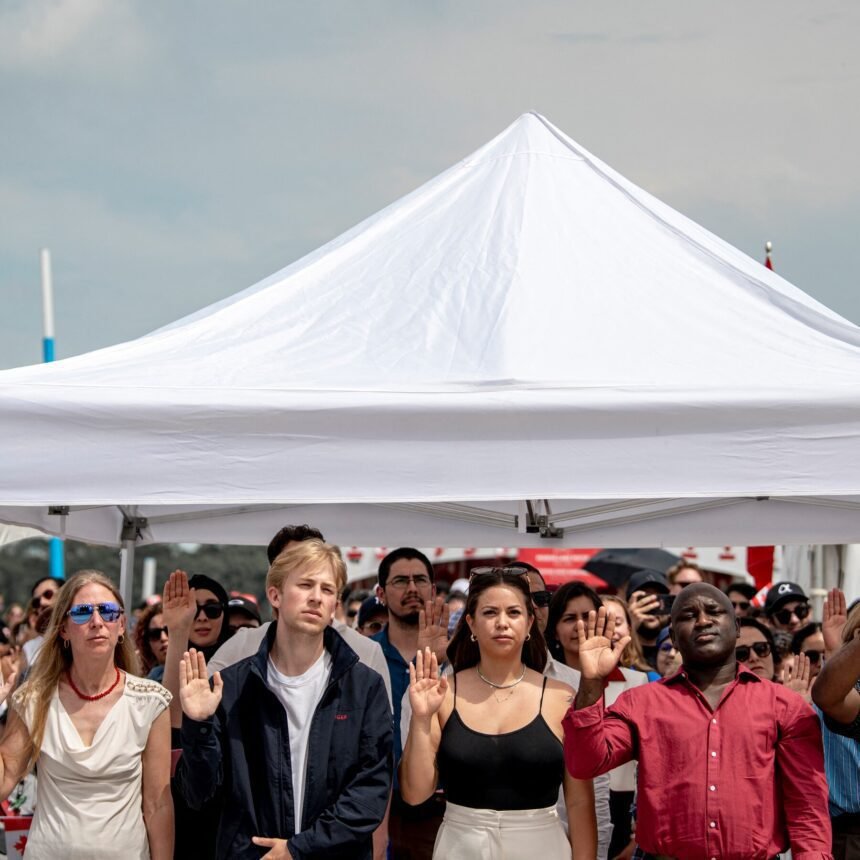
Ottawa/Washington: Changes and ongoing debates around Canada’s citizenship-by-descent framework have drawn renewed interest from individuals abroad, including Americans with Canadian ancestry, according to immigration-related discussions and reporting.
Under current Canadian citizenship law, individuals born outside Canada may in certain cases acquire citizenship through a Canadian parent. However, long-standing rules—often referred to as the “first-generation limit”—generally restrict the automatic transmission of citizenship to only the first generation born abroad.
In recent years, the Canadian government has considered reforms and clarifications to address gaps in the system, particularly in cases involving Canadians born or naturalized abroad who also have children outside Canada. Legal challenges and policy reviews have contributed to ongoing discussions about how citizenship by descent should apply in modern circumstances.
Interest in potential eligibility has grown among some Americans who believe they may have Canadian lineage through parents or grandparents. In such cases, individuals typically apply for a citizenship certificate to determine whether they are already recognized as Canadian citizens under existing law.
Canadian authorities continue to process these applications through Immigration, Refugees and Citizenship Canada (IRCC), with processing times varying depending on documentation and case complexity.
While discussions around expanding or modifying citizenship-by-descent rules continue in legal and policy circles, no broadly confirmed nationwide expansion granting automatic multi-generation citizenship has been officially implemented.
Experts note that eligibility remains highly dependent on individual family history, documentation, and current legal criteria rather than a universal change in citizenship law.