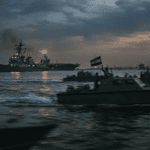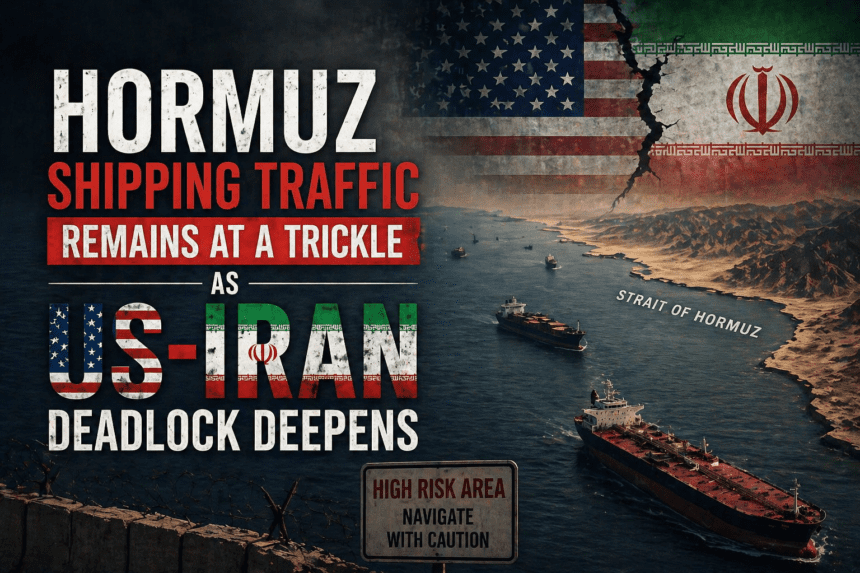
Shipping through the Strait of Hormuz remains painfully thin, with merchant traffic still far below normal as the deadlock between Washington and Tehran shows little sign of easing. Recent reporting says the waterway is still seeing only a trickle of movement, and much of that appears tied to Iran-linked vessels rather than a broad return of commercial confidence.
The slowdown is not just about caution. It is being driven by a deeper political and military impasse. Iran has indicated it wants the U.S. blockade lifted, and wider hostilities halted before it meaningfully loosens its grip around Hormuz, while the U.S. has kept up pressure at sea and continued intercepting vessels it believes may be linked to sanctions evasion or Iranian trade. That has left commercial operators stuck in the middle, weighing insurance costs, physical risk, and the chance of detention.
Bloomberg reported on April 25 that the strait remained near-empty, with only a few Tehran-linked ships moving through the corridor. That is a striking picture for one of the world’s most important maritime chokepoints, especially after weeks of conflict, vessel seizures and naval confrontations. A few days earlier, the same outlet had reported that traffic had ground to a halt after Iran fired on commercial ships and said it had seized at least two vessels.
The U.S. side, meanwhile, is not stepping back. The Associated Press reported today that American forces boarded the cargo ship Blue Star III during blockade enforcement operations, though it was later released after officials determined it was not headed to Iran. That was described as the fourth commercial vessel intercepted since the blockade began, a sign that Washington is still trying to prove it can choke trade flows connected to Iran even without fully sealing off every route.
The rhetoric has hardened too. Six days ago, sources reported that President Donald Trump had ordered the military to “shoot and kill” Iranian small boats found laying mines in the strait, while the U.S. also expanded mine-clearing efforts and increased its regional naval posture. That kind of language does not calm shipping markets. It does the opposite. Shipowners and charterers tend to read it as a warning that even a limited commercial voyage could suddenly turn into a high-risk operation.
Diplomacy, at least for now, is not filling the gap. Sources reported today that Pakistan has continued trying to mediate, but Iran’s conditions and U.S. war aims remain far apart. Tehran wants the blockade ended and is resisting the timing and framework of further nuclear talks, while Washington appears unwilling to relax pressure without broader concessions. That leaves Hormuz not formally closed in every legal sense, but still effectively constrained by fear, force and strategic mistrust.
That matters far beyond the Gulf. The Strait of Hormuz is one of the world’s most important routes for oil and gas shipments, so even a partial paralysis can ripple quickly through freight markets, energy pricing and regional supply chains. The current picture suggests that the real barrier is no longer just mines, patrol boats or inspections. It is the absence of a political off-ramp. Until that changes, shipping is likely to remain hesitant, patchy and far below the levels global markets would consider normal.