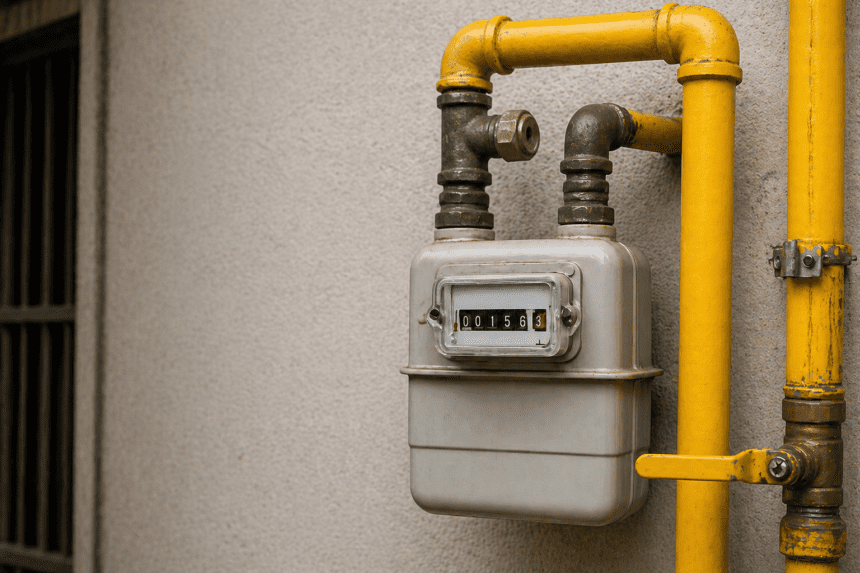
The federal government has officially halted all new domestic and commercial gas connections across Pakistan. The decision, aimed at curbing the ballooning circular debt in the energy sector, marks an indefinite freeze on the expansion of the national gas network.
This move follows a stark reality check from the Petroleum Division: indigenous gas production is plummeting by nearly 10% annually. With existing fields maturing and discovery rates failing to keep pace with consumption, the state-run gas utilities Sui Northern and Sui Southern can no longer bridge the gap between supply and demand. For millions of households waiting for a connection, the news is a definitive end to their expectations.
The ministry’s mandate applies universally, with no exceptions for housing schemes or industrial zones that were previously in the pipeline. The numbers reveal the scale of the crisis. Pakistan’s gas deficit has widened to roughly 1.5 billion cubic feet per day (BCFD) during peak winter months. Importing Liquefied Natural Gas (LNG) to cover this shortfall costs the exchequer billions of dollars a burden the current economic climate cannot sustain.
“We are running on borrowed time and imported fuel we can barely afford,” an official at the Petroleum Division told reporters on condition of anonymity. “Adding new consumers to a system that is already starving is not just fiscally irresponsible; it’s physically impossible.
” The ban also serves as a blunt attempt to force a transition. The government is pushing industrial and commercial users to shift toward electricity or alternative energy sources.
However, the business community remains skeptical. Manufacturers argue that the sudden policy shift leaves them without a reliable energy source, threatening exports and operational viability in an already volatile market. While the ban aims to preserve what remains of the country’s domestic reserves, it leaves a massive question mark over the future of the energy sector.
The government has yet to announce a roadmap for how it plans to manage the existing load or whether the freeze will be lifted if new exploration projects yield results. For now, the taps are effectively closed. The era of cheap, accessible natural gas for new users in Pakistan has reached a hard stop.