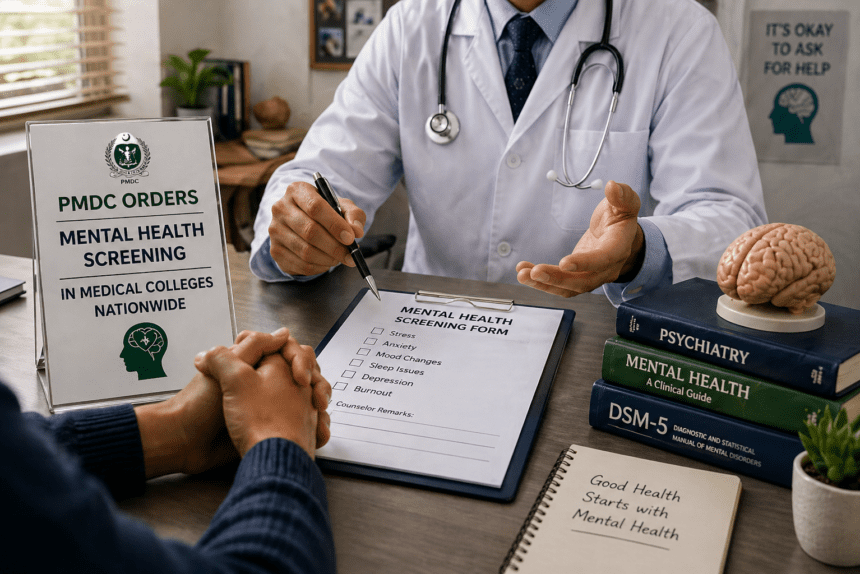
Pakistan’s medical students will now undergo mandatory mental health evaluations under a new directive from the Pakistan Medical and Dental Council (PMDC). The council told colleges nationwide this week that student well-being can no longer be sidelined, ordering the immediate establishment of mental health committees in every institution.
The move isn’t just a policy update; it’s a long-overdue response to a mental health crisis in the medical community. For years, the “sink or swim” culture of Pakistani medical schools has ignored the psychological toll of 80-hour work weeks and grueling exam cycles.
This directive forces deans and principals to acknowledge that a student’s mental stability is as vital as their clinical competence. Under the new guidelines, every public and private medical and dental college must set up a dedicated counseling cell.
These centers must be staffed by professional psychologists and psychiatrists, ensuring students have a safe, confidential space to seek help. The PMDC’s order emphasizes that these screenings shouldn’t be one-off events but part of a continuous support system. The stakes are high. Last year, a series of high-profile student suicides across the country sparked protests and calls for reform. Data from various provincial health departments suggests that nearly one in three medical students suffers from some form of anxiety or clinical depression.
“We cannot produce healers who are themselves broken,” a senior PMDC official said, requesting anonymity as they weren’t authorized to speak ahead of the formal press briefing. The official noted that many colleges previously treated mental health as a luxury or a sign of weakness. That culture, the council insists, has to change. The PMDC is also pushing for a shift in how faculty interact with students.
The directive includes provisions for “stress management workshops” and mentorship programs aimed at reducing the friction between senior consultants and juniors. It’s an attempt to dismantle the toxic hierarchy that often defines the Pakistani house-job experience. Implementation remains the biggest hurdle.
While elite private institutions may transition easily, cash-strapped public colleges will struggle to find the budget for full-time mental health staff. The PMDC hasn’t yet clarified if it will provide subsidies or if colleges must absorb these costs themselves. Colleges that fail to comply could face penalties, including a reduction in their annual seat allocations.
The council is serious: the era of ignoring the mental health of Pakistan’s future doctors is over. The pressure is now on the colleges to prove they care as much about their students as they do about their passing rates.