By using this site, you agree to the Privacy Policy and Terms of Use.
Accept
Media HydeMedia Hyde
  • Home
  • Politics
  • Education
  • Entertainment
  • Sports
  • Blogs
  • Business & Commerce
  • Others
    • Religious
    • Metropolitan
    • Climate and Weather
Font ResizerAa
Media HydeMedia Hyde
Font ResizerAa
  • Home
  • Politics
  • Education
  • Entertainment
  • Sports
  • Blogs
  • Business & Commerce
  • Others
    • Religious
    • Metropolitan
    • Climate and Weather
Follow US
© 2026 Media Hyde Network. All Rights Reserved.
Climate and WeatherHeadline

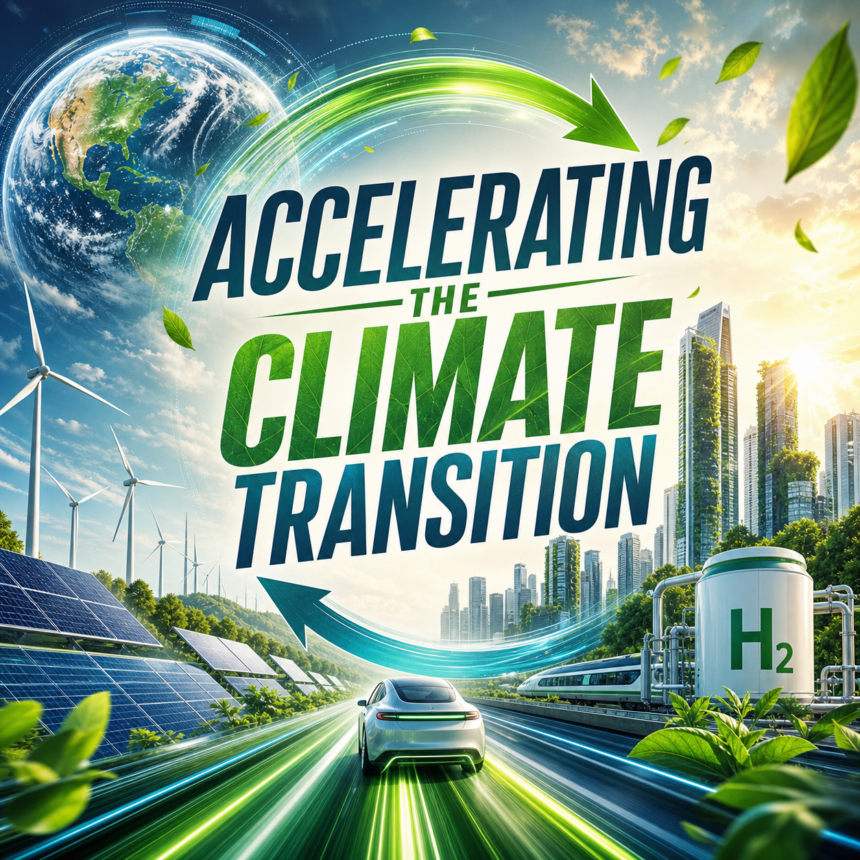
Accelerating the climate transition means fixing the money problem

Last updated: May 6, 2026 1:25 pm
Ayesha Masood
Share
Accelerating the climate transition means fixing the money problem
SHARE

The global push to speed up the climate transition is entering a tougher, more practical phase. The debate is no longer only about whether countries should move away from fossil fuels; it is increasingly about how fast they can do it, who pays for it, and whether poorer countries will be given enough financial room to make the shift without deepening debt and inequality. That tension sat at the center of a first-of-its-kind international summit in Santa Marta, Colombia, where representatives from 56 countries focused on the mechanics of moving beyond coal, oil and gas.

The Colombia meeting did not produce binding global commitments, but it did mark a noticeable change in tone. Officials and experts said the conversation is moving from broad promises to implementation, with working groups set up around finance and labor transitions. That matters, because the biggest barrier identified by participants was not a lack of climate ambition on paper; it was a lack of affordable financing, especially for countries in the Global South that remain heavily exposed to debt, energy insecurity and volatile commodity markets.

That financing gap is becoming harder to ignore. The European Commission said in March that delivering the clean energy transition in Europe alone will require about €660 billion per year until 2030, rising to €695 billion annually in the following decade. Those figures underline the scale of investment needed even in relatively wealthy economies with deep capital markets. For lower-income countries, the challenge is sharper: they are often being asked to decarbonize faster while borrowing at much higher cost.

At the same time, the energy transition is no longer a fringe story about future technology. The International Energy Agency said in its Global Energy Review 2026 that the deployment of solar, wind, nuclear, electric cars and heat pumps since 2019 is now avoiding around 3 billion tonnes of CO2 annually, roughly 8% of global emissions. That is a big signal that clean technologies are already reshaping energy demand in the real world, not just in climate models or conference speeches.

Still, momentum is uneven. Colombia’s summit highlighted that many governments want to accelerate the shift away from fossil fuels, but they are struggling with the politics of jobs, subsidies, industrial competitiveness and public consent. The summit also exposed a blunt reality: countries that depend on fossil fuel income or still lack reliable energy access cannot simply switch systems overnight. That is why participants placed heavy emphasis on “just transition” planning, labor protections and financial restructuring rather than slogans alone.

There is also a broader development problem wrapped inside the climate story. The 2026 Financing for Sustainable Development Report says the world is dealing with slower growth, elevated debt burdens and tighter fiscal conditions, all of which limit governments’ ability to fund long-term transitions. In plain terms, many states know what they need to build, but they do not have the budget space or cheap capital to build it at the required speed.

That helps explain why climate diplomacy is shifting toward industrial policy and investment strategy. Europe is trying to accelerate clean-energy spending through a dedicated investment strategy tied to energy security and affordability. Internationally, the emerging message is similar: climate action is no longer being sold only as an environmental obligation, but also as a competitiveness issue, a resilience issue and, increasingly, a financial-system issue.

The real test now is whether governments can turn this new urgency into bankable projects, stable rules and fairer financing terms. Clean technology is advancing. Political language is changing. But unless capital starts flowing faster and more equitably, the climate transition will keep moving in bursts rather than at the pace scientists and policymakers say is needed. That, more than anything, is the story of 2026: the transition is no longer waiting for proof of concept. It is waiting for scale.


Share This Article
Email Copy Link Print
Previous Article Ranbir Kapoor snaps at paparazzi after crowd closes in on Alia Bhatt at Mumbai screening
Next Article Kangana Ranaut’s ‘Bharat Bhhagya Viddhaata’ to Bring Cama Hospital’s Untold 26/11 Story to Screen in June
Leave a Comment

Leave a Reply Cancel reply

Your email address will not be published. Required fields are marked *

Sponsored Ads

Stay Connected

FacebookLike
XFollow
InstagramFollow
YoutubeSubscribe
WhatsAppFollow
ThreadsFollow
Sindh Schools to Close for Two-Month Summer Break Starting June 1
Education
May 13, 2026
Pakistan Targets Tech Workforce with 20,000 AI Training Slots
Education
May 13, 2026
Tokyo University Launches Fully Autonomous Lab Where Robots Run the Show The lights are on at the University of Tokyo’s newest chemistry lab, but the lab coats are gone. In a move that signals a shift for experimental science, the university has officially opened a facility where robots handle the entire research cycle—from mixing chemicals to analyzing results—without a single human in the room. This isn’t just a room with a few automated arms. It’s a closed-loop system designed to hunt for new materials for batteries and semiconductors at speeds that make traditional methods look like they’re standing still. The AI designs the experiment, the robots execute it, and the data feeds right back into the AI to decide what happens next. "The goal is to remove the bottleneck of human physical labor," a researcher involved in the project’s pilot phase said. "A human can do maybe ten experiments a day. This system won't stop at ten, and it doesn't need to go home at 5:00 PM." The stakes are high. Japan is currently locked in a global race to find more efficient materials for the next generation of electric vehicle batteries. By cutting humans out of the "pipette-and-wait" cycle, the university expects to compress years of trial-and-error into a few weeks of non-stop robotic iteration. It’s a response to a looming crisis, too. Japan’s shrinking workforce means there are fewer young scientists entering the field every year. Automating the grunt work isn't just about speed; it’s about survival in a country where human talent is becoming a scarce resource. Critics often worry that "robot-run" means "job-lost," but the university’s lead engineers argue the opposite. They say the move frees up researchers to actually think, rather than spending eight hours a day performing repetitive liquid handling. The robots don't get bored, they don't make clerical errors, and they don't suffer from "Friday afternoon" fatigue that can ruin a data set. The lab is currently focused on thin-film materials, but the team plans to scale the technology to other branches of chemistry soon. If it works, the image of the lone scientist hunched over a workbench might soon be a relic of the past. The lab is running right now. It’ll be running tomorrow morning. And it won't need a coffee break to get through the night.
Tokyo University Launches Fully Autonomous Lab Where Robots Run the Show
Education
May 13, 2026
Pakistan Offers New Higher Education Scholarships to Bangladeshi Students
Education
May 13, 2026
Private Schools Defy Punjab Government’s Revised Summer Vacation Schedule
Education
May 13, 2026
HEC Drops Paperwork: Fully Online Degree Attestation Goes Live Nationwide
Education
May 13, 2026

You Might Also Like

Climate and Weather

“Lahore Floods: No Roofs Down, No Dams Broken, But Thousands Affected”

By
Anoosha Malik
Seismologists note that Karachi has experienced several mild tremors in recent months, mostly centered around Malir and its outskirts. While these earthquakes are low in intensity and not considered dangerous, experts say they’re part of natural fault activity in the region. According to meteorologists, such small quakes often release underground pressure gradually, reducing the likelihood of a sudden major jolt. However, they stress the need for continuous monitoring to better understand seismic risks in and around Karachi.
Climate and Weather

3.2-Magnitude-Earthquake-Shakes-Parts-of-Karachi

By
mediahyde
Charity fundraises to bring back wildlife in Wales
Climate and Weather

Charity fundraises to bring back wildlife in Wales

By
Ayesha Masood
Robbers disguised as KE workers loot building in Karachi
Court & CrimeHeadline

Robbers disguised as KE workers loot building in Karachi

By
Ayesha Masood
Media Hyde Media Hyde Dark
Facebook Twitter Youtube Rss Medium

About US

Media Hyde Network: Your instant connection to breaking stories and live updates. Stay informed with our real-time coverage across politics, tech, entertainment, and more. Your reliable source for 24/7 News.

Top Categories
  • Headline
  • Politics
  • Entertainment
  • Education
  • Sports
  • Religious
  • Metropolitan
  • Climate and Weather
Usefull Links
  • Contact Us
  • Disclaimer
  • Privacy Policy
  • Cookies Policy
  • Advertising Policy
  • Terms & Conditions

© 2025 Media Hyde Network. All Rights Reserved.

Welcome Back!

Sign in to your account

Username or Email Address
Password

Lost your password?