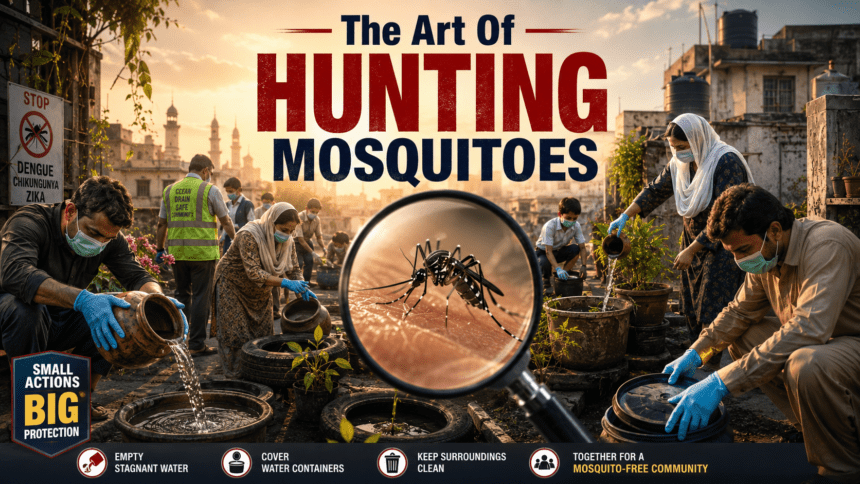
The common mosquito is the deadliest animal on earth, killing nearly 700,000 people annually through malaria, dengue, and Zika. Despite a century of chemical warfare, bed nets, and genetic modification, the buzzing pest remains undefeated.
The core of the problem lies in the mosquito’s evolutionary speed. Scientists at the Liverpool School of Tropical Medicine recently identified a mutation in the Anopheles mosquito that renders standard pyrethroid insecticides the backbone of current bed net technology virtually useless.
These insects have developed a “thickened” outer shell that prevents poison from penetrating their systems, effectively turning our primary defense into little more than a decorative curtain.
“We are essentially outgunned,” says Dr. Elena Rossi, an entomologist tracking vector-borne resistance.
“Every time we introduce a new chemical, the population filters for survivors. Within a few generations, the entire swarm is immune.
The human cost is concentrated in sub-Saharan Africa and Southeast Asia.
In these regions, the failure of traditional tools isn’t a minor inconvenience; it’s a public health collapse. Hospitals in endemic zones are seeing a 20% spike in severe malaria cases, a trend experts link directly to the diminished efficacy of household sprays and treated netting.
Tech startups are attempting to bridge the gap with high-tech solutions. From laser-firing drones designed to zap mosquitoes in flight to the release of “sterile” male mosquitoes meant to collapse local populations, the field is shifting from chemical to biological warfare. While these projects make headlines, they face massive hurdles in scaling for rural villages and tropical rainforests.
The environmental fallout also complicates matters. Mass-spraying campaigns, once the gold standard, are being reconsidered due to their impact on pollinators and local ecosystems. Regulators are now caught between the urgent need to save human lives and the long-term risk of ecological destruction. The battle has moved beyond simple extermination.
Researchers are now looking at “gene drives,” a controversial technique that could force a population-wide infertility trait through an entire species.
It’s a radical step one that could potentially wipe out the mosquito entirely. Ethics committees remain locked in debate over the consequences of removing a species from the food chain. For now, the mosquito continues to adapt, outmaneuver, and thrive, proving that biology is far more resilient than any lab-grown solution we’ve managed to create.