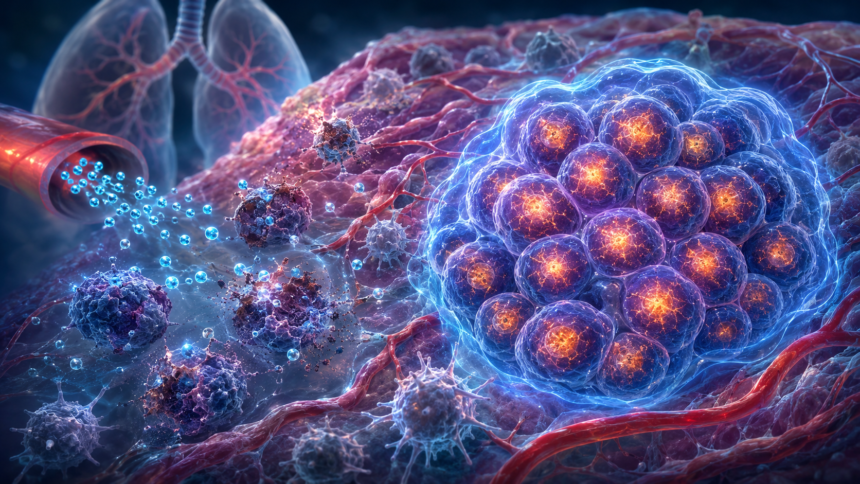
(SCLC) patients often face a grim reality initial chemotherapy works, but the cancer almost always returns, fueled by aggressive, drug-resistant cells. New research has pinpointed a specific protein, YAP1, as the primary engine behind this survival mechanism.
The findings, published in the latest issue of Cancer Cell, explain why standard platinum-based treatments eventually fail. Researchers found that when SCLC cells are exposed to chemotherapy, they don’t just die the survivors undergo a molecular shift. They activate the YAP1 protein, which essentially reprograms the cell to bypass the damage caused by the drugs.
“We aren’t just looking at random mutations,” said Dr. Elena Rossi, lead author of the study.
“We’re looking at a survival switch. Once YAP1 is turned on, the cancer cells stop acting like typical lung cells and start behaving like highly resilient stem cells.” This shift makes the tumor nearly impervious to standard therapy. The research team used CRISPR gene editing technology to disable the YAP1 protein in lab-grown SCLC models.
The result was immediate: the cells lost their resistance and became sensitive to chemotherapy once again. The clinical implications are sharp. Current treatment protocols for SCLC haven’t changed significantly in decades, largely because the disease is so adept at evading destruction.
Targeting YAP1 could provide a way to “re-sensitize” tumors, potentially allowing existing drugs to finish the job they currently cannot.
However, the path to a human treatment remains complex. YAP1 is active in many healthy tissues, meaning a systemic drug could trigger severe side effects. The next hurdle for the team is developing a targeted delivery mechanism something that hits the tumor’s YAP1 expression without damaging the rest of the patient’s body.
Until then, the study provides a clear roadmap for researchers: stop the protein, stop the relapse. For patients currently facing the high recurrence rates of SCLC, this offers the first concrete target for a new generation of combination therapies.