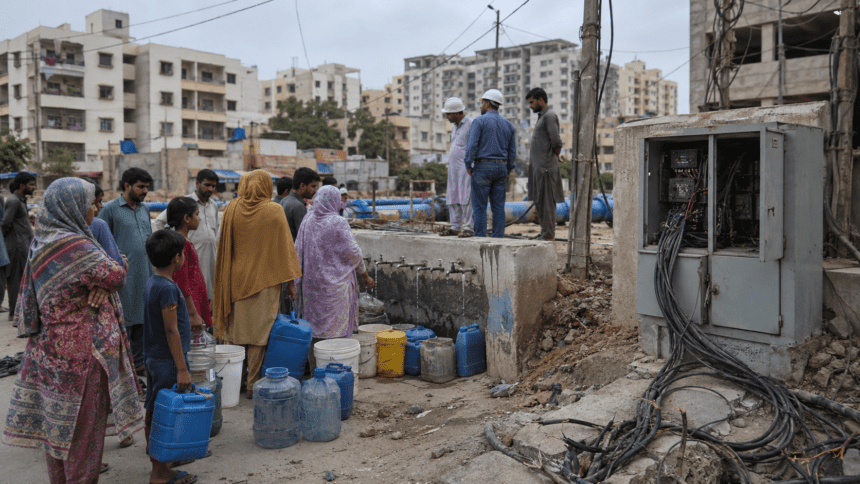
Water supply to several densely populated neighborhoods in Karachi remains suspended tonight after thieves targeted a critical K-Electric power installation. The theft of high-voltage cabling at a primary pumping station has paralyzed the city’s ability to distribute water, leaving thousands of residents scrambling for alternatives as temperatures climb.
The outage hit the Dhabeji pumping station early Wednesday, a facility that serves as the lifeline for much of the city. While utility crews are on-site, officials say the nature of the theft which involved ripping out specialized copper wiring means repairs aren’t a simple fix.
Local residents in areas like Gulshan-e-Iqbal and North Nazimabad reported taps running dry shortly after dawn. For many, this isn’t just an inconvenience; it’s a recurring financial blow.
With municipal supply cut, families are being forced to purchase private water tankers at inflated rates, a market that spikes in price the moment the city’s grid fails. “We haven’t seen a drop of water since yesterday morning,” said a resident of Block 13, Gulshan.
“The tanker mafia is already charging double, and we have no choice but to pay because the utility hasn’t provided a timeline for restoration.
” K-Electric confirmed the incident, stating that their teams are working to replace the stolen infrastructure.
However, the utility company has struggled to secure these remote installations against organized theft rings that have become increasingly bold. Security experts suggest that these syndicates target copper cabling specifically due to its high resale value on the black market, often leaving behind damage that takes days to rectify.
The Karachi Water and Sewerage Board (KWSB) has yet to issue a formal schedule for when pressure will return to the lines. A KWSB spokesperson noted that even once the power is restored, the system requires several hours to re-pressurize, meaning the impact will linger well into the weekend.
This latest disruption underscores the fragility of Karachi’s utility infrastructure. When a single cable theft can cut off water for millions, the city’s reliance on aging, poorly secured systems becomes clear. Until the city finds a way to physically protect these critical nodes, residents will continue to bear the cost of the next power failure.