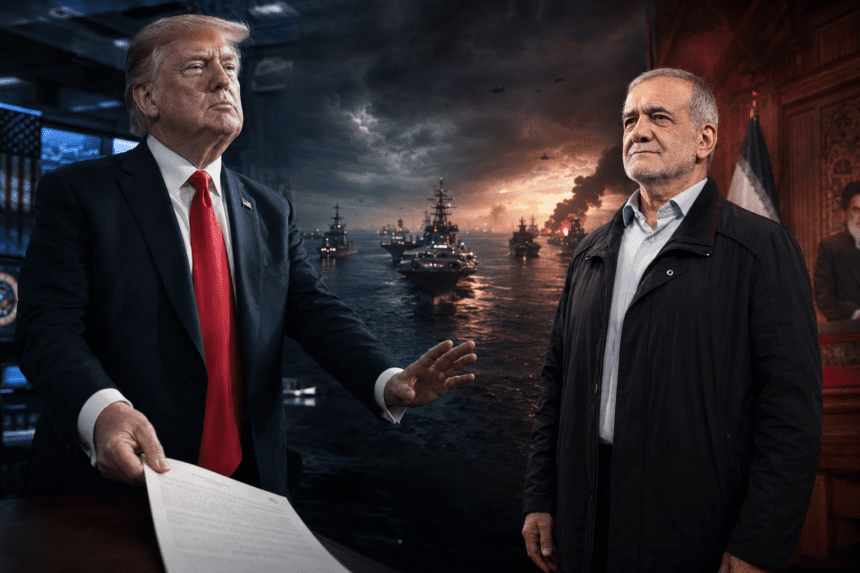
WASHINGTON — Donald Trump on Sunday flatly rejected Iran’s latest terms for ending the war, calling Tehran’s response “totally unacceptable” and throwing fresh doubt over already fragile efforts to prevent another round of fighting in the Gulf. Iran’s reply, sent through Pakistani mediators, reportedly centered on ending the war across multiple fronts, especially in Lebanon, while also insisting it would retaliate against any new US strikes and oppose additional foreign naval deployments in the Strait of Hormuz.
The public exchange was brief, almost blunt. Trump gave no detailed breakdown of what he found objectionable, but his message on Truth Social left little room for ambiguity. Tehran, for its part, kept up a defiant tone. Iranian President Masoud Pezeshkian said dialogue would not amount to surrender, while officials and state-linked media framed the response as a demand for an end to the war without Iran giving up core strategic leverage.
At the heart of the dispute is a gap that still looks pretty wide. Reports indicate the US proposal sought long-term limits on uranium enrichment, tighter control over Iran’s highly enriched uranium, and dismantling or curbs on key nuclear facilities. Iran’s side reportedly pushed back on dismantlement, floated dilution and third-country transfer options for some enriched uranium, and sought guarantees that any transferred stockpile would be returned if Washington later walked away from an agreement.
That nuclear issue is also where Israel is digging in. Prime Minister Benjamin Netanyahu said the war cannot truly end while enriched uranium remains inside Iran and while enrichment facilities are still standing. Trump has at times sounded less urgent in tone, suggesting the material is closely monitored, but the broader message from Washington and Israel is that any settlement still has to answer the nuclear question, not just stop the shooting for a few days.
Then there is Hormuz — the narrow waterway that keeps haunting every diplomatic effort. Iran has warned Britain and France against sending ships into the strait, with Deputy Foreign Minister Kazem Gharibabadi saying only Iran can secure that passage and that outside interference would bring an immediate response. Britain and France, meanwhile, are preparing for a multinational security effort tied to restoring commercial shipping once conditions allow, and London has said a defense ministers’ meeting involving more than 40 countries is due this week.
Markets reacted fast, because they usually do when Hormuz is back in the headlines. Brent crude climbed above $104 a barrel after Trump’s rejection became public, reflecting fears that the talks may be sliding toward collapse and that energy supplies could again come under direct pressure. The strait carries a huge share of global oil traffic, so even a political threat there tends to hit prices almost immediately.
The military picture is still tense enough to make any talk of peace feel provisional. Fresh drone incidents were reported on Sunday by the United Arab Emirates, Kuwait and Qatar, with no immediate formal claim of responsibility. At the same time, Iran’s parliament security commission spokesman Ebrahim Rezaei warned that Tehran’s “restraint is over,” adding that any attack on Iranian vessels would trigger a strong response against American ships and bases. That is the sort of language that doesn’t just unsettle diplomats — it tells regional militaries to stay on edge.
For now, the negotiations are not dead, but they look battered. Pakistan and Qatar are still reported to be involved in mediation, and there are signs both sides want to keep channels open. Even so, the latest exchange exposed the real problem: Washington appears to want a settlement that locks down Iran’s nuclear capacity and maritime leverage, while Tehran is demanding security guarantees, sanctions relief and room to preserve what it sees as sovereign rights. That isn’t a minor disagreement. It’s the whole argument.