By using this site, you agree to the Privacy Policy and Terms of Use.
Accept
Media HydeMedia Hyde
  • Home
  • Politics
  • Education
  • Entertainment
  • Sports
  • Blogs
  • Business & Commerce
  • Others
    • Religious
    • Metropolitan
    • Climate and Weather
Font ResizerAa
Media HydeMedia Hyde
Font ResizerAa
  • Home
  • Politics
  • Education
  • Entertainment
  • Sports
  • Blogs
  • Business & Commerce
  • Others
    • Religious
    • Metropolitan
    • Climate and Weather
Follow US
© 2026 Media Hyde Network. All Rights Reserved.
Education

Tokyo University Launches Fully Autonomous Lab Where Robots Run the Show

Last updated: May 13, 2026 1:11 am
Misbah Jogyat
Share
Tokyo University Launches Fully Autonomous Lab Where Robots Run the Show The lights are on at the University of Tokyo’s newest chemistry lab, but the lab coats are gone. In a move that signals a shift for experimental science, the university has officially opened a facility where robots handle the entire research cycle—from mixing chemicals to analyzing results—without a single human in the room. This isn’t just a room with a few automated arms. It’s a closed-loop system designed to hunt for new materials for batteries and semiconductors at speeds that make traditional methods look like they’re standing still. The AI designs the experiment, the robots execute it, and the data feeds right back into the AI to decide what happens next. "The goal is to remove the bottleneck of human physical labor," a researcher involved in the project’s pilot phase said. "A human can do maybe ten experiments a day. This system won't stop at ten, and it doesn't need to go home at 5:00 PM." The stakes are high. Japan is currently locked in a global race to find more efficient materials for the next generation of electric vehicle batteries. By cutting humans out of the "pipette-and-wait" cycle, the university expects to compress years of trial-and-error into a few weeks of non-stop robotic iteration. It’s a response to a looming crisis, too. Japan’s shrinking workforce means there are fewer young scientists entering the field every year. Automating the grunt work isn't just about speed; it’s about survival in a country where human talent is becoming a scarce resource. Critics often worry that "robot-run" means "job-lost," but the university’s lead engineers argue the opposite. They say the move frees up researchers to actually think, rather than spending eight hours a day performing repetitive liquid handling. The robots don't get bored, they don't make clerical errors, and they don't suffer from "Friday afternoon" fatigue that can ruin a data set. The lab is currently focused on thin-film materials, but the team plans to scale the technology to other branches of chemistry soon. If it works, the image of the lone scientist hunched over a workbench might soon be a relic of the past. The lab is running right now. It’ll be running tomorrow morning. And it won't need a coffee break to get through the night.
SHARE

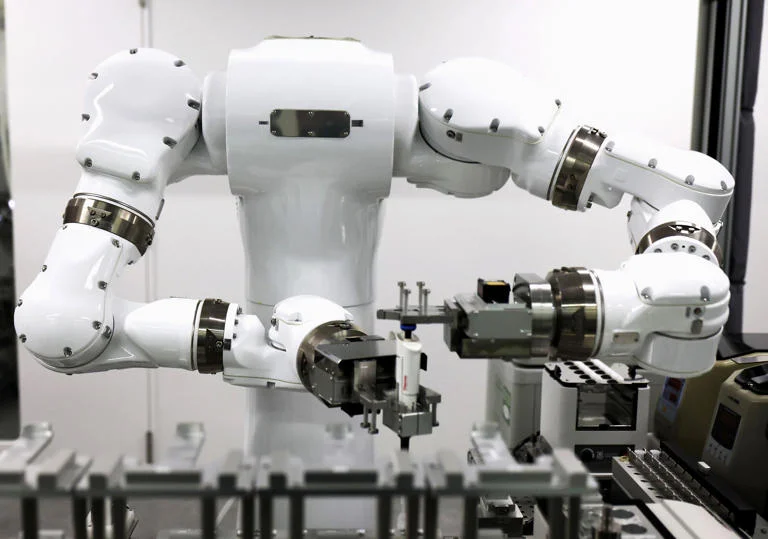
The lights are on at the University of Tokyo’s newest chemistry lab, but the lab coats are gone. In a move that signals a shift for experimental science, the university has officially opened a facility where robots handle the entire research cycle from mixing chemicals to analyzing results without a single human in the room.

This isn’t just a room with a few automated arms. It’s a closed-loop system designed to hunt for new materials for batteries and semiconductors at speeds that make traditional methods look like they’re standing still. The AI designs the experiment, the robots execute it, and the data feeds right back into the AI to decide what happens next.

“The goal is to remove the bottleneck of human physical labor,” a researcher involved in the project’s pilot phase said. “A human can do maybe ten experiments a day. This system won’t stop at ten, and it doesn’t need to go home at 5:00 PM.

The stakes are high. Japan is currently locked in a global race to find more efficient materials for the next generation of electric vehicle batteries. By cutting humans out of the “pipette-and-wait” cycle, the university expects to compress years of trial-and-error into a few weeks of non-stop robotic iteration.

It’s a response to a looming crisis, too. Japan’s shrinking workforce means there are fewer young scientists entering the field every year. Automating the grunt work isn’t just about speed; it’s about survival in a country where human talent is becoming a scarce resource.

Critics often worry that “robot-run” means “job-lost,” but the university’s lead engineers argue the opposite. They say the move frees up researchers to actually think, rather than spending eight hours a day performing repetitive liquid handling.

The robots don’t get bored, they don’t make clerical errors, and they don’t suffer from “Friday afternoon” fatigue that can ruin a data set. The lab is currently focused on thin-film materials, but the team plans to scale the technology to other branches of chemistry soon.

If it works, the image of the lone scientist hunched over a workbench might soon be a relic of the past. The lab is running right now. It’ll be running tomorrow morning. And it won’t need a coffee break to get through the night.


The lights are on at the University of Tokyo’s newest chemistry lab, but the lab coats are gone. In a move that signals a shift for experimental science, the university has officially opened a facility where robots handle the entire research cycle from mixing chemicals to analyzing results without a single human in the room.

This isn’t just a room with a few automated arms. It’s a closed-loop system designed to hunt for new materials for batteries and semiconductors at speeds that make traditional methods look like they’re standing still. The AI designs the experiment, the robots execute it, and the data feeds right back into the AI to decide what happens next.

“The goal is to remove the bottleneck of human physical labor,” a researcher involved in the project’s pilot phase said. “A human can do maybe ten experiments a day. This system won’t stop at ten, and it doesn’t need to go home at 5:00 PM.” The stakes are high. Japan is currently locked in a global race to find more efficient materials for the next generation of electric vehicle batteries.

By cutting humans out of the “pipette-and-wait” cycle, the university expects to compress years of trial-and-error into a few weeks of non-stop robotic iteration.

It’s a response to a looming crisis, too. Japan’s shrinking workforce means there are fewer young scientists entering the field every year. Automating the grunt work isn’t just about speed; it’s about survival in a country where human talent is becoming a scarce resource. Critics often worry that “robot-run” means “job-lost,” but the university’s lead engineers argue the opposite.

They say the move frees up researchers to actually think, rather than spending eight hours a day performing repetitive liquid handling. The robots don’t get bored, they don’t make clerical errors, and they don’t suffer from “Friday afternoon” fatigue that can ruin a data set.

The lab is currently focused on thin-film materials, but the team plans to scale the technology to other branches of chemistry soon. If it works, the image of the lone scientist hunched over a workbench might soon be a relic of the past. The lab is running right now. It’ll be running tomorrow morning. And it won’t need a coffee break to get through the night.

Share This Article
Email Copy Link Print
Previous Article Pakistan Offers New Higher Education Scholarships to Bangladeshi Students Pakistan Offers New Higher Education Scholarships to Bangladeshi Students
Next Article Pakistan Targets Tech Workforce with 20,000 AI Training Slots Pakistan Targets Tech Workforce with 20,000 AI Training Slots
Leave a Comment

Leave a Reply Cancel reply

Your email address will not be published. Required fields are marked *

Sponsored Ads

Stay Connected

FacebookLike
XFollow
InstagramFollow
YoutubeSubscribe
WhatsAppFollow
ThreadsFollow
Election Commission Announces Internship Programme for University Students
Education
November 22, 2026
Government Offers Free Chip Design Training With Rs. 50,000 Monthly Stipend
Education
November 22, 2026
FPSC Candidate Arrested Following Misconduct During Examination ISLAMABAD: A candidate appearing in an examination conducted by the Federal Public Service Commission (FPSC) has reportedly been arrested following an incident of misconduct during the examination. According to reports, the candidate allegedly engaged in inappropriate behaviour during the examination, prompting authorities to intervene and take action. The incident raised concerns about examination discipline and compliance with the rules and regulations established by the commission. The relevant authorities took notice of the matter, and the candidate was taken into custody following the reported misconduct. The FPSC conducts competitive examinations for recruitment to various federal government positions and maintains strict rules to ensure transparency, fairness and discipline throughout the examination process. Further details regarding the nature of the misconduct, the candidate’s identity and possible legal proceedings have not been independently confirmed. Beat: Crime & Law Enforcement Sub-beat: Examination Misconduct / Education Note: The exact location, date and circumstances of the arrest should be verified from the original report before publication.
Education
November 22, 2026
Mohsin Naqvi Slams Minister Over Repeated TV Criticism, Defends Business Community
Business & Commerce pakistan Politics
November 22, 2026
KP Bans Photography in Government Schools Without Prior Approval
Education
November 22, 2026
Punjab Bans Unauthorized Entry in Girls’ Schools and Colleges
Education
November 22, 2026

You Might Also Like

Education

PMDC Confirms MDCAT 2025 Will Be Held as Scheduled

By
Alisha Akhtar
AJK Inter Exams Postponed Amid Region-Wide Lockdown
Education

AJK Inter Exams Postponed Amid Region-Wide Lockdown

By
Misbah Jogyat
Pakistan’s Out-of-School Children Rate Falls to 28% in 2025
Education

Pakistan’s Out-of-School Children Rate Falls to 28% in 2025

By
Misbah Jogyat
Virtual University Opens Sports Trials in Major Cities
Education

Virtual University Opens Sports Trials in Major Cities

By
Misbah Jogyat
Media Hyde Media Hyde Dark
Facebook Twitter Youtube Rss Medium

About US

Media Hyde Network: Your instant connection to breaking stories and live updates. Stay informed with our real-time coverage across politics, tech, entertainment, and more. Your reliable source for 24/7 News.

Top Categories
  • Headline
  • Politics
  • Entertainment
  • Education
  • Sports
  • Religious
  • Metropolitan
  • Climate and Weather
Usefull Links
  • Contact Us
  • Disclaimer
  • Privacy Policy
  • Cookies Policy
  • Advertising Policy
  • Terms & Conditions

© 2025 Media Hyde Network. All Rights Reserved.

Welcome Back!

Sign in to your account

Username or Email Address
Password

Lost your password?