LAHORE, May 24: The Punjab government’s move to increase agricultural income tax has reached the Lahore High Court, with a joint petition challenging the revised rates on the ground that they were introduced without the legislative approval required under provincial law.
The petition was filed by opposition MPA Ijaz Shafi and the Judicial Activism Panel through Advocate Azhar Siddique. The petitioners argue that the government revised agricultural income tax rates through executive notifications while bypassing the constitutional role of the Punjab Assembly. They have asked the court to suspend recovery under the increased rates, withdraw the impugned notifications and order refunds of amounts allegedly collected without lawful authority.
At the heart of the case is a fairly direct question: can the provincial government raise agricultural income tax through notifications if those changes are not properly placed before the elected assembly?
The petitioners say it can’t. According to their plea, tax changes of this nature require legislative oversight, and any attempt to enforce revised rates without that approval violates both the law and the Assembly’s authority over taxation. The argument leans heavily on the principle that taxation is not simply an administrative matter; it is one of the core powers of an elected legislature.
The controversy has been building for weeks. On April 21, Punjab Assembly Speaker Malik Muhammad Ahmad Khan declared the revised agricultural income tax notifications unlawful, saying they had “no legal existence” because they were not laid before the Assembly in the manner required by law. He ordered an immediate halt to tax assessments, demands and recoveries under the revised rates, and directed the government to place the notifications before the House along with an explanation.
The dispute traces back to notifications issued on March 5, 2025, through which agricultural income tax rates were revised. A later notification dated September 10, 2025 sought to apply the revised rates retrospectively from July 1, 2025. The legal objection raised inside the Punjab Assembly was that these notifications were not presented during the 2025-26 budget session, despite the requirement under Section 11(2) of the Punjab Agricultural Income Tax Act, 1997.
There was, however, a political twist. A day after the speaker’s ruling, the Punjab Assembly reportedly restored the agricultural income tax increase notifications after the House unanimously overlooked delays in their presentation. That reversal has now added another layer to the legal fight: whether a later political cure can validate earlier executive action that petitioners insist was unlawful from the start.
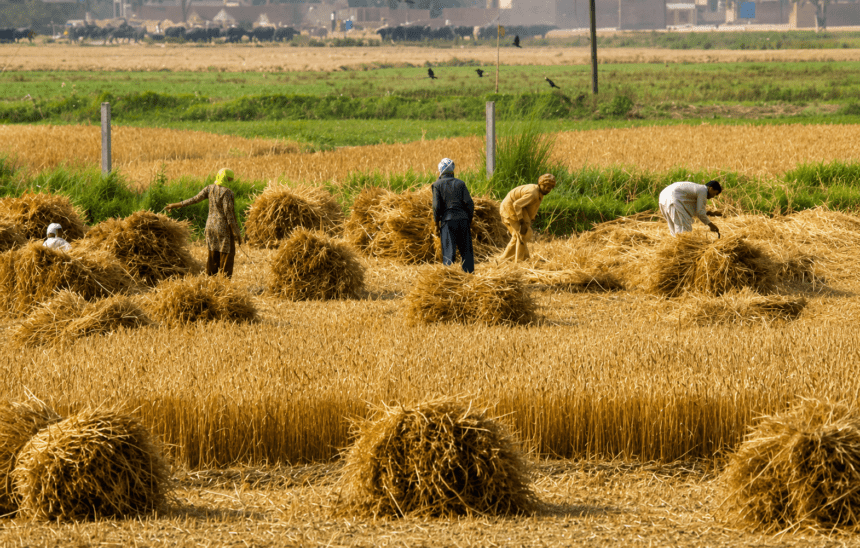
The matter is sensitive because agricultural income tax has long been one of Pakistan’s most politically charged fiscal issues. Provinces have the authority to tax agricultural income, but enforcement has often remained weak, uneven and controversial. A recent LHC ruling in a separate matter also reaffirmed that agricultural income taxation falls within the provincial domain, not the federal government’s jurisdiction, once a taxpayer establishes payment of provincial agricultural income tax.
For the Punjab government, the case could become a test of how far the executive can go in adjusting tax rates through delegated powers. For farmers and landowners, it is about recovery notices and whether increased liabilities can be imposed retrospectively. And for the Assembly, frankly, it is about turf — who gets the final say when citizens are asked to pay more.
The Lahore High Court will now have to examine whether the revised agricultural tax notifications were validly issued, whether the Assembly’s later handling of the matter cured the alleged defect, and whether any recoveries already made under the increased rates should stand or be refunded.