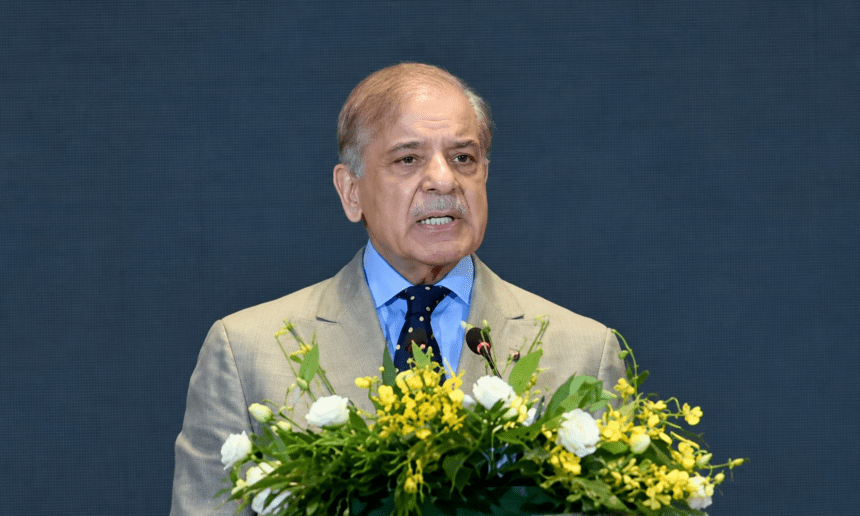
Hangzhou, May 24: Prime Minister Shehbaz Sharif on Sunday placed agriculture, information technology, special economic zones and mines and minerals at the centre of Pakistan’s next phase of economic cooperation with China, telling Chinese investors that Islamabad is looking for partnerships, expertise and investment — not just traditional government-to-government support.
Speaking at the Pakistan-China Business-to-Business Investment Conference in Hangzhou, the prime minister said the two countries now had a chance to move beyond infrastructure-heavy cooperation and build practical business links in sectors where Pakistan has resources and China has technology, capital and market scale. The conference was held during Shehbaz’s four-day official visit to China from May 23 to 26, confirmed earlier by China’s foreign ministry.
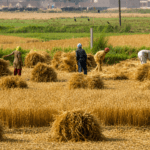
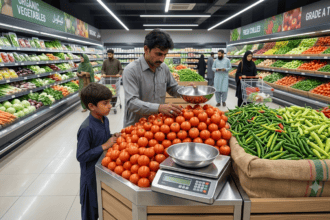
Agriculture was the strongest part of his pitch. Calling Pakistan “basically an agrarian economy,” Shehbaz said Chinese support in high-quality seeds, mechanisation, modern farming methods and value addition could help Pakistan sharply increase its exports to China. He noted that China imports around $100 billion worth of agricultural products every year, while Pakistan’s current share remains very small. In his words, Pakistan could raise agricultural trade with China by about $10 billion over the next five to seven years — but only if the two sides work seriously on standards, productivity and market requirements.
The prime minister also pointed to the 1,000 Pakistani professionals trained in China last year, saying they were already back home and contributing to the sector. That detail matters because Pakistan’s farm sector has long suffered from low per-acre yields, weak post-harvest handling and limited processing capacity. Chinese involvement, officials believe, could help turn raw agricultural output into exportable products instead of leaving farmers dependent on low-margin local markets.
Shehbaz’s message to Chinese companies was fairly direct: Pakistan wants jobs in rural areas, small and medium-scale entrepreneurship, and export-led growth. He said better cooperation in agriculture could create “massive” employment opportunities and allow thousands of smaller businesses to become part of the China-facing export chain.
Beyond agriculture, the prime minister identified IT, special economic zones and mines and minerals as priority areas. The Hangzhou forum itself focused on IT and telecom, battery energy storage systems and agriculture, with cooperation agreements and memorandums of understanding expected between Pakistani and Chinese companies. Officials framed the event as part of CPEC 2.0, the second phase of the China-Pakistan Economic Corridor, which is supposed to lean more toward industrial cooperation, business partnerships and private-sector activity.
The visit also has a wider diplomatic track. Shehbaz began the trip in Hangzhou, Zhejiang province, and is expected to travel to Beijing for meetings with Chinese President Xi Jinping and Premier Li Qiang. He is accompanied by Deputy Prime Minister and Foreign Minister Ishaq Dar and other senior officials.
In Hangzhou, the prime minister is also scheduled to meet heads of major Chinese companies and visit Alibaba’s headquarters. According to state media reporting cited by Dawn, cooperation agreements between Alibaba and the Government of Pakistan are also expected during the visit.
The new push comes after Pakistan and China signed major investment agreements in 2025, including deals covering agriculture, renewable energy, electric vehicles, health, steel and other sectors. At that time, Shehbaz had also promised Chinese investors faster procedures and better security for Chinese workers — an issue that remains sensitive because CPEC-linked personnel have been targeted in militant attacks in Pakistan.
For Islamabad, the Hangzhou pitch is about something bigger than another round of diplomatic slogans. Pakistan is trying to shift Chinese engagement from roads and power projects toward factories, exports, technology transfer and resource development. That won’t be easy. Investors will still look closely at Pakistan’s policy consistency, security conditions, tax regime and ease of doing business.
Still, the direction is clear. Shehbaz wants Chinese firms to see Pakistan not only as a corridor or a market, but as a production base — one with farmland, young tech talent, mineral reserves and industrial zones waiting for serious investment.