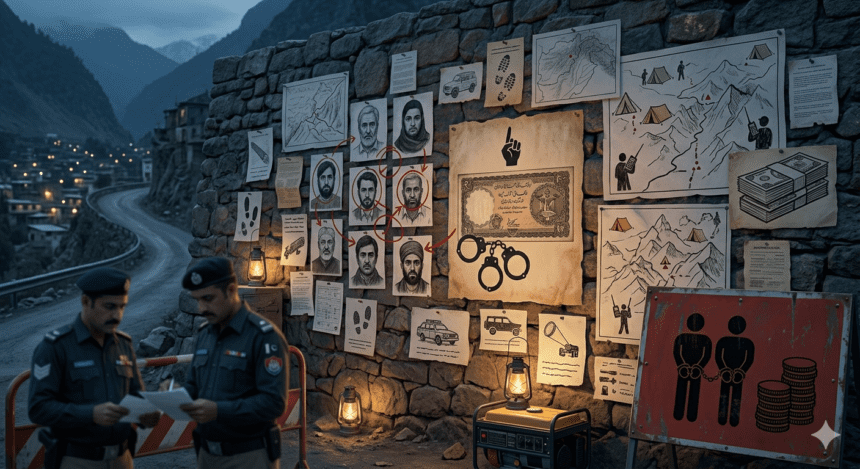
The Azad Jammu and Kashmir (AJK) government has announced a Rs10 million bounty for the arrest of key leaders belonging to the Joint Awami Action Committee (JAAC). This decision marks a significant escalation in the ongoing standoff between the regional administration and the protest movement, which has paralyzed the territory with strikes and demonstrations over electricity prices and wheat flour subsidies.
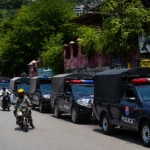
Police have released a list of wanted individuals, accusing them of orchestrating violence and inciting public disorder during recent protests. The bounty is presented as a measure to restore order after weeks of civil unrest that led to clashes between demonstrators and security forces.
The JAAC, however, remains unmoved. The committee, which represents a coalition of traders, civil society, and political activists, maintains that their demands for subsidized power and flour are non-negotiable. They view the government’s bounty as a tactic to silence legitimate dissent rather than an attempt to address the deepening economic crisis in the region.
The unrest began earlier this year when public anger over soaring utility bills boiled over into a region-wide shutdown. Despite multiple rounds of negotiations, the gap between the government’s fiscal constraints and the committee’s demands for relief has only widened. For the average resident, the situation is increasingly untenable; the combination of security crackdowns and economic inflation has brought daily life to a standstill.
Local observers suggest that the government’s hardline approach risks further alienating the public. By criminalizing the leadership of a movement that enjoys broad grassroots support, the administration may be closing the door on the very political solution needed to stabilize the region.
Security forces have intensified patrols in major cities, including Muzaffarabad and Rawalakot, following the announcement. While the government insists it is acting to prevent further chaos, the streets remain tense, and the JAAC has vowed to continue its protest campaign until the bounty is withdrawn and their core demands are met.