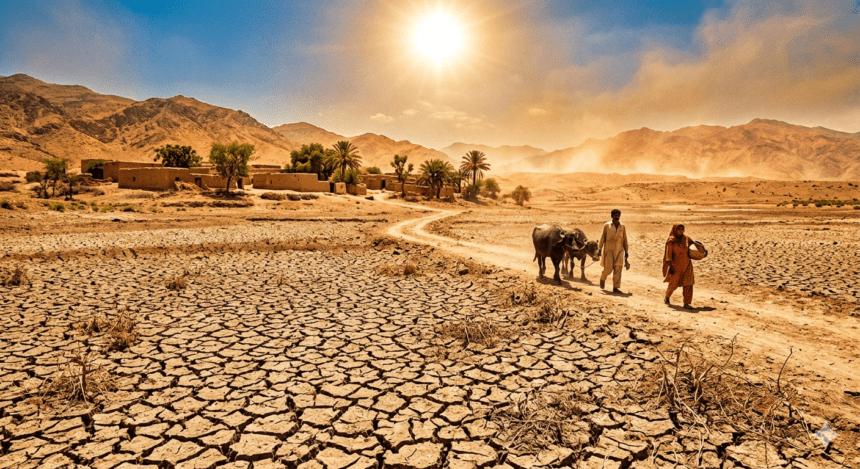
Pakistan has just sweltered through two consecutive years of record-breaking temperatures, according to climate data confirming a trend that is rapidly altering the country’s agricultural and social landscape.
The data confirms what many citizens have felt on the ground: the cooling relief once expected in late autumn is arriving later, while summer heatwaves are intensifying in both duration and severity. This isn’t just about uncomfortable weather; it’s about a fundamental shift in the regional climate.
For a country where nearly 20% of the GDP relies on agriculture, these heat spikes carry a heavy price. Wheat crops in Punjab and Sindh have faced repeated stress, with premature ripening cutting into yields. Farmers are reporting that the traditional sowing calendars—relied upon for generations—no longer align with the shifting rainfall and temperature patterns.
Meteorologists point to the “urban heat island” effect compounding the global trend. Cities like Lahore and Karachi are recording spikes driven by dense concrete and insufficient green cover, trapping heat long after the sun sets. When nighttime temperatures fail to drop, the human body cannot recover from the day’s thermal stress, leading to a sharp rise in heat-related hospitalizations.
The economic fallout is becoming impossible to ignore. Energy demand for cooling has surged, placing an immense strain on an already fragile national power grid. Rolling blackouts, once a seasonal nuisance, are now a constant feature of the summer months, hitting the industrial sector’s productivity just as heavily as residential households.
Climate experts maintain that without a radical overhaul of water management and urban planning, these “warmest years” will soon be viewed as the new normal rather than an anomaly.
“We are past the point of treating these summers as freak occurrences,” said one climate analyst based in Islamabad. “The data shows a consistent, upward trajectory that the current infrastructure simply wasn’t built to handle.”
As the country braces for the next season, the policy response remains stagnant. The focus is still on crisis management—dealing with the immediate aftermath of heatwaves—rather than the long-term structural changes needed to keep the country livable.
The heat isn’t just a weather story anymore; it’s a direct threat to the national economy and public health. For millions, the question is no longer if the next year will be hot, but how much hotter it will get.