The dream of flipping a switch to bring dormant nuclear reactors back to life is colliding with a brutal reality: these facilities are not light bulbs. They are complex, aging machines that often require billions in repairs and years of regulatory scrutiny before they can safely rejoin the grid.
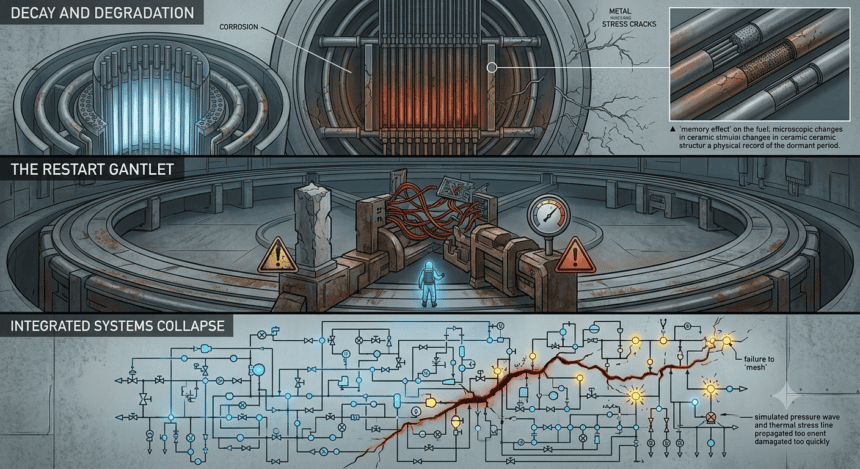
While energy firms eye shuttered plants to meet the surging electricity demands of AI data centers and manufacturing, the engineering hurdles are proving steeper than anticipated. A reactor that has sat cold for a decade isn’t just “off.” It is a site of systemic degradation.
Piping systems, once vibrant with pressurized water, become brittle. Control systems that relied on 1990s-era analog hardware are now obsolete, leaving engineers to perform a high-stakes surgery on the plant’s “nervous system.” Replacing these components isn’t a simple swap; it requires a complete recertification by nuclear safety commissions. Every weld, every pump, and every circuit must meet modern standards that didn’t exist when the plant first broke ground.
The financial math is equally punishing. When a plant closes, the specialized workforce disperses. Operators, technicians, and nuclear engineers move to other sectors. Restarting a facility requires building a new, highly trained team from scratch—a process that takes years and carries a heavy salary premium. Investors who once viewed these plants as “low-hanging fruit” for carbon-free energy are finding that the cost to restart often exceeds the price of building a modern small modular reactor.
Safety regulations represent the final, and perhaps most difficult, hurdle. Today’s safety protocols are far more rigorous than those of the 20th century. A plant that was compliant in 2005 might fail a stress test in 2024. Upgrading to meet these standards often necessitates tearing out the very infrastructure the owners hoped to salvage.
What remains is a choice between a expensive, long-term renovation or a clean slate. For energy companies, the allure of existing transmission lines and permits is strong, but the graveyard of shuttered reactors shows that history is rarely easy to resurrect.
The industry is learning a hard lesson: in nuclear power, the past is rarely a shortcut to the future.