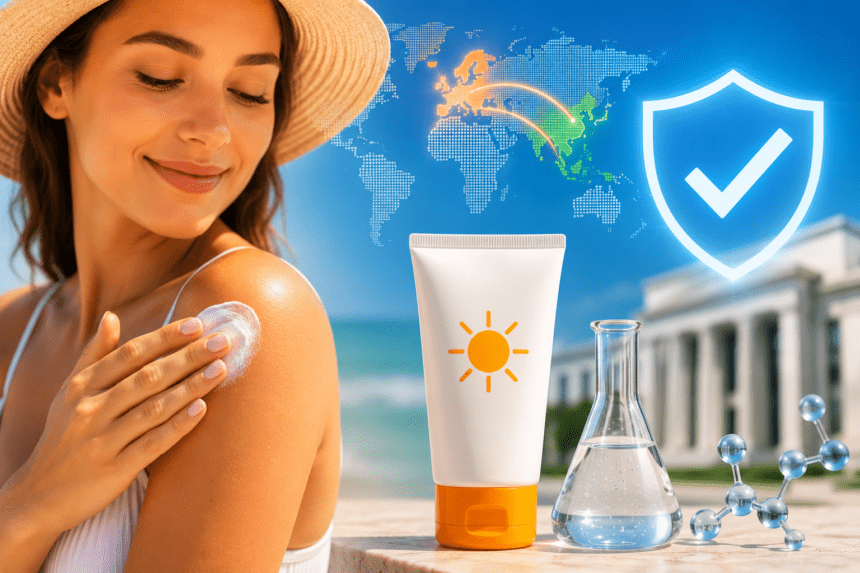
A sunscreen ingredient that has been widely used in Europe and Asia for years has now received approval from the U.S. Food and Drug Administration (FDA), marking a significant development in sun protection options available to American consumers.
The ingredient, known as bemotrizinol, is a broad-spectrum ultraviolet (UV) filter that helps protect the skin from both UVA and UVB rays. It has been used in sunscreens sold in many countries outside the United States for more than two decades and is valued for its effectiveness and stability when exposed to sunlight.
What Is Bemotrizinol?
Bemotrizinol is a chemical UV filter that absorbs a wide range of ultraviolet radiation, helping to prevent sunburn, premature skin aging, and skin damage caused by prolonged sun exposure.
Unlike some older sunscreen ingredients, bemotrizinol remains highly stable under sunlight, meaning it continues to provide protection without breaking down quickly. It is often combined with other UV filters to enhance overall sunscreen performance.
Why Is the Approval Significant?
For years, dermatologists and skin-care experts have noted that consumers in Europe and parts of Asia had access to newer sunscreen technologies that were not yet available in the United States.
The FDA’s approval allows manufacturers to incorporate bemotrizinol into sunscreen formulations marketed in the U.S., potentially expanding the range of sun-protection products available to consumers.
Experts believe the addition of this ingredient may improve the effectiveness, comfort, and cosmetic appeal of certain sunscreen products.
Benefits of Broad-Spectrum Protection
Exposure to ultraviolet radiation is associated with a variety of health risks, including:
- Sunburn
- Premature skin aging
- Hyperpigmentation
- Eye damage
- Increased risk of skin cancer
Broad-spectrum sunscreens protect against both UVA and UVB rays, making them an important component of daily skin care and cancer prevention strategies.
Why Sunscreen Matters
Health professionals recommend wearing sunscreen regularly, even on cloudy days, because ultraviolet rays can penetrate clouds and continue to affect the skin.
Additional sun-safety measures include:
- Wearing protective clothing
- Using sunglasses
- Seeking shade during peak sunlight hours
- Avoiding excessive sun exposure
These practices can help reduce long-term skin damage and lower the risk of skin cancer.
What This Means for Consumers
The approval of bemotrizinol gives sunscreen manufacturers access to another effective UV-filtering ingredient that has already established a long track record of use internationally.
Consumers may begin seeing new sunscreen formulations containing the ingredient in the coming years as companies update their product lines and seek regulatory clearance for new products.
Looking Ahead
The FDA’s decision reflects growing interest in expanding access to modern sun-protection technologies that have been used safely in other parts of the world. Dermatologists hope that broader sunscreen options will encourage more people to use sun protection consistently and help reduce the burden of sun-related skin diseases.
As skin cancer rates continue to rise globally, experts emphasize that regular sunscreen use remains one of the most effective ways to protect skin health and prevent long-term damage from ultraviolet radiation.