A series of powerful earthquakes rattled three continents in the last 24 hours, leaving emergency responders on high alert and residents in several regions scrambling for safety. From the remote corners of the Pacific to the fault lines of the Middle East, the earth shifted with intensity, though early reports suggest a stroke of luck regarding casualties.
In the Philippines, a 6.2 magnitude tremor struck off the coast of Catanduanes early Tuesday morning. The Philippine Institute of Volcanology and Seismology confirmed the quake hit at a depth of 10 kilometers. While the shallow depth usually spells disaster, the epicenter sat far enough offshore that coastal communities reported only minor structural cracks rather than widespread collapse.
Across the globe, the focus shifted to the Kermadec Islands, north of New Zealand. A 6.0 magnitude shock hit the region shortly after, rattling nerves in an area already familiar with the volatile Ring of Fire. Seismologists at GeoNet noted the remote location spared population centers from the worst of the shaking.
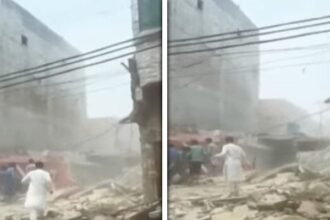
Meanwhile, parts of Iran experienced a 5.4 magnitude event near the border region. Unlike the oceanic quakes, this one hit near populated provincial towns. Local authorities deployed Red Crescent teams immediately, citing concerns over older masonry structures prone to crumbling. By Tuesday evening, the official death toll remained at zero, though dozens were treated for injuries sustained while fleeing homes.
These quakes—while geographically disconnected—highlight the unpredictable nature of global tectonic activity. Seismologists warn that while there is no evidence of a “chain reaction,” the sheer frequency of these events serves as a stark reminder of the planet’s restless crust.
Emergency management agencies in these regions are now shifting from rescue to assessment. In Iran, the priority is structural integrity of rural housing. In the Philippines, the focus remains on monitoring potential aftershocks that could threaten coastal stability.
Geologists emphasize that while these events occurred within a tight window, they remain independent incidents. Yet, for the people living near these fault lines, the numbers don’t matter as much as the next tremor. As one local official in the affected Iranian province put it, “We prepare for the worst, but we live for the quiet.”