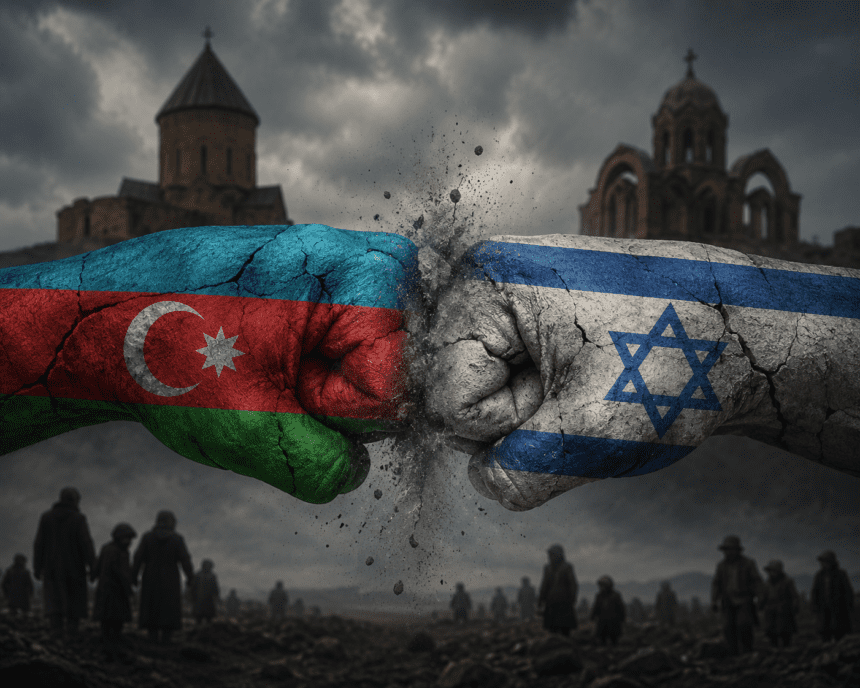
Baku has formally protested Israel’s recent move to recognize the 1915 mass killings of Armenians as genocide. The diplomatic friction marks a rare public rift between two nations that have maintained a robust strategic and military partnership for decades.
The Azerbaijani Foreign Ministry summoned the Israeli ambassador earlier today, signaling deep dissatisfaction with the shift in Jerusalem’s stance. Baku views the recognition not just as a historical disagreement, but as a direct affront to its own territorial integrity and the historical narrative surrounding the Nagorno-Karabakh conflict.
For years, Israel has walked a precarious diplomatic tightrope. It has long been one of Azerbaijan’s primary arms suppliers, providing advanced drones and surveillance technology that proved decisive in Baku’s military operations against Armenia. At the same time, Israel has faced internal pressure from human rights groups and academic circles to acknowledge the mass killings of Armenians under the Ottoman Empire.
By moving toward recognition, Israel risks alienating a critical ally on Iran’s northern border. Azerbaijan, a secular, Shia-majority state, has served as a key intelligence outpost for Israel, providing a strategic platform for monitoring activities in Tehran. Analysts suggest this latest move by Jerusalem may be a calculated attempt to appease domestic critics without fully severing the lucrative defense pipeline to Baku.
The Armenian government has welcomed the change, viewing it as a long-overdue moral victory. However, the move places the Armenian administration in a complex position; they are currently navigating a delicate peace process with Azerbaijan, and any shift in international recognition of the genocide is likely to harden Baku’s rhetoric.
Behind the diplomatic cables and public statements, the reality is stark. Azerbaijan’s military superiority, built largely on Israeli hardware, remains the primary factor in regional stability. If this partnership frays, the security architecture of the South Caucasus could shift rapidly.
Baku has signaled it will evaluate its next steps based on the consistency of Israeli policy moving forward. For now, the strategic alliance remains intact, but the trust that fueled it has been visibly shaken.