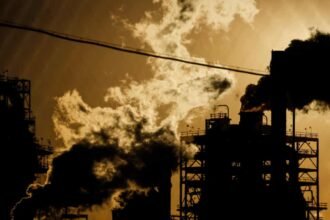
The Lahore High Court has finally disposed of an eight-year-old public interest litigation, mandating that provincial authorities strictly enforce environmental protection protocols. Justice Shahid Karim’s ruling marks the conclusion of a protracted legal struggle that sought to hold government departments accountable for the city’s deteriorating air quality and unchecked industrial pollution.
For nearly a decade, the case remained stuck in the judicial pipeline. Petitioners argued that the Environmental Protection Agency (EPA) operated in name only, failing to monitor emissions from factories or regulate the rapid loss of green cover in urban centers. The court’s latest judgment rejects the “business as usual” approach that has defined the provincial response to smog and toxic air.
The ruling forces the government to move beyond bureaucratic paper-shuffling. It requires the immediate implementation of real-time air quality monitoring across industrial zones, a directive the EPA has consistently delayed citing budgetary constraints. The court made it clear: fiscal excuses no longer carry weight when public health is the primary casualty of administrative inaction.
Environmental lawyers involved in the case view the verdict as a rare victory for judicial oversight. While the government often views environmental regulations as a hurdle to industrial output, the court’s stance shifts the burden of proof. Factories must now demonstrate compliance or face immediate closure—a standard that has rarely been applied with such consistency in the past.
The judgment also addresses the systemic lack of transparency in environmental data. By ordering the public disclosure of emission reports, the court has stripped the EPA of its ability to shield non-compliant industries from public scrutiny.
Critics of the government’s past performance remain skeptical about enforcement. They point to a long history of court orders being ignored or buried under layers of provincial red tape. Whether this specific directive survives the transition from the courtroom to the factory floor depends entirely on the willingness of the administration to challenge powerful industrial lobbies.
For now, the legal battle is over, but the enforcement phase begins. The court has signaled that it will continue to monitor compliance, effectively keeping the state under a judicial watch until the promised environmental standards become a daily reality.