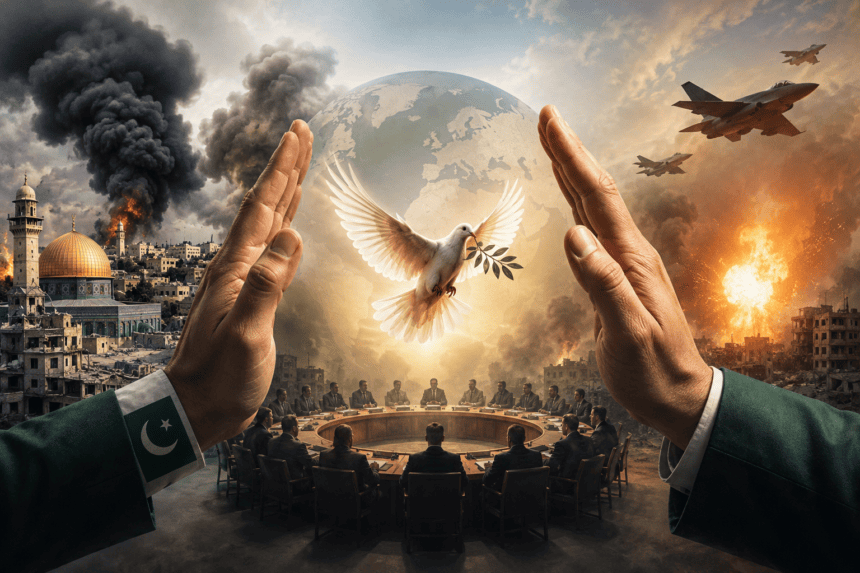
Islamabad has officially expressed “deep concern” over the rapidly deteriorating security situation in the Middle East, calling on all parties to step back from the brink of a wider regional conflict.
The Foreign Office issued a statement early Tuesday, warning that the current trajectory—marked by a sharp increase in hostilities—threatens to destabilize a region already walking a tightrope. Islamabad’s position remains anchored in the call for an immediate ceasefire and a return to diplomatic channels, yet the statement carries a sharper tone than previous diplomatic missives, reflecting growing anxiety in the capital over the potential spillover effects.
The stakes for Pakistan are high. Beyond the humanitarian toll, regional escalation risks disrupting vital trade routes and spiking global energy prices, costs that the country’s fragile economy can ill afford. Policymakers in Islamabad are acutely aware that a broader conflict would complicate the country’s delicate balancing act between its strategic partners in the Gulf and its proximity to Iran.
While the government’s rhetoric emphasizes the need for international law to prevail, analysts argue that Pakistan’s influence in the current standoff is limited. The Foreign Office maintains that “preventive diplomacy” is the only path forward, though it stopped short of naming specific actors responsible for the latest flare-up.
The messaging aligns with Pakistan’s long-standing policy of non-interference in regional power struggles, yet the urgency of the latest statement suggests that the Ministry of Foreign Affairs is bracing for a protracted crisis.
“The international community has a responsibility to prevent this from spiraling into a full-scale war,” a diplomatic source told reporters, speaking on condition of anonymity. “The cost of inaction is no longer just a regional problem; it’s a global one.”
For now, Islamabad remains in wait-and-see mode, monitoring the flow of intelligence from its embassies in Tehran and Riyadh. Whether these calls for restraint will carry any weight in the halls of power in Washington, Tel Aviv, or Tehran remains the central question—one that, for the moment, has no clear answer.