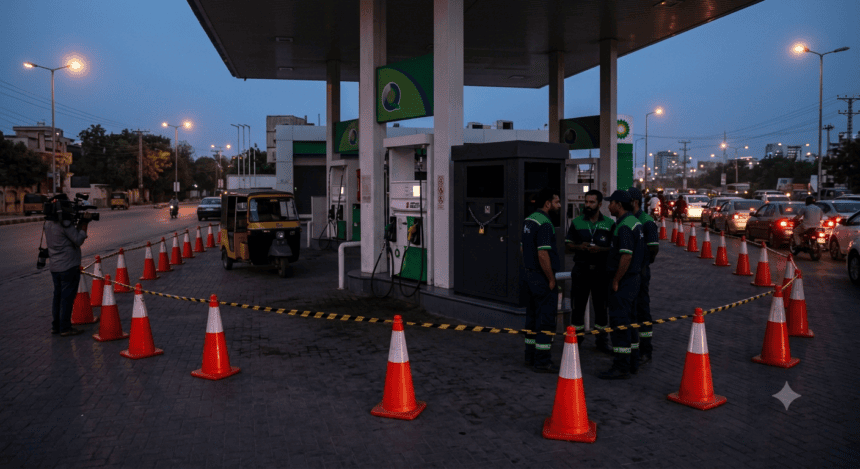
Petrol pumps across the country will shut down indefinitely starting Friday, as negotiations between the Petroleum Dealers Association and the government collapsed over the implementation of daily fuel pricing.
The standoff centers on the government’s push for a dynamic pricing model that mirrors global market fluctuations. Dealers argue the move will decimate their profit margins and leave them vulnerable to daily inventory losses.
“We aren’t just fighting for margins, we’re fighting for survival,” said the association’s president in a press briefing late Wednesday. He confirmed that all member stations will stop purchasing and selling fuel until the Oil and Gas Regulatory Authority (OGRA) revisits the proposed pricing mechanism.
The strike threatens to paralyze logistics and public transport within 48 hours. With many stations already reporting low stocks due to panic buying, the domestic supply chain faces an immediate crunch.
Government officials, meanwhile, maintain that the daily pricing structure is essential to align local rates with international crude benchmarks. A spokesperson for the petroleum ministry dismissed the strike as “unjustified,” arguing that global price transparency protects consumers from sudden, massive spikes.
But for the average commuter, the policy shift—and the resulting strike—means one thing: long queues and empty pumps.
Previous attempts to overhaul the pricing structure have met similar resistance, often resulting in temporary shutdowns. This time, however, the dealers have refused to return to the table until the government puts a written guarantee on the table regarding commission adjustments.
As of Thursday evening, no emergency meetings between the two sides have been scheduled. The roads are set to get much quieter by tomorrow morning.